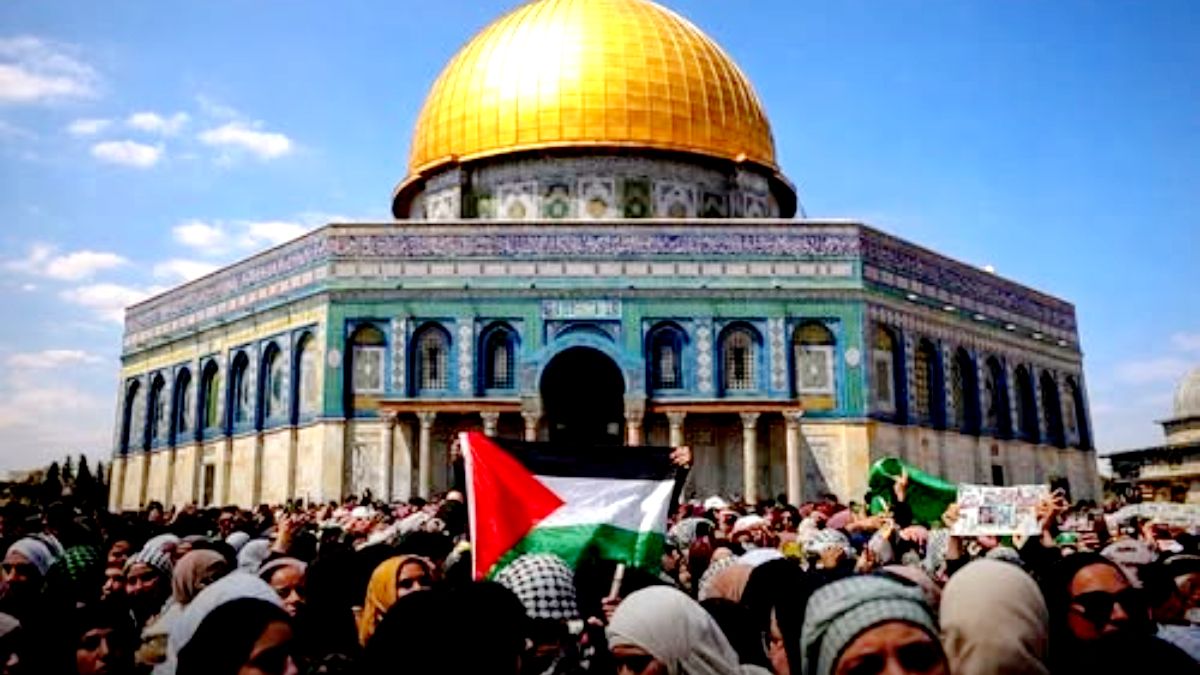
Garut PR- After more than a month of strict restrictions, the Al Aqsa Mosque complex in Jerusalem has finally reopened to worshipers. This moment is a bright spot for Muslims who for almost 40 days have not been able to perform their worship at one of the holiest sites in Islam.
The reopening was carried out on Tuesday (8/4/2026) by the Islamic waqf authorities, following the easing of the previously heated security situation. During the closure period, access to the mosque complex was strictly restricted, with only a handful of officers allowed to enter, while the general congregation had to refrain from worshiping inside the holy area.
Also Read: Horrifying! The issue that Pakistan and China will attack Israel with nuclear weapons is emerging, these are the facts
This decision was greeted with enthusiasm. Since morning, hundreds of worshipers began to arrive, stepping back into the mosque grounds to perform prayers with great emotion. However, a number of restrictions are still in place at several entrances, and security forces remain on guard around the complex.
A waqf official said that this opening was an important step to restore the spiritual life of the people.
Also read: War costs are soaring, Israel’s economy is suffocating amidst a rain of rockets from Iran and Hezbollah
“We reopened the Al Aqsa Mosque for worshipers after the emergency situation subsided. People can now return to praying inside the complex,” he said.
Previously, the closure was carried out due to increasing tensions in the conflict between Palestine and Israeli Zionists, which had a direct impact on limiting access to various religious sites in Jerusalem. This policy has received widespread criticism because it is considered to touch on sensitive issues related to freedom of worship.
Also Read: Scary! The skies of Tel Aviv are suddenly invaded by crows, causing Israeli citizens to panic
Now, with the reopening of the Al Aqsa Mosque, there is hope that tensions will ease. However, observers warn that the situation in the region is still fragile and can change at any time, depending on evolving security dynamics.
In the midst of uncertainty, the footsteps of the congregation returning to the mosque are a symbol of steadfastness despite the conflict, that hope still finds its way.***