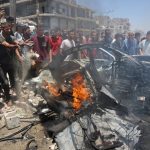
The armed confrontation between the United States and the Islamic Republic of Iran has continued to escalate, with the conflict appearing increasingly difficult to contain after U.S. airstrikes entered their tenth consecutive night.
According to Al Jazeera on Tuesday, July 21, 2026, the Islamic Revolutionary Guard Corps (IRGC) launched a large-scale retaliatory offensive targeting strategic assets and U.S. military bases in Jordan, Bahrain, and Kuwait in response to the sustained American air campaign.
The expanding military escalation has pushed security conditions across the Gulf region to a critical level.
In Bahrain, air raid sirens sounded throughout the day amid waves of Iranian missiles and drones.
The Bahraini Ministry of Interior officially urged residents to remain calm.
“Residents are advised to remain calm and proceed immediately to the nearest safe location,” the ministry said.
Tehran claimed that its strikes successfully hit U.S. military installations as well as infrastructure belonging to Amazon operating in the Gulf kingdom.
Strait of Hormuz
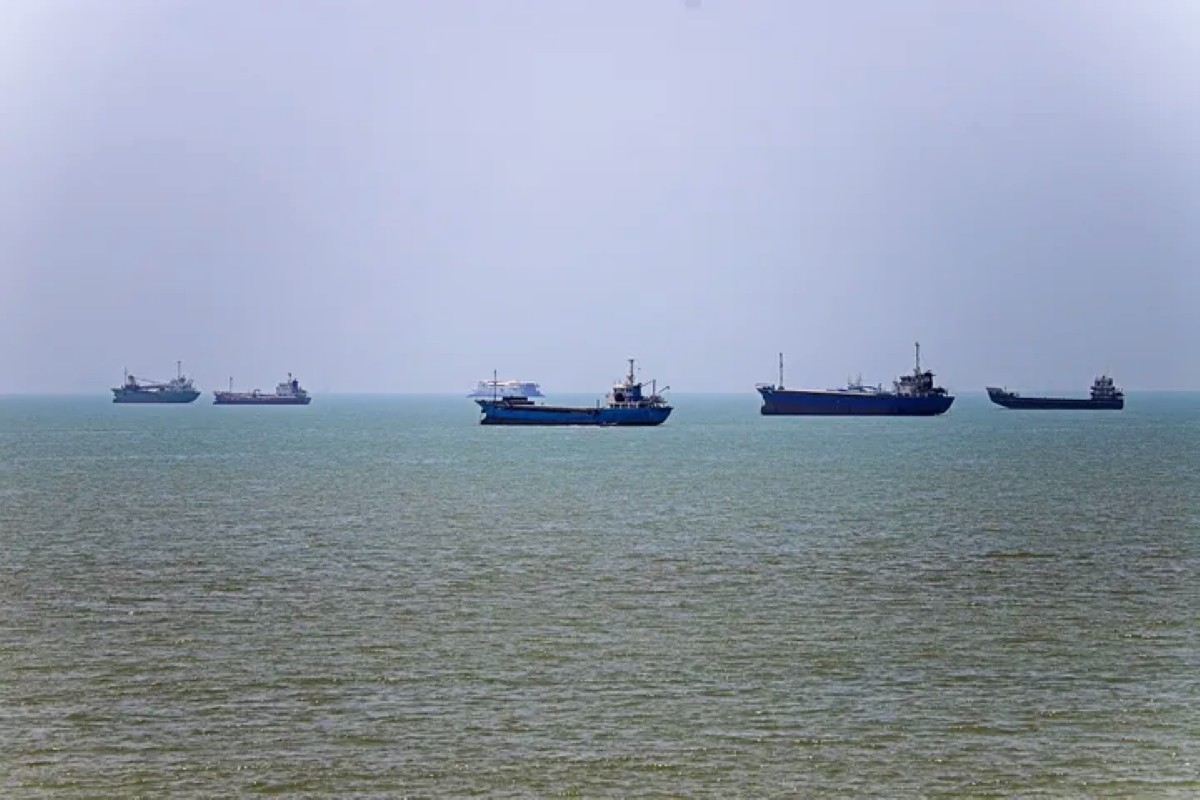
In addition to military targets, hostilities also intensified in the Strait of Hormuz, where maritime traffic came under renewed threat.
The IRGC confirmed that two oil tankers caught fire after explosions while attempting to navigate the southern shipping route.
“A massive fire engulfed two oil tankers following explosions after they attempted to pass through the unsafe southern route in the Strait of Hormuz,” the IRGC said in an official statement quoted by Al Jazeera.
The IRGC added that rescue teams had been dispatched to evacuate all crew members and urged international maritime authorities to avoid the dangerous shipping route.
Regional geopolitical tensions intensified further after the Iran-aligned Houthi movement in Yemen officially declared a maritime blockade against Saudi Arabia.
The move is expected to trigger fresh disruptions to global energy supply chains.
Meanwhile, U.S. military casualties have begun to mount.
U.S. President Donald Trump issued a stern warning to Tehran after at least three American service members were killed during fighting over the past week.
“Iran will pay many times over for the deaths of American soldiers,” Trump said in an official White House statement on Tuesday, July 21, 2026.
Although the White House stated that airstrikes would continue until the president decides otherwise, diplomatic communication channels between the countries are reportedly still being kept open.
Debate Over Iran’s Retaliation
Iran’s retaliatory strikes targeting civilian facilities in neighboring countries have sparked intense debate among academics and military analysts.
Atifeh Taghiani, Professor of Political Science at the University of Tehran, argued that Iran’s actions are supported by international law.
“International law grants Iran the right to retaliate against any country from which attacks against us are launched,” Taghiani said.
According to her, U.S. fighter aircraft deliberately used military bases in Gulf countries to launch attacks against Iran’s civilian infrastructure.
However, that argument was strongly rejected by Abdullah Al-Shayji, Professor of Political Science at Kuwait University.
Al-Shayji dismissed Tehran’s justification as political propaganda lacking credibility.
“The claim that U.S. attacks were launched from Gulf countries is no longer credible or realistic. All of the strikes originated from the two U.S. aircraft carriers, George W. Bush and Abraham Lincoln, which were positioned no more than 150 kilometers off Iran’s coast,” Al-Shayji said.
He added that Iran’s deliberate attack on Kuwait’s desalination facilities during the peak of the summer season constituted a violation of international law and would only further isolate Tehran on the global stage.***