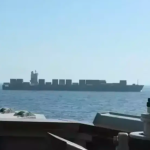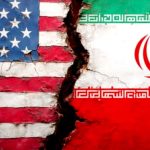
DESCRIPTION – When the war between Iran and the US and Israel began with the brutal attack on Iran on February 28 2026, Iran blockaded the Strait of Hormuz, which proved to be confusing for the United States (US).
The Strait of Hormuz has an important role for the world economy. The Strait of Hormuz is 167 kilometers long. This strait is considered strategic because it connects the Persian Gulf with the Gulf of Oman. The strait varies in width between 39 and 97 kilometers, with the narrowest point being around 33-39 km.
Also Read: Iran’s New Talks with the US Threatened to Be Canceled Due to Actions of the US Navy, Tehran Kapok
The Strait of Hormuz acts as the world’s most vital “oil highway”, connecting the Persian Gulf with the Arabian Sea, through which more than 20% of the global supply of petroleum and liquefied natural gas or around 16-20 million barrels per day passes.
This strait is the main export route for Gulf producing countries such as Saudi Arabia, Iran, Iraq and the UAE to Asian markets. The US is also very dependent on this strait because of its energy needs
The US and many countries in the West condemn the blockade of the Strait of Hormuz and assess Iran’s actions as illegal because they violate international law.
However, a legal expert at the University of Colorado Law School and a non-resident researcher at the Quincy Institute, Maryam Jamshidi believes that the allegations are not entirely true. According to him, it is not Iran that has violated international law.
Unfair Assessment
As the US and western countries often do, they often make unfair and disproportionate assessments of various things, especially the Iran issue.
Maryam Jamshidi believes that the US and Western countries are busy accusing Iran’s blockade of the Strait of Hormuz as being illegal and violating international law. Unfortunately, the US and Israel’s attack on Iran on February 28 2026 clearly violated international law, but the West’s reaction was relatively calm.
Maryam assesses how international law is applied by the US and western countries as a way to regulate Iran’s behavior.
“This says a lot about how international law is applied today as a way to restrain and regulate Iran’s behavior, while effectively giving the United States and Israel free rein to do whatever they want,” Maryam said.
Maryam’s statement was outlined in a new article published in The Nation magazine with the title “Only One Party Is Clearly Violating the Law in the Strait of Hormuz: And It’s Not Iran.”
In an interview with the democracynow.org page, Maryam stated that there has been a lot of international criticism about what Iran has done in the Strait of Hormuz, especially their efforts to regulate ship traffic through the strait and impose fees on certain ships that pass through the strait.
The emerging international rhetoric stated that what Iran was doing was completely and clearly illegal.
“And from my point of view, that’s not entirely true. This is not a black-and-white issue. Iran does have reasonable legal arguments for regulating the Strait of Hormuz, as well as for imposing fees,” he said.
In fact, Maryam expressed counter-criticism for the US and Israeli military attacks on Iran on February 28 2026 which were considered illegal but were more muted, especially by western countries and from a number of countries in the Gulf Region.
“And I think the contrast between these two reactions is very telling — on the one hand, total condemnation of Iran over legal issues that are far from clear-cut, and much more muted, more limited criticism of the United States and Israel when it comes to actions they have taken that clearly violate international law,” he said.
“I think this says a lot about how international law is being used today as a way to restrain and regulate Iranian behavior, while effectively giving the United States and Israel free reign to do whatever they want against the Iranian government,” he said.
Maryam further explained that over the last few years, she has seen how Israel, in particular, with support from the United States, as well as with support from most other Western countries.
According to him, Western governments have eroded, violated and flouted international law, in their actions against Palestine, their actions in Lebanon, their actions in Syria, their actions in Yemen and their other actions in Iran.
“And I think, you know, these actions that Israel has taken have caused many people to question the usefulness and importance of international law, whether international law still exists or not. And, you know, now with this war against Iran, the concern and fear that international law really doesn’t matter, has only increased,” Maryam said.
Unfair Solution Offers
Maryam also said that currently many solutions have been proposed to the UN Security Council, but the proposed solutions are considered unfair because they put more pressure on Iran.
According to him, there have been several resolutions submitted to the Security Council since the war began. Much of the resolution focuses on Iran and Iran’s actions in the Strait of Hormuz. The countries that have been the main forces behind these resolutions appear to be the Gulf Arab states, particularly Bahrain and the UAE, which have also been the targets of the most attacks by Iran.
Also Read: South Bandung Continues to Flood, Promise After Promise Unfinished: Now KDM Offers Lake Solution
“Again, what is very interesting and, I think, important to understand about these resolutions is that they very clearly and absolutely condemn Iran for its regulatory actions in the Strait of Hormuz. As I mentioned, even though these actions have a legal basis, they present them as completely unlawful,” he explained.
And one of those resolutions, he said, which was thankfully vetoed by China and Russia, would have effectively authorized all UN member states to go to war with Iran to open the Strait of Hormuz.
“I mean, that’s a very radical proposal, basically validating and allowing countries to engage in armed conflict against other countries for the sole purpose of opening waterways. So, you know — and again, there’s no resolution that’s been submitted to the Security Council to explicitly condemn the US and Israel for their actions against Iran,” he stressed.
Maryam added, in terms of domestic legislation in Iran, the Iranian parliament appears to be considering a law that would essentially make the regulatory scheme in the Strait of Hormuz part of Iranian law.
It is not yet completely clear what the law contains, what its legal basis is, and what types of regulations will be implemented. However, it appears that the law includes a fee system. So, Iran is trying to take the ad hoc fee system they have developed over the last few weeks and institutionalize it in domestic law. ***