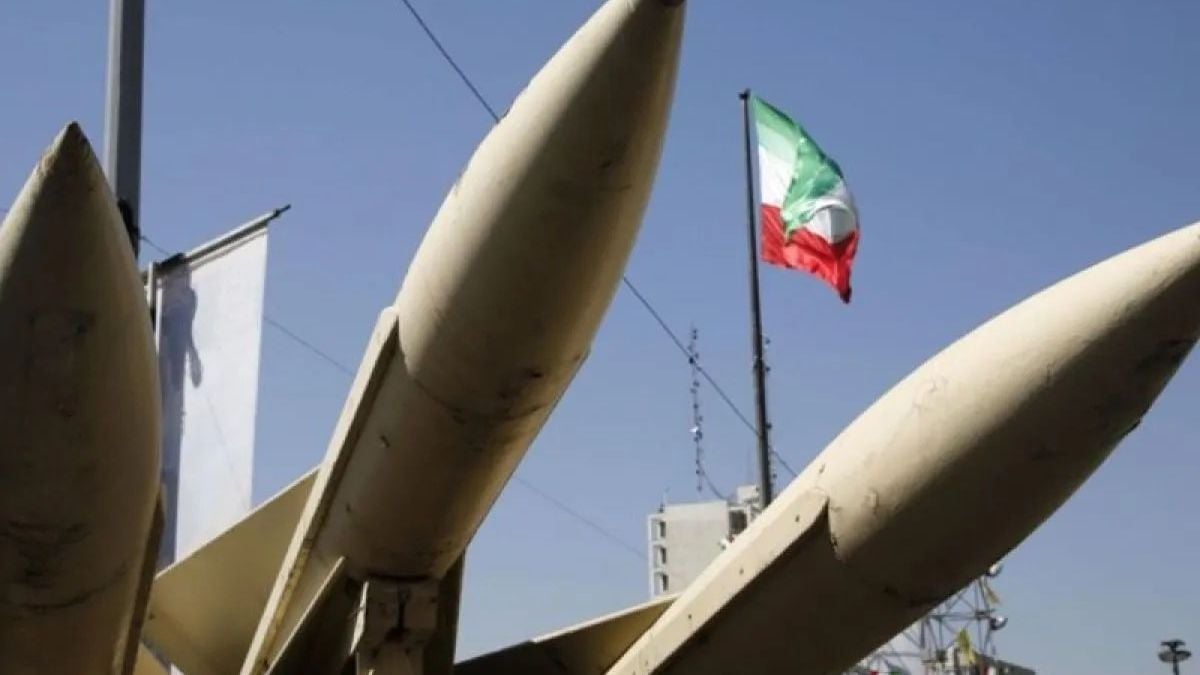
DEPOK RUBLIC — International relations observers and researchers assess that the Iran war which ended in a ceasefire has triggered major changes in the geopolitical configuration of the Middle East. A number of analysts such as Bader Mousa Al-Saif, Abdulkhaleq Abdulla, Yasmine Farouk, Andreas Krieg, and Gregg Roman assess that Arab countries are currently reorganizing their security, defense and diplomatic relations strategies after the major conflict involving Iran, the United States and Israel.
Arab Countries Are No Longer Completely Dependent on the United States
According to Bader Mousa Al-Saif from Kuwait University, Gulf countries are now starting to reconsider the regional security model that has been based on the protection of the United States. He believes that the latest war shows that sole dependence on Washington is no longer the ideal option for the Gulf monarchies.
“All countries in the region should rethink this model,” said Al-Saif. “The question is how to protect the region as a whole from falling into a protracted war.”
In the latest developments, a number of Gulf countries have begun to open new defense partnerships with other countries. Saudi Arabia is known to be strengthening defense cooperation with Pakistan, while the United Arab Emirates is building a strategic partnership with India. This move is seen as a signal of diversification of security partners to deal with regional uncertainty.
Andreas Krieg of King’s College London added that Gulf states would likely not completely abandon the protection of the United States, but would strengthen ties with other powers, including European countries, to expand their security networks.
Iran is considered increasingly isolated amidst the solidarity of Arab countries
Middle East Forum researcher, Gregg Roman, assesses that the response of Arab countries to the Iranian attack shows a major change in the regional political landscape. For the first time, a number of Gulf Arab countries publicly condemned Iran directly during the conflict.
Saudi Arabia, Bahrain and the United Arab Emirates are said to have issued strong statements against Tehran after their territories were affected by Iranian missile and drone attacks. Riyadh even emphasized its full solidarity with the countries targeted by the attack.
“Iran invaded Arab sovereign territory. Any diplomatic ambiguity that the Gulf states might have maintained regarding the broader conflict disappeared instantly,” said Gregg Roman.
According to him, this development shows that the “axis of resistance” narrative that Iran has been building has suffered a serious blow. Instead of gaining Arab world solidarity, Tehran faces the consolidation of regional powers that are increasingly critical of its influence.
Three Future Scenarios for the Gulf Post-Iran Conflict
Carnegie Endowment researchers Andrew Leber and Sam Worby mapped out three possible scenarios that could occur in the Gulf region after an Iran war. The first scenario is the birth of a more cooperative Gulf Cooperation Council (GCC), including the integration of joint air defense and strengthening cross-border economic cooperation.
In this scenario, Gulf countries can accelerate the development of integrated air defense systems, increase local defense manufacturing, as well as strengthen alternative trade routes to reduce dependence on the Strait of Hormuz.
However, the scenario that is considered the most realistic is a limited status quo, namely increasing cooperation only in certain sectors without establishing an integrated military command. According to them, the GCC’s long history of internal rivalry means that full integration is still difficult to achieve.
The worst scenario is the emergence of a new rift between the Gulf countries. Rivalry between Saudi Arabia and the United Arab Emirates, differences in attitudes towards Israel, and different strategies for dealing with Iran are said to have the potential to trigger new fragmentation within the Gulf bloc.
Muslim NATO Discourse Strengthens Amid Regional Uncertainty
In the midst of these strategic changes, discussions also emerged regarding the possibility of forming a new security alliance dubbed “Muslim NATO”. This idea emerged as coordination between Saudi Arabia, Türkiye, Egypt and Pakistan increased on regional defense issues.
Saudi political analyst Omar Saif assesses that the alliance has the potential to create a new balance of power in the Middle East. According to him, the combination of military strength, economy and strategic position of the four countries can be a balance against regional threats.
“The same alliance could put the brakes on Israel’s regional ambitions,” said Omar Saif.
However, observers assess that the formation of a formal alliance still faces many obstacles, ranging from historical rivalries between members to the complexity of each country’s relationship with the United States and other global actors.
In the end, Iran’s war is seen as not only changing Tehran’s relations with Arab countries, but also encouraging the birth of a new security configuration in the Middle East. If this trend continues, the region is expected to enter a new phase with a much different balance of power than before the conflict.