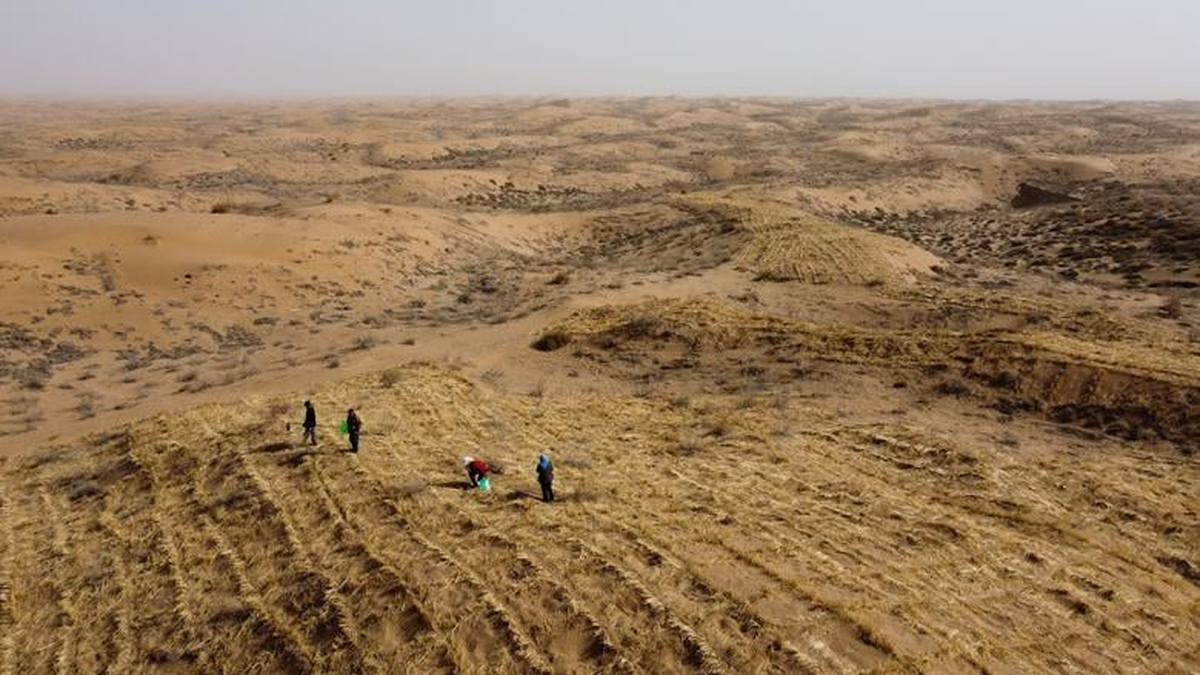
DEPOK RUBLIC – The phenomenon of the Gobi Desert as a cold desert explains that the vast expanse of desert in southern Mongolia and northwestern China has very extreme climatic characteristics, making it different from hot deserts in general.
The Gobi Desert is one of the largest deserts in the world
The Gobi Desert stretches for about 1,600 kilometers with a width of between 500 and 1,000 kilometers. Its total area reaches around 1.3 million square kilometers, making it one of the largest deserts in the world.
Geographically, the Gobi Desert is located between a number of large mountain ranges, namely the Altai Mountains and Hangayan Mountains in the north, as well as the Yin, Qilian, East Altun and Bei Mountains on the south side. To the east and west, this area is bordered by the Da Datangn and East Tien Shan mountains.
This desert region is also divided into five different ecological areas, namely Gobi Gaxun, Gobi Junggar, Gobi Trans-Altai, East Gobi or Mongolian Gobi, and the Alxa Plateau or Ala Shan Desert.
The name “Gobi” itself comes from Mongolian which means “place without water”, describing the condition of the area which is very dry and has minimal rainfall.
The natural conditions of the Gobi Desert are dominated by arid rocks
In contrast to the general image of deserts filled with seas of sand, only about five percent of the Gobi Desert is desert. Most of the area actually consists of barren rocky landscapes and arid plains.
However, the Gobi Desert still has iconic sand dunes called the Khongor Sand Dunes which reach a height of around 80 meters and stretch for 180 kilometers. This sand dune is said to be one of the largest in the world.
Rainfall in the Gobi Desert area is classified as very low. Some areas have not received measurable rain for years.
Meanwhile, other areas only receive less than 40 millimeters of rain per year, although in certain mountainous areas the figure can exceed 200 millimeters.
This is the reason the Gobi Desert is called the Cold Desert
According to Britannica information quoted in the report, the Gobi Desert is known as a “cold desert” because it has very long and extreme winters.
Temperatures in this area can drop below minus 40 degrees Celsius in winter, much lower than many other desert regions in the world.
But on the other hand, the Gobi Desert also experiences very hot summers, with daytime temperatures that can exceed 40 degrees Celsius. This very contrasting temperature difference between summer and winter is one of the main characteristics of the area.
In addition, the daily temperature amplitude in the Gobi Desert is also very high, with drastic temperature changes between day and night.
Geographical Factors Cause Extreme Weather in the Gobi Desert
In his explanation, the extreme conditions of the Gobi Desert are influenced by its location far in the interior of the Asian continent, so it does not have the temperature balancing effect of the ocean.
The relatively high altitude of the Gobi Desert region also contributes to low temperatures, especially in winter.
Apart from topographic factors, the Gobi Desert is also exposed to cold air masses from Siberia which move into the region during the winter.
These cold winds from Siberia bring snow and frost to desert areas, reinforcing the Gobi Desert’s character as one of the most extreme climate environments on Earth.