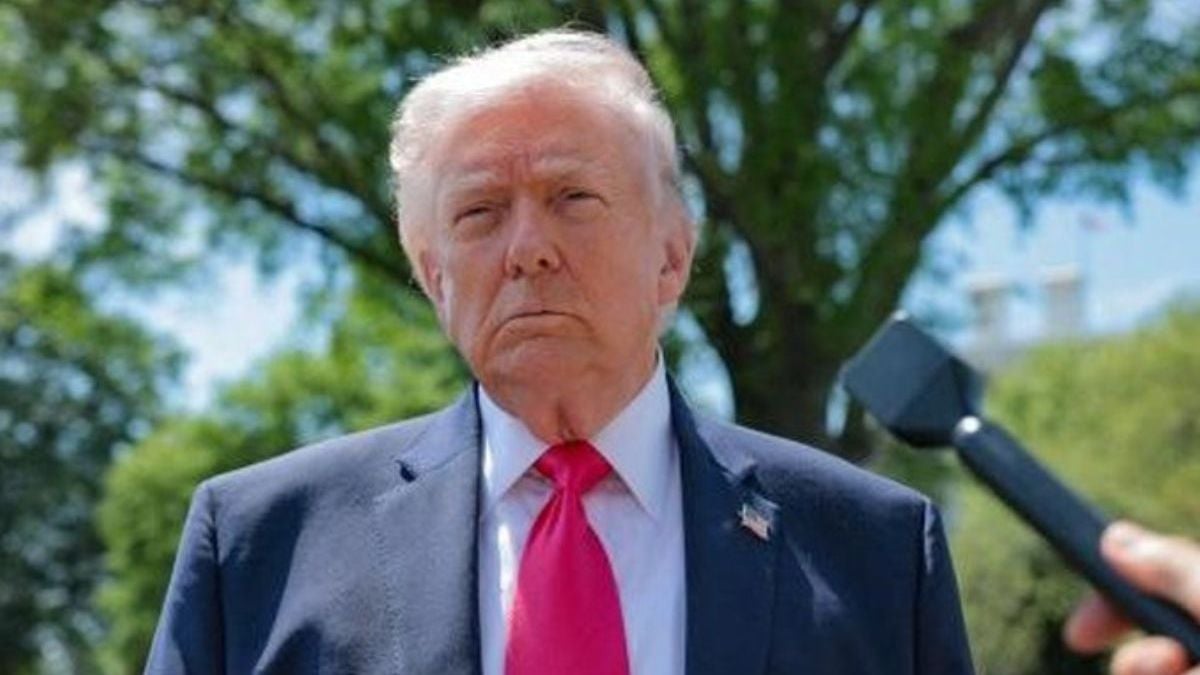
PEKALONGAN PORTAL – Tensions in the Caribbean region increased sharply after the President of the United States (US), Donald Trump, openly stated his ambition to take over Cuba in the near future.
Trump has signaled he will use naval military force to force the island’s communist government to submit to Washington.
At an event in Florida, Trump revealed that Cuba was the next main target after the US completed its military agenda in Iran.
Also read: Reasons why Mark Lee left NCT and SM Entertainment: The end of Ace’s 10 year journey
“Cuba, which we will take almost immediately. On the way back from Iran, we will have one of our big aircraft carriers, maybe the USS Abraham Lincoln, we will let it stop about 100 yards off the coast,” said Trump, Saturday (2/5/2026).
Trump felt confident that just by showing force, the Cuban government would surrender without much resistance.
“They’ll say ‘thank you very much, we give up.’ “I like getting work done,” he added.
New Sanctions and Diplomatic Pressure
In addition to the military threat, Trump has signed an executive order imposing new sanctions on individuals and entities affiliated with the Cuban government.
These sanctions are based on threats to national security and US foreign policy.
US Secretary of State, Marco Rubio, also emphasized that the free market reform measures currently being offered by Cuba are still far from Washington’s demands.
According to Rubio, Cuba’s efforts to allow exiles to invest have not been dramatic enough to change the country’s political and economic map.
Cuba’s response
Also read: Iranian missile again destroys US F-35 stealth fighter jet
Unwavering Resistance
Responding to blatant threats from the White House, Cuban President Miguel Diaz-Canel emphasized that the Cuban people would not remain silent.
Through a statement on X’s social media, Diaz-Canel vowed to provide fierce resistance to any attempt at external aggression.
“Facing the worst-case scenario, Cuba has one guarantee: any external aggressor will face unwavering resistance,” Diaz-Canel stressed.
Despite expressing openness to broad talks on investment and economic cooperation, Havana has steadfastly refused to negotiate changes to its political system.
With the two countries hardening their positions, the risk of confrontation in the Caribbean region is now at its highest point in recent decades.***