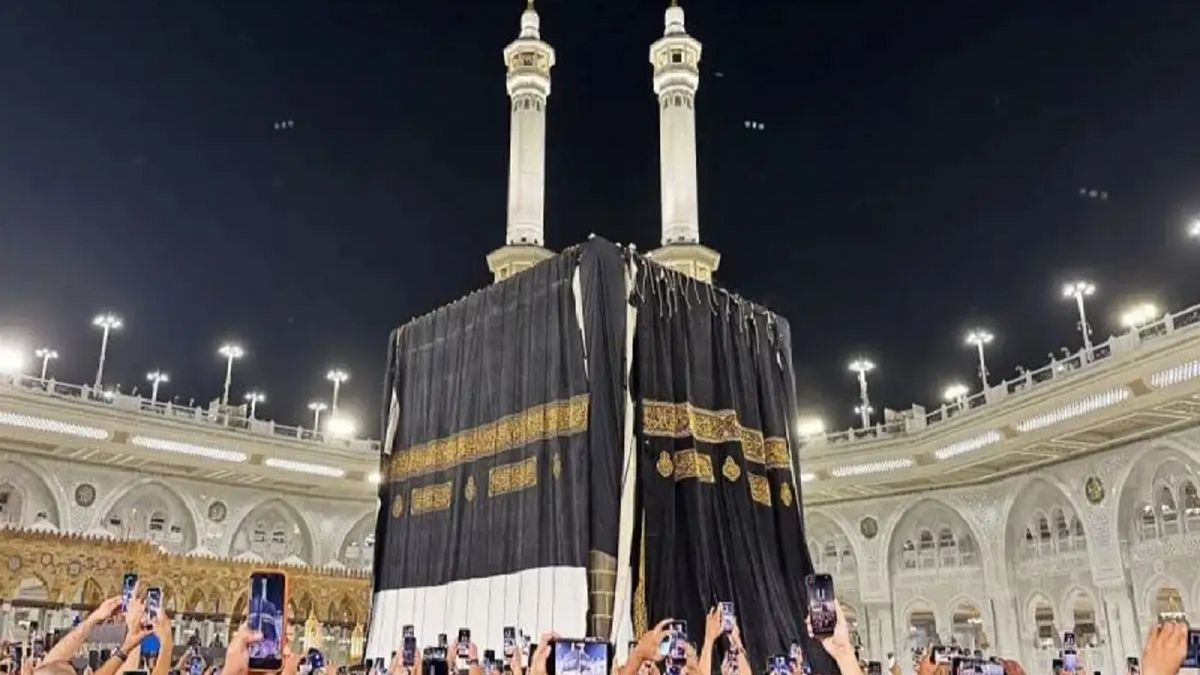
MAKKAH – There is a sight that Muslims always look forward to every turn of the Hijri year. In the midst of the sea of people crowding the Grand Mosque, the Kaaba kiswah which had been covering the Baitullah for a year was slowly being taken down and replaced with a new, magnificent covering.
This sacred moment took place again on Monday (15/6/2026) evening local time, coinciding with the arrival of the Islamic New Year, 1 Muharram 1448 Hijriah.
Thousands of worshipers who filled the grounds of the Grand Mosque were immersed in an atmosphere of emotion when they witnessed the procession of changing the kiswah, one of the most special traditions in the Islamic world.
Seconds of the Old Kiswah being removed
Since the afternoon, the area around the Kaaba has been filled with pilgrims from various countries who want to witness the historic procession firsthand.
Under the light of the lights of the Grand Mosque that illuminated the Makkah night, a special team appointed by the Grand Mosque authorities began working with great care.
One by one, parts of the old kiswah were removed from the walls of the Kaaba. At the same time, new kiswahs made of high-quality black silk began to be gradually raised.
The atmosphere became more solemn when the chanting of talbiyah, takbir and salawat echoed from various corners of the Grand Mosque.
Many congregants were seen raising their hands, praying, and even shedding tears while watching the procession which only takes place once a year.
Also read: Epstein Documents Scandal 2026: Angry Voices of the Muslim World Over the Desecration of the Holy Cloth Kiswah Kaaba
Not Just Changing Cloth
For some people, changing the kiswah may be seen as a mere process of replacing the cloth covering the Kaaba.
However, for Muslims, this event has a much deeper meaning.
The changing of the kiswah is a symbol of the start of a new chapter in life. As the Kaaba is wrapped in new cloth, Muslims are invited to leave behind the mistakes of the past and welcome the new year with a cleaner heart.
This momentum is also a reminder of the meaning of hijrah, namely moving from bad habits to a better, more obedient life and closer to Allah SWT.
High Value Masterpiece
The Kiswah of the Kaaba is not an ordinary cloth.
The Baitullah covering is made from premium quality black silk and decorated with calligraphy of holy verses from the Koran using gold and silver thread.
Every detail was done by special craftsmen at the King Abdulaziz Complex for the Kiswah of the Kaaba in Makkah.
The manufacturing process requires high precision because each embroidery contains extraordinary artistic, historical and spiritual value.
It is not surprising that the Kaaba kiswah is known as one of the most prestigious works of Islamic art in the world.
Also read: This special officer sews the Kiswah of the Kaaba: Not just anyone can do it
Why Should It Be Replaced Every Year?
Apart from having a spiritual meaning, changing the kiswah is also carried out to maintain the quality and beauty of the Kaaba cover.
Every year millions of Hajj and Umrah pilgrims interact directly with the Kiswah. Many of them touched, hugged, and even kissed the cloth as a form of love for Baitullah.
This intense interaction means that the kiswah needs to be updated regularly to maintain its cleanliness and quality.
Traditions that are Now Present in the Islamic New Year
For many years, the kiswah was replaced on 9 Dzulhijah when millions of pilgrims underwent wukuf at Arafah.
However, since 1444 Hijriah or 2022, the King of Saudi Arabia, Salman bin Abdulaziz Al Saud, has decided to change the schedule to every 1 Muharram.
This decision means that the moment of changing the kiswah is now part of the Islamic New Year celebrations which can be witnessed by more Muslims from all over the world.
New Hope Behind the New Kiswah Wrap
By early morning, the entire replacement process was finally complete.
The Kaaba is standing majestically again with a new kiswah that will cover it for the next year.
For thousands of congregants who stayed from afternoon until midnight, this moment was a spiritual experience that is hard to forget.
When the new kiswah covered the Baitullah, millions of prayers also rose along with the new hope that accompanied the arrival of the Islamic New Year.
Because for many Muslims, changing the kiswah is not just a change of cloth. He is a symbol that every human being is always given the opportunity to start over, improve themselves, and write a better life in the new year.***