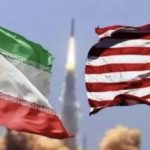
News Screen – The newly signed agreement between Iran and the United States to end the conflict in the Middle East faces serious challenges after follow-up negotiations scheduled to take place in Switzerland were postponed, while clashes between Israel and Hezbollah escalated again in South Lebanon.
The postponement of the talks comes amid rising political and security tensions, just days after the two countries agreed on initial steps to end the war that has rocked the region in recent weeks.
The Swiss Ministry of Foreign Affairs confirmed that the meeting which was scheduled to involve the delegations of the United States, Iran, Qatar and Pakistan in the Burgenstock area was postponed. However, the Swiss government stated that it remains ready to facilitate further dialogue if all parties have agreed on a new schedule.
Also Read: US-Iran Agreement Claimed to be Signed Soon, Trump Says the Strait of Hormuz Will Be Opened Again
Previously, United States Vice President JD Vance was scheduled to attend the negotiations along with a number of regional mediators. However, the White House announced the cancellation of the trip, citing logistical constraints and the complexity of the negotiation process.
On the other hand, Iran’s main negotiator, Mohammad Bagher Ghalibaf, warned that Tehran would give a firm response if there were violations of the terms of the agreement or demands that were deemed excessive.
This statement shows that trust between the two parties has still not been fully restored even though the agreement has been signed.
The Lebanese Conflict Heats Up Again
The situation became more complicated after the Israeli military launched new attacks on a number of locations claimed to be Hezbollah bases in South Lebanon. Lebanese health authorities reported at least 18 people died as a result of the attack.
Meanwhile, the Israeli military confirmed that four of its soldiers were killed in fighting in the South Lebanon region. The incident was the first Israeli casualty since the agreement to end the conflict was announced.
The development sparked strong reactions from a number of Israeli officials, including National Security Minister Itamar Ben Gvir who called for more aggressive steps towards Lebanon.
The latest clashes show that efforts to defuse tensions in the region still face major obstacles, especially because the conflict in Lebanon is part of broader dynamics in the Middle East.
Conditional Support from Iran’s Supreme Leader
Iran’s Supreme Leader, Ayatollah Mojtaba Khamenei, revealed that he gave his approval to the deal despite having a number of reservations.
According to him, the decision was taken after a commitment from the Iranian government to maintain national interests and the rights of the Iranian people at every stage of implementing the agreement.
Khamenei also assessed that Washington has a big interest in immediately ending the conflict which has incurred high political, economic and military costs.
The Strait of Hormuz is still in the spotlight
One of the important points in the Iran-US deal is the reopening of the Strait of Hormuz which during the conflict was a source of concern for global energy markets.
The United States military has lifted its blockade of Iranian ports. However, shipping activities in the Strait of Hormuz are reportedly still limited due to the new monitoring mechanism implemented by the Iranian government.
Apart from that, the agreement also includes a commitment to lifting oil sanctions against Iran and continuing discussions regarding Tehran’s nuclear program in the negotiation period for the next 60 days.
Although a number of initial steps have been taken, the postponement of negotiations in Switzerland and the resurgence of violence in Lebanon show that the peace process is still in a fragile phase and requires strong support from all parties involved.
International mediators are scheduled to meet in Egypt this weekend to discuss further steps to maintain the continuity of the agreement and prevent conflict from spreading again in the Middle East region.***