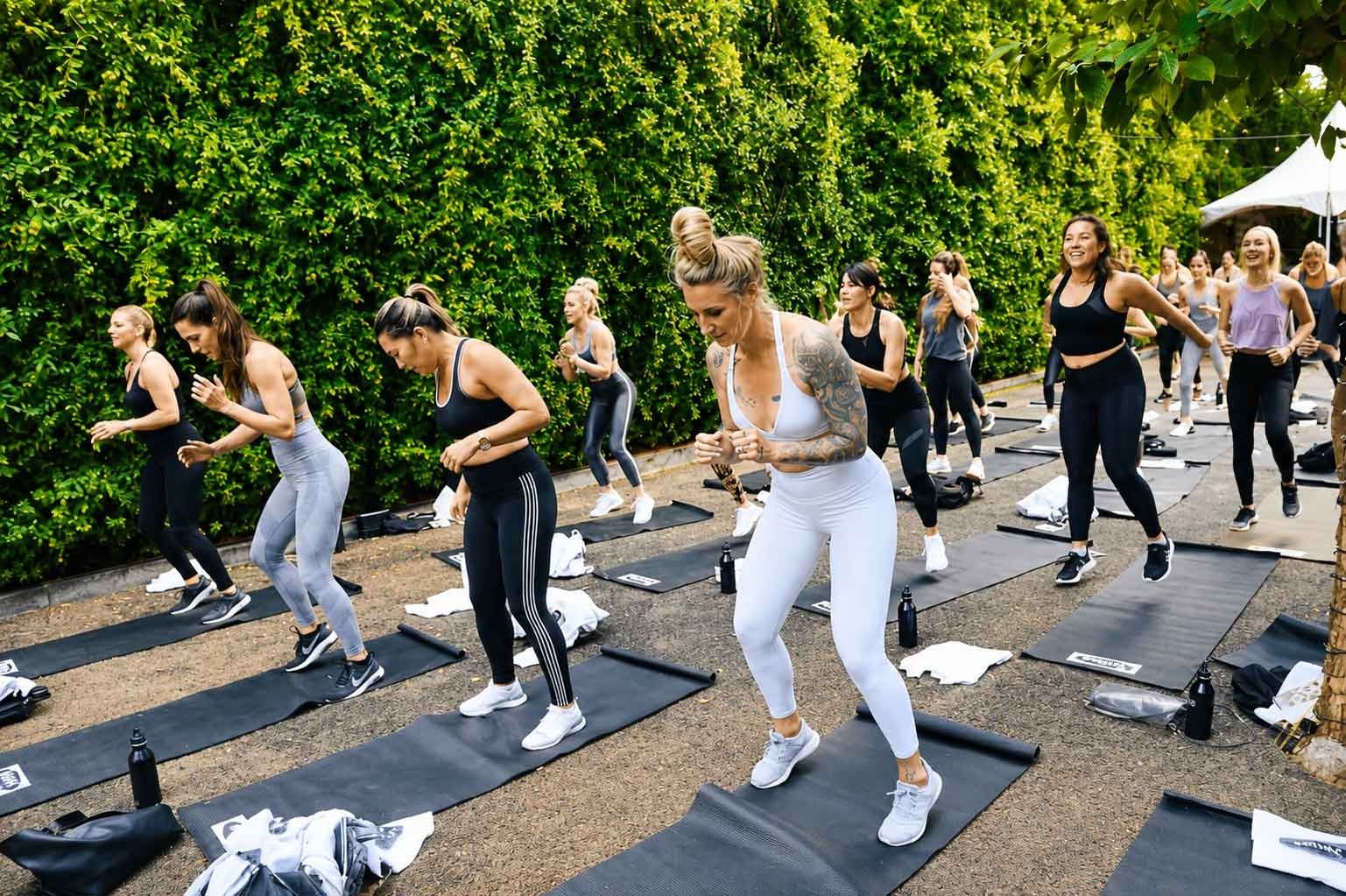
Concrete and asphalt surfaces are often avoided out of concern that they may damage the joints. Yet for some people, repeated impact with hard ground has become a powerful tool for extending biological longevity. In training studios, groups of middle-aged women can be seen deliberately performing jumps, landing firmly without cushioned surfaces. They are intentionally applying mechanical stress to skeletal systems that naturally become more fragile with age. This is more than just a fitness trend—it is a scientifically supported strategy for preserving physical independence well into old age.
For years, aging in women has commonly been associated with declining stamina, weakening bones, and the gradual accumulation of stubborn abdominal fat. However, this fatalistic view is increasingly being challenged by emerging research focused on the unique biology of women. In an in-depth interview titled “Dr. Stacy Sims: Jump Training, Brain Lactate, & Female Protein Needs” on The Unspoken Framework YouTube channel, Dr. Stacy Sims, a globally recognized expert in female exercise physiology and nutrition, explained that aging can be met with resilience when women understand how to apply the right type of external stress to their bodies.
One of the greatest health threats facing middle-aged women is osteoporosis. Once menopause begins, women may lose as much as 33% of their total bone mass in a relatively short period. Without proper intervention, this decline can continue to worsen. However, when combined with appropriate exercise, the risk can be significantly reduced. Rather than relying solely on hormone therapy, Dr. Sims recommends jump training for 10 minutes, three times per week. This exercise deliberately uses impact forces to stimulate new bone formation. Remarkably, research has shown that this method can restore bone density from osteopenia to normal levels in as little as four months.
HIIT Training
Bone health is not the only concern as women age. Brain health also becomes increasingly important. Genetically, women tend to have a more oxidative metabolism and fewer glycolytic—or fast-twitch—muscle fibers than men. This biological difference makes women more susceptible to age-related disruptions in brain lactate metabolism.
High-intensity interval exercises such as High-Intensity Interval Training (HIIT) and Sprint Interval Training (SIT) offer a biological solution. The powerful muscle contractions generated during these workouts stimulate lactate production, which research suggests plays a critical role in preventing cognitive decline and reducing the accumulation of amyloid plaques associated with Alzheimer’s disease.
Dr. Sims also addressed a common misconception about HIIT. Many people mistakenly believe HIIT simply means participating in nonstop circuit-style workouts until they are exhausted and drenched in sweat. In reality, true HIIT incorporates extended recovery periods, allowing the central nervous system and cellular energy systems to fully recover before the next sprint or high-intensity effort begins. According to Dr. Sims, an ideal weekly routine for women combines one to two days of high-intensity interval training with three to four days of functional strength training.
High-intensity exercise also plays a key role in reducing visceral fat, which commonly increases after the age of 40. As estrogen levels decline, women lose one of the body’s natural anti-inflammatory hormones. If they rely solely on prolonged moderate-intensity cardio, such as easy jogging, the body may respond by storing more fat around the abdomen. Sprint-based training, however, encourages muscles to undergo epigenetic adaptations, activating glucose transport mechanisms that enable the body to burn fat and carbohydrates directly without relying heavily on insulin.
Changes in exercise habits should be accompanied by improvements in nutrition. Dr. Sims emphasizes that women require significantly more high-quality protein than many previously believed—approximately 2 to 2.3 grams per kilogram of body weight per day. Adequate protein intake from both animal and plant-based sources, including tempeh, tofu, and green beans, is essential for preserving muscle mass and reducing levels of the stress hormone cortisol, which contributes to fat accumulation.
Ultimately, long-term health for women is not simply about achieving a slimmer physique or maintaining an attractive appearance. It is about creating molecular adaptations that allow the body to remain strong, the brain to stay sharp, and individuals to maintain independence and a high quality of life into their 80s and 90s. Women are encouraged to learn to recognize their bodies’ intrinsic signals and reject the notion that declining health is an inevitable part of aging.***