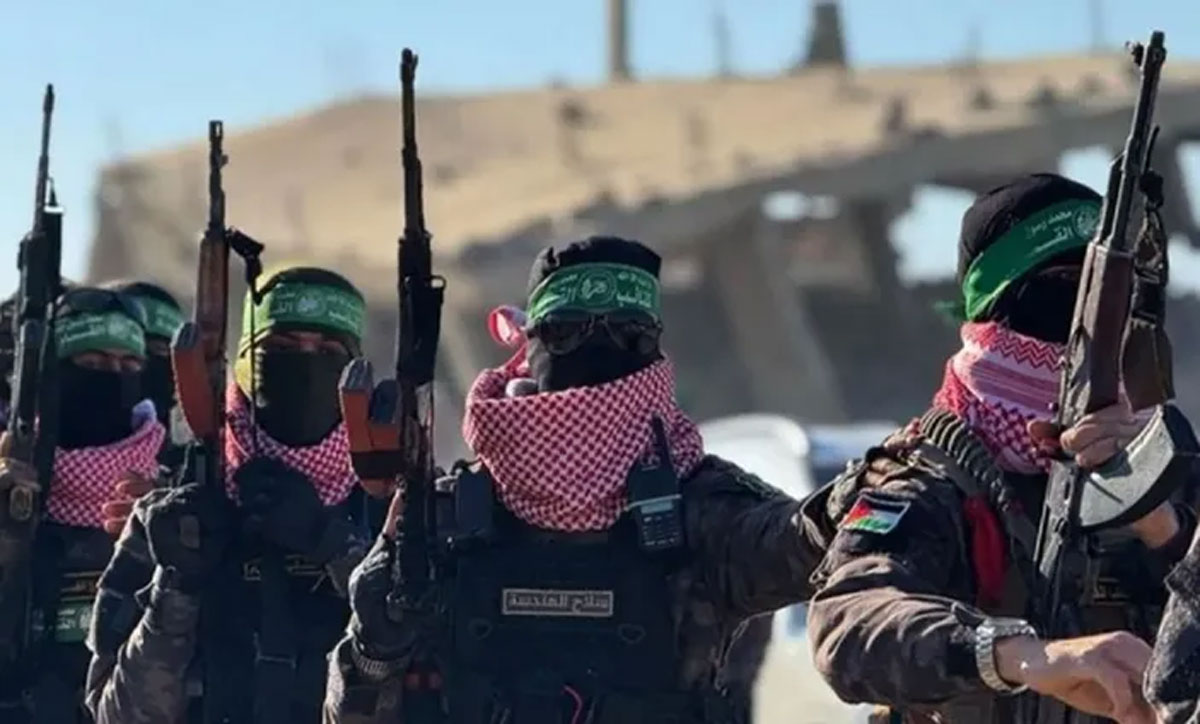
Hamas has announced its intention to relinquish control of the Gaza government after two decades in power and has invited a United States-backed transitional administration to assume responsibility for governing the Palestinian territory. The announcement was reported by The Guardian on Monday, July 6, 2026.
According to The Guardian, Mohammed al-Farra, the head of Hamas’ administration in Gaza, announced his resignation and the transfer of governing authority to an institution known as the National Committee for the Administration of Gaza (NCAG).
Al-Farra stated that Hamas would soon end its political oversight of the Gaza administration. However, civil servants and public service employees will continue carrying out their duties professionally until the NCAG officially assumes control.
“Hamas has taken a new step whereby it will no longer be responsible for the Gaza Strip, in order to remove any pretext for the occupation to continue its aggression and war of extermination,” Hamas spokesperson Hazem Qassem told AFP, as quoted in the report.
Viewed as Largely Symbolic
Several analysts believe the announcement is primarily symbolic and intended to revive the long-stalled peace process while paving the way for reconstruction efforts and the delivery of humanitarian aid to approximately 2.1 million residents of Gaza.
The move is also seen as Hamas’ response to an Israel-backed proposal that would reportedly limit both humanitarian aid distribution and the governing authority of the NCAG to only a small portion of Gaza under direct Israeli military control.
Although Hamas declared its willingness to relinquish political control of the government, it did not commit to unilaterally disarming, a key demand made by both Israel and the United States.
Hamas has previously maintained that it will not surrender its weapons as long as Israel continues to control more than 60 percent of the Gaza Strip and is accused of violating ceasefire agreements.
NCAG Has Yet to Enter Gaza
Despite the announcement, prospects for an actual transfer of power remain uncertain.
The NCAG operates under the supervision of the Peace Council, established by President Donald Trump as part of a ceasefire initiative mediated by his administration last October.
However, the committee’s 13 members, most of whom are Palestinian professionals, have reportedly been unable to enter Gaza because of restrictions imposed by the Israeli government under Prime Minister Benjamin Netanyahu since January. They are currently believed to be based in Cairo.
NCAG Chairman Ali Shaath wrote on social media that the committee is “fully prepared to assume its national responsibilities as soon as the necessary resources and capabilities become available.”
Meanwhile, the Peace Council responded cautiously to Hamas’ announcement, stating only that it had “taken note” of the declaration and emphasizing that its assessment would be based on concrete actions rather than statements alone.
Max Rodenbeck of the International Crisis Group said Hamas appears to be searching for a way out of the prolonged political deadlock.
“With no political horizon for the Palestinians, they cannot simply lay down their arms, but they can at least signal a willingness to relinquish political power,” Rodenbeck said, as quoted in the report.
Similarly, Muhammad Shehada, an analyst at the European Council on Foreign Relations, argued that Hamas is attempting to regain the political initiative while avoiding the implementation of what the United States has described as a “humanitarian city”—a plan that many critics argue would confine Palestinians to only a small section of the Gaza Strip.***