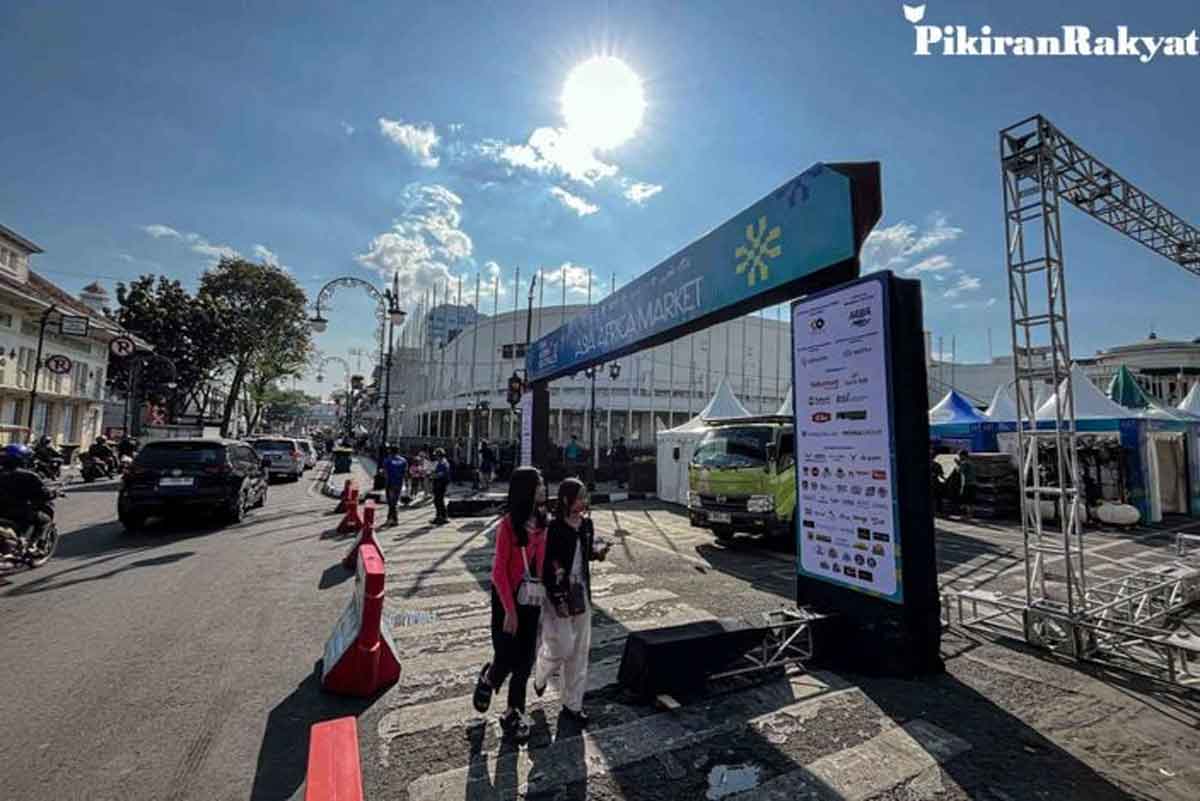
The Bandung City Government, through its Department of Culture and Tourism (Disbudpar), has officially proposed the historic Asia-Africa Conference (AAC) District for inclusion on the UNESCO World Heritage List.
Head of the Bandung Department of Culture and Tourism, Ir. H. Adi Junjunan Mustafa, M.Sc., said the Asia-Africa Conference site possesses outstanding universal value that is highly significant to global humanity. He emphasized that the principles embodied in the Ten Principles of Bandung (Dasasila Bandung), adopted during the 1955 conference, remain highly relevant to today’s geopolitical landscape.
“The Bandung City Government will collaborate with the central government—particularly the Ministry of Culture and the Ministry of Foreign Affairs—with full support from the provincial government to nominate the historic Asia-Africa Conference site, which carries unique values and profound significance for humanity, as a UNESCO World Heritage Site,” Adi said on the sidelines of a National Seminar at the Savoy Homann Hotel on Friday, July 10, 2026.
Adi added that efforts to preserve these historical values are being implemented through the Asia-Africa Festival, which will take place this weekend, July 11–12.
He stressed that the festival is designed to be much more than an annual entertainment event.
“This event is not merely about festivities or a carnival. It represents our commitment to preserving the historical legacy of Bandung as the birthplace of the Asia-Africa Conference and the Bandung Spirit,” he explained.
Heritage Experts Highlight Historical Layering and Legal Challenges
Although the nomination represents a major milestone, Dr. Woerjantari K. Soedarsono, a member of the Bandung Cultural Heritage Expert Team (TACB) and a lecturer at ITB’s School of Architecture, Planning and Policy Development (SAPPK), urged the government to proceed with caution.
According to Woerjantari, the Asia-Africa district contains multiple layers of historical significance, including the city’s Chinatown, the historic Pekojan quarter, the Alun-Alun (city square) area that reflects the colonial urban layout, and the Asia-Africa Conference site itself.
“The question is whether these historical layers have been properly identified. Among the many layers of history, which significance do we intend to emphasize? We must be extremely careful in conducting this assessment so that we do not repeat the experience of the earlier Jakarta Old Town nomination, which was considered lacking in authenticity because the area was too extensive, its identity was weak, and it had undergone too much 21st-century intervention,” Woerjantari explained.
Beyond defining the site’s boundaries, she also questioned whether the necessary legal and administrative requirements had been fulfilled before proceeding with a UNESCO nomination.
“One important question is whether a UNESCO nomination requires the area to first be officially designated as a National Cultural Heritage Area. Can the nomination proceed through the relevant authorities without first obtaining that cultural heritage status?” she said.***