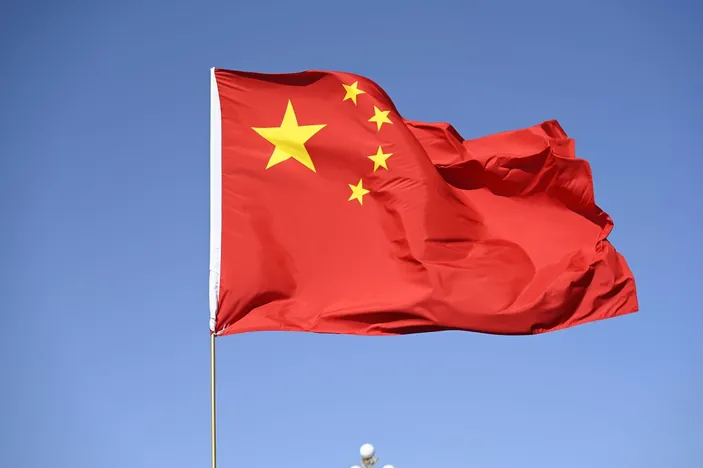
China has firmly rejected the United States’ latest decision to impose new import tariffs. Beijing argues that the unilateral policy will only worsen global trade relations without benefiting any party.
Chinese Foreign Ministry spokesperson Lin Jian stressed that China’s position on economic and trade relations with the United States has remained consistent over time.
“China’s position on China-U.S. economic and trade issues is very clear. We firmly oppose all forms of unilateral tariff imposition. Tariff wars and trade wars will never benefit anyone,” he said, as quoted by Reuters.
Despite issuing a strong protest, China’s Ministry of Foreign Affairs has not disclosed whether Beijing will immediately introduce retaliatory measures in response to Washington’s latest policy.
New U.S. Tariff Rules Target 60 Major Trading Partners
Washington officially imposed new import tariffs ranging from 10 percent to 12.5 percent on products from 60 of its major trading partners, effective Friday (July 24).
According to data from the Office of the United States Trade Representative (USTR), the countries affected by the policy account for nearly 99 percent of the total value of U.S. imports.
The United States claims the measure is intended as a sanction against countries that it believes have not done enough to prevent products made with forced labor from entering their markets.
The announcement of the new tariffs came just one day before the expiration of the 10 percent global tariff previously introduced by President Donald Trump in February.
The temporary tariffs were implemented following a U.S. Supreme Court ruling that overturned the previous reciprocal tariff policy, including duties related to fentanyl concerns on goods imported from China, Canada, and Mexico.
Differences in Tariff Rates
Under the new policy, China received no special treatment or exemption from Washington.
Chinese goods are subject to an additional 12.5 percent tariff, which is applied on top of existing import duties.
The United States said the tariff rates for each country were determined based on assessments of suspected forced labor practices within their respective jurisdictions.
The 12.5 percent tariff group includes China, Japan, the European Union, Australia, the Philippines, Switzerland, Taiwan, and Thailand.
Meanwhile, the 10 percent tariff applies to around 20 countries, including Indonesia, the United Kingdom, Malaysia, and Mexico, which are considered to have stronger legal frameworks for preventing and combating forced labor.
In Asia, countries such as Japan and South Korea fall into the higher tariff category.
However, products from those two countries that were already subject to tariffs of 12.5 percent or higher will be exempt from the additional duties.
U.S. Cites Forced Labor and Industrial Overcapacity Concerns
The aggressive measures introduced by the Donald Trump administration stem from trade investigations involving several global trading partners.
Washington alleges that many countries intentionally lower production costs through unethical forced labor practices.
In addition to labor concerns, the United States is also investigating alleged unfair competition resulting from industrial overcapacity in 16 major economic regions around the world, including China, India, Japan, Vietnam, and the European Union.***