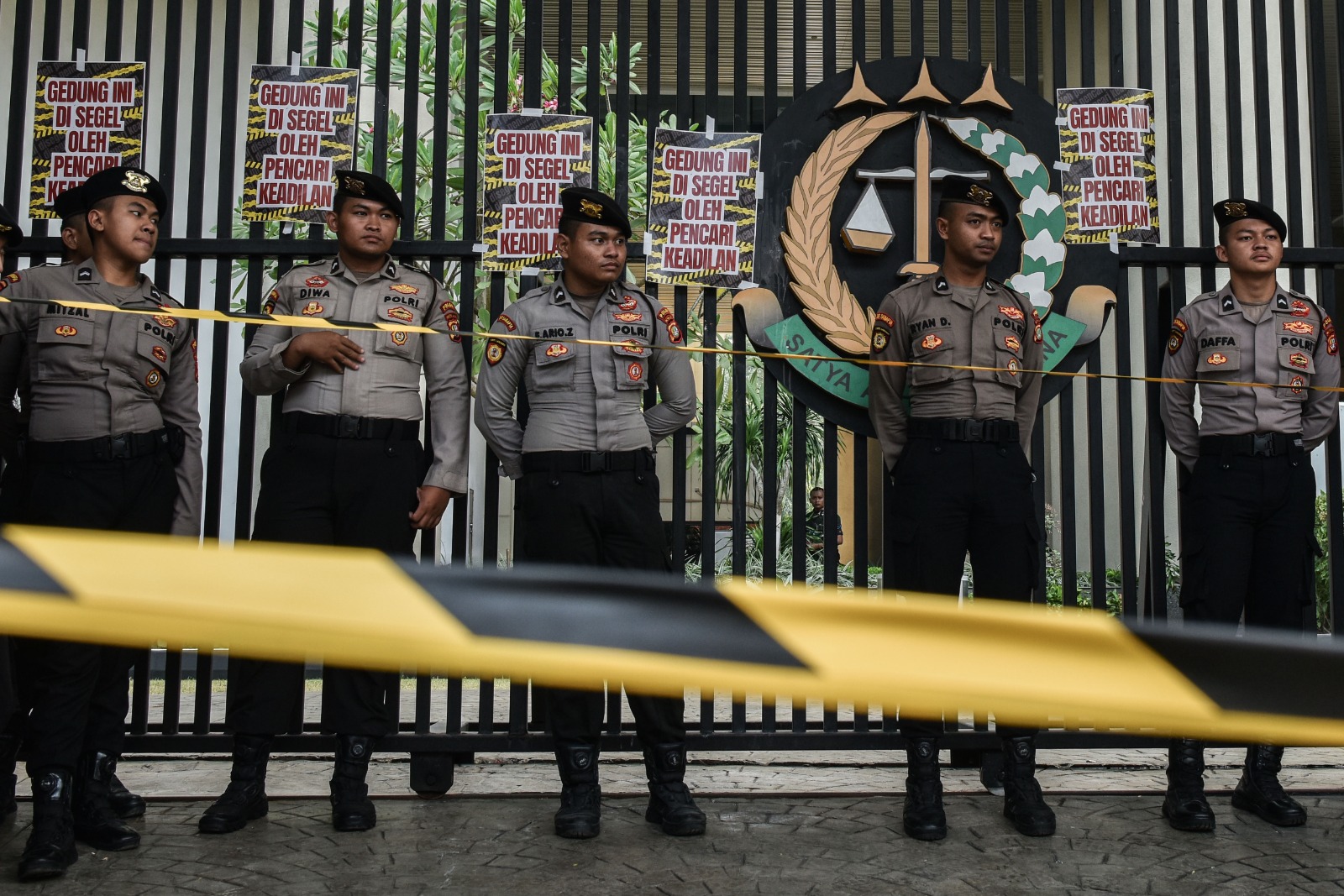
Corruption in Indonesia continues to raise serious concerns, underscoring the need for a firm commitment to law enforcement. Amid ongoing efforts to combat corruption, the proposed “peace fine” mechanism in the Prosecutors Bill (RUU Kejaksaan) has sparked heated debate. Critics argue that the provision could weaken the country’s commitment to fighting extraordinary crimes.
Member of the House of Representatives (DPR RI) Firman Soebagyo on Sunday, July 26, 2026, voiced strong criticism of the article that would allow certain cases to be resolved outside the court system.
According to him, the compromise clause, which would allow cases to be settled through the payment of fines, risks undermining the rule of law and tarnishing the spirit of Indonesia’s reform movement.
“The inclusion of a compromise provision for corrupt officials in the Prosecutors Bill, which regulates amnesty through fines, would seriously undermine the spirit of the rule of law. This will make it more difficult for President Prabowo Subianto,” Firman said in Jakarta.
Firman argued that combating corruption requires strong national leadership and cannot be carried out by a single institution alone.
The success of the anti-corruption agenda, he said, depends on the integrity of the president’s cabinet members, the transparency of law enforcement agencies, and public participation.
He therefore urged the House of Representatives and the government to review and revoke provisions that are open to multiple interpretations and could set a harmful precedent.
Legal Limitations
In reality, the peace fine mechanism is not a new concept in Indonesia’s legal system.
However, under previous regulations, the mechanism was never intended to grant amnesty for or terminate corruption cases.
According to information published by the Faculty of Law of Syiah Kuala University (FH USK), the mechanism for resolving cases outside the courts refers to Article 35 paragraph (1) letter k of Law No. 11 of 2021 on the Prosecutor’s Office, which was later reinforced by Article 66 of the New Criminal Procedure Code (Law No. 20 of 2025).
The application of the peace fine mechanism is subject to strict limitations and applies only to certain economic crimes.
Adopting the provisions of Emergency Law No. 7 of 1955, its scope is limited to cases involving customs, excise, and taxation.
Furthermore, under Article 66 of the New Criminal Procedure Code, the mechanism applies only to offenses punishable by a maximum prison sentence of one year or offenses carrying only monetary fines.
The provision is explicitly prohibited for corruption offenses because it directly conflicts with the principles set out in Indonesia’s Anti-Corruption Law.
In terms of authority and procedure, the discretion to apply the mechanism rests exclusively with the Attorney General, who holds the dominus litis principle, giving the office authority over criminal prosecutions.
Any delegation of this authority to provincial or district prosecutors’ offices must be based on official administrative law regulations.
The process of determining the amount of the fine must also involve the Ministry of Finance and other relevant institutions to ensure transparency, preventing decisions from being made unilaterally.
Although these legal safeguards have been explicitly established, calls to review the proposed legislation continue to come from civil society groups and members of parliament.
Clear legal boundaries are considered essential to ensure that the peace fine mechanism is not misused as a loophole for impunity, while safeguarding Indonesia’s anti-corruption efforts from compromise.***