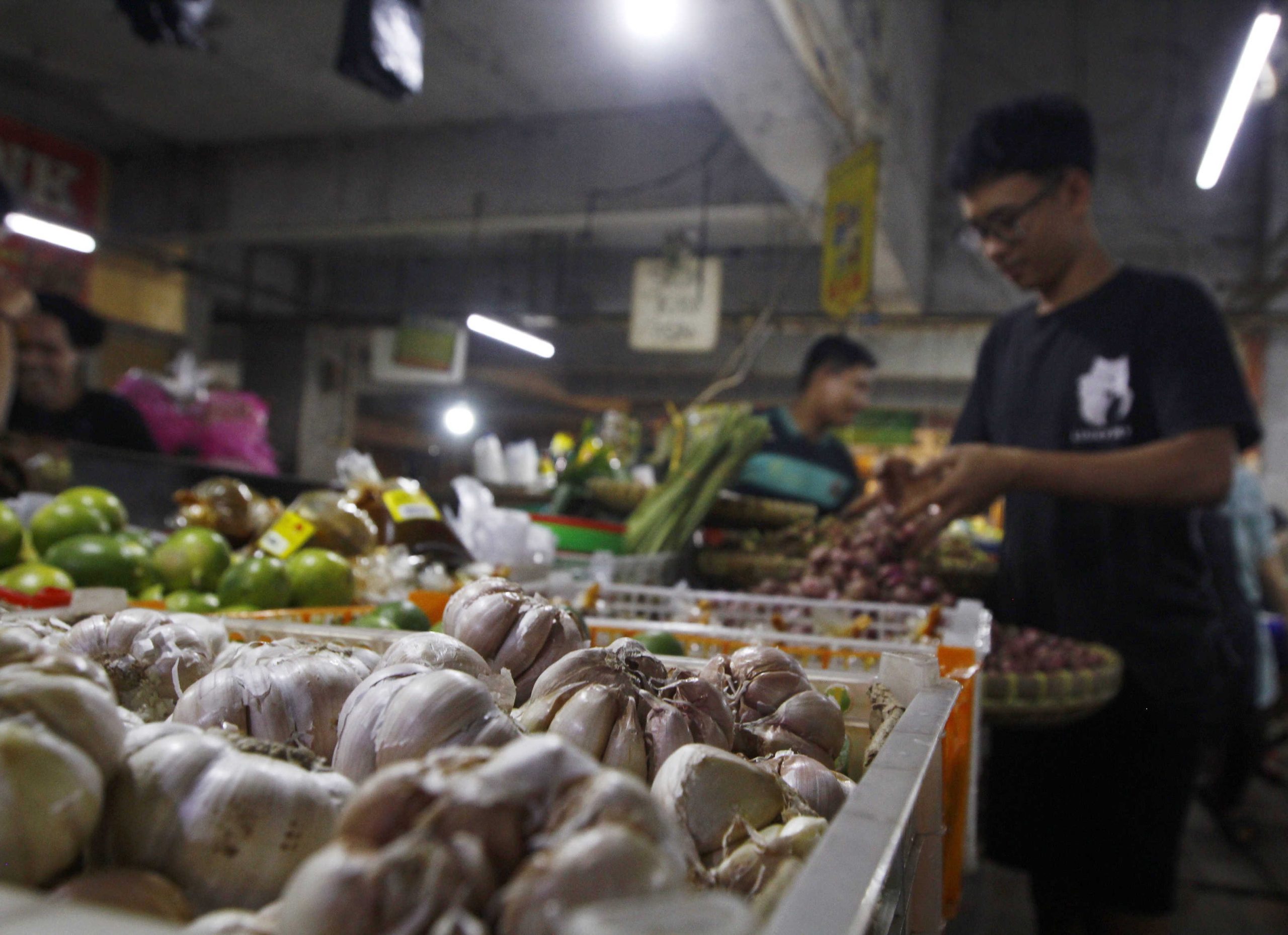
Several food commodities, including staple goods, have experienced price fluctuations in the week following the increase in Pertamax fuel prices. In fact, some food prices had already begun rising before the announcement of the fuel price adjustment.
One of the commodities affected is rice, whose price increase has caused concern among both merchants and consumers. This was conveyed by Rahmat Kurnia, a rice trader at Kosambi Market, when interviewed on Sunday, June 14, 2026.
According to Rahmat, rice prices have increased by Rp1,000 per kilogram across all varieties, with the exception of SPHP rice distributed by Bulog.
“However, I do not think the increase is related to the rise in Pertamax prices. My supplier informed me as early as June 6 that prices would be going up,” he said.
For Rahmat, an increase of Rp1,000 per kilogram is significant. Premium medium-grade rice is currently selling for around Rp15,000 per kilogram.
“I find it strange because the Minister of Agriculture said that the country has just completed a major harvest and that rice stocks are in surplus. As far as I know, when supply is abundant, prices should go down. But that is not what is happening. I do not know where the problem lies,” he said.
Rahmat added that he no longer sells Bulog’s SPHP rice because he feels the sales scheme and requirements imposed by Bulog are not suitable for his business.
He hopes the government can maintain price stability amid the current economic slowdown.
Meanwhile, Agus Juandi, a grocery merchants at Kosambi Market and Chairman of the West Java Traditional Market merchants Association (Apetra), said that packaged cooking oil is currently priced at Rp22,000 per liter.
Bulk cooking oil is selling for around Rp20,000 per liter, while Minyakita is priced at Rp15,700 per liter.
He also noted that cooking oil supplies remain abundant in the market despite prices remaining relatively high.
Vegetable Prices Also Fluctuate
Price fluctuations have also affected vegetable commodities.
Nita, a vegetable vendor, said that most vegetable prices have generally declined.
“Only a few items are becoming more expensive, such as carrots and garlic. As for garlic, I suspect the increase is linked to the strong U.S. dollar because garlic is an imported product. It is now selling for Rp45,000 per kilogram, compared to around Rp40,000 previously,” she explained.
She added that the suspension of operations at some Free Nutritious Meals (MBG) kitchens has also affected the prices of several vegetables.
For example, caisim (green mustard greens), which previously sold for Rp28,000 per kilogram when MBG kitchens were operating at full capacity, has now dropped to Rp8,000 per kilogram.
Other vegetables have experienced similar declines and are currently being sold at lower prices.
“Personally, I would prefer the MBG kitchens to be discontinued. That way, market merchants like us might also feel some impact. We were told that the MBG kitchens would help stimulate the economy for small merchant, but so far we have not experienced any benefits,” Nita said.
Egg Prices Decline, Imported Soybeans Become More Expensive
Meanwhile, Eeng, an egg merchants at Kosambi Market, said that egg prices are currently declining and are being sold at Rp27,000 per kilogram, down from the previous range of Rp28,000 to Rp30,000 per kilogram.
Following Eid al-Adha, he noted that egg prices have generally decreased and remained stable.
“In my opinion, egg prices are most stable when they are around Rp26,500 to Rp27,000 per kilogram,” he said.
The rising price of imported soybeans has also become a burden for merchants.
Angga, a mobile tofu and tempeh vendor, acknowledged the situation.
“Soybeans are now selling for Rp9,000 per kilogram. Previously, they were Rp8,000. The increase is quite significant and certainly affects production costs,” said Angga, who sells tofu and tempeh produced in Cibuntu.