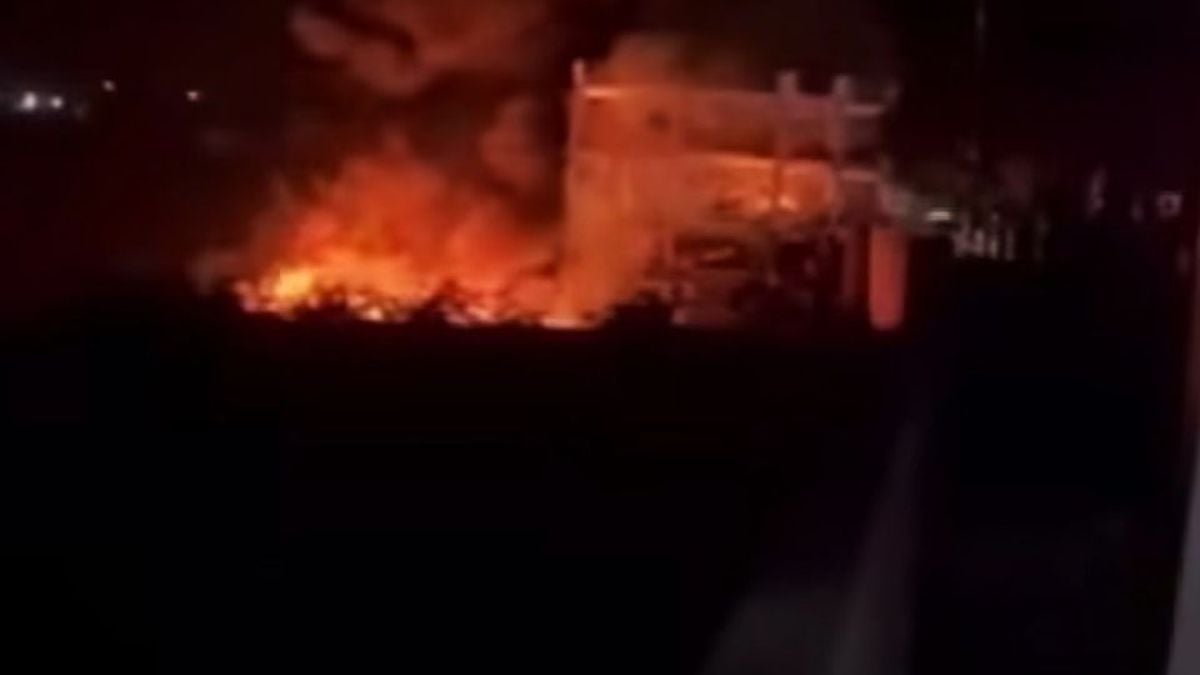
Bulukumba News – Dust still hung in the air in Beirut when the sound of the sirens had not stopped. Amid the rubble of a collapsed apartment, an emergency responder picks apart broken concrete with his bare hands, searching for signs of life among the heavy silence. Early morning, April 8 2026, the city had not yet had time to recover from the long night when another wave of air attacks came.
The sky, which was supposed to witness a ceasefire, instead turned into a missile trajectory.
Within hours, more than a hundred attacks hit Lebanon. And far away in Tehran, a response is starting to be drafted.
Also read: Not the Strait of Hormuz, this is the determining factor in the duration of the Iran vs Israel war
The ceasefire broke on the first day
The ceasefire agreement between the United States and Iran, which was announced to take effect on Wednesday, April 8, 2026, was supposed to be a break from the long tensions in the region. Pakistani Prime Minister Shehbaz Sharif, who acted as mediator, even emphasized that the agreement also included Lebanese territory.
However, the reality on the ground says otherwise.
According to Iranian state media reports, PressTVthe Israeli military continued to launch a massive attack on Lebanon on the same day. Local authorities reported at least 254 people killed in less than a day—a figure that illustrates the scale of the violence.
For Iran, this is not just a technical violation. This is a signal that the agreement is not being respected.
An Iranian official, in a broadcast on national television, expressed readiness to launch a full-scale defense operation if violations continued.
Also read: Iran chooses to respond to ‘tube water’ with ‘milk’? Four Indonesian Ships Allowed to Pass through the Strait of Hormuz
Hormuz Ultimatum
Amid rising tensions, the most worrying statement came from a threat to close the Strait of Hormuz—a narrow but vital passage connecting the Persian Gulf with the open sea.
The Strait of Hormuz is one of the most important energy distribution routes in the world. According to data from the US Energy Information Administration (EIA), around 20 percent of global oil passes through this strait every day. If this pathway is disrupted, the impact could be immediately felt on oil prices, global inflation, and the economic stability of many countries.
Iranian officials have publicly warned that closing the strait again is an option if ceasefire violations continue.
Calls were also directed to mediator countries to immediately intervene and stop the attacks.
Also read: Trump calls pilot rescue successful, Iran claims total failure
In Tehran, the tone of political statements grew louder. Iran’s Parliamentary Spokesman, Mohammad Baqer Qalibaf, openly stated that trust in the United States was declining.
He assessed that violations had occurred since the first day of the ceasefire, including attacks on Lebanon, sending drones into Iranian territory, and denying Iran’s uranium enrichment rights.
“In such a situation, a bilateral ceasefire or negotiations cannot be carried out,” he said, as quoted by Press TV.
This statement indicates one thing: the diplomatic space is starting to narrow. In fact, plans for peace talks are scheduled to take place in Islamabad on Friday, April 10 2026—an effort that is now at the edge of uncertainty.
Also Read: Iran’s Cheap Drones Paralyze Billion Dollar System: US Sophisticated Defense Questioned, Is Russia Involved?
This escalation does not only impact conflict areas. Countries that depend on the stability of global energy pathways are starting to prepare for the worst.
Disturbances in the Strait of Hormuz could trigger a spike in oil prices in a short time. Historically, tensions in this region have always been accompanied by volatility in the global energy market.
Apart from that, international trade routes are also threatened. Many cargo ships and tankers have had to reconsider their routes, increasing logistics costs and extending delivery times.
For countries in Asia, including Indonesia, the impact could be felt in the form of increased fuel prices and pressure on the domestic economy.***