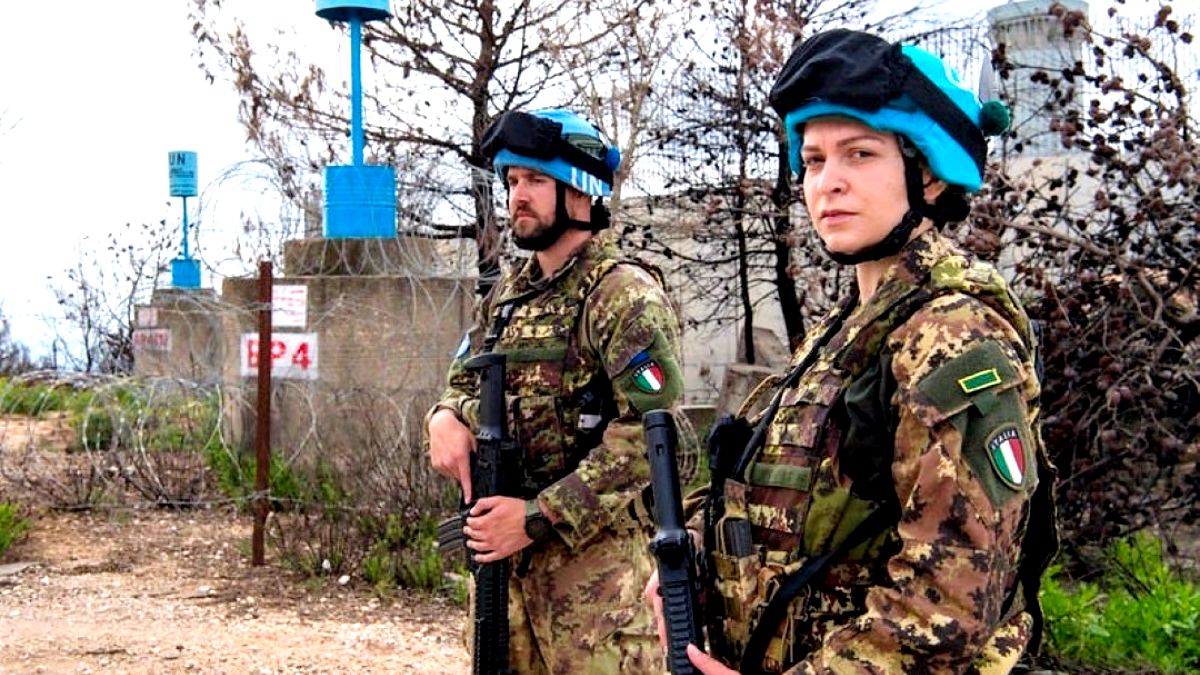
Garut PR- Lebanon’s skies roared again, not with a natural storm, but with the sound of weapons that shattered the sense of security in a region that had long been fragile. Wednesday (8/4/2026) became a tense day when the convoy of UN peacekeeping troops from Italy UNIFIL was suddenly stopped by a series of brutal gunfire from Israeli Zeionist soldiers.
The convoy leaving Shama for Beirut was supposed to be a symbol of hope, carrying personnel tasked with maintaining stability. But halfway through the journey, that hope turned into tense tension. The sound of gunfire broke the silence, forcing the vehicles bearing the UN logo to stop suddenly. The personnel inside were faced with a situation that could turn into a tragedy in a matter of seconds.
Also read: War in Lebanon escalates, explosion at UNIFIL headquarters again injures 3 Indonesian soldiers
Even though there were no casualties, the shadow of death felt very close. Several vehicles were reported to have suffered damage, providing clear evidence of how thin the line is between safety and disaster. In this critical condition, the convoy finally chose to withdraw, returning to base, leaving the road which had turned into a threat zone.
In Rome, anger erupted. The Italian government reacted quickly by summoning the Israeli ambassador, a diplomatic move that signaled the seriousness of the incident. Prime Minister Giorgia Meloni strongly criticized it, calling the ongoing attacks in Lebanon something that could no longer be tolerated. He warned that the conflict had claimed too many lives and forced an increasingly uncontrollable wave of refugees.
Also read: Israel continues to attack Lebanon, Iran threatens to close the Strait of Hormuz again and prepares a counterattack
Foreign Minister Antonio Tajani emphasized in a firm tone: peacekeepers are not targets. They were not there to fight, but to prevent the war from spreading further. However, the reality on the ground says otherwise – even symbols of peace are no longer immune from the threat of bullets.
Defense Minister Guido Crosetto called the incident “unacceptable,” a phrase that feels barely adequate to describe the gravity of the situation. Troops that should be protected by international mandates are instead trapped in the midst of a conflict that is increasingly out of control.
Also Read: Beirut Smoldering, Israeli Zeonist Air Strikes Again Terrorize Civilians in Lebanon
Meanwhile, on the other side of the border, Israel claims to have struck around 100 Hezbollah targets in one day, a major operation described as the most intense since the conflict with Iran escalated. This statement confirms one thing: the escalation is not subsiding, but continues to grow.
The shadow of tragedy becomes even more intense when remembering the previous incident. At the end of March, three Indonesian peacekeepers were killed in southern Lebanon, two of whom died as a result of an explosion that hit a logistics convoy. The incident is still fresh in memory, and now, a similar threat is returning to haunt us.
Also read: In the midst of conflict, the government ensures the repatriation of the bodies of 3 peacekeeping personnel in Lebanon
Lebanon has once again become a theater of global tensions, a place where the lines between war and peace are increasingly blurred. On the roads where humanitarian missions are supposed to pass, there are now traces of fear. And the big question hangs in the air, if peacekeeping forces are no longer safe, who is truly safe? ***