THE MIND OF THE PEOPLE – Iran has again sent a strong signal regarding the security of the Strait of Hormuz, one of the most strategic energy shipping lanes in the world. Iran’s First Vice President Mohammad Reza Aref emphasized that Tehran cannot guarantee security in the region if Iran’s oil exports continue to be restricted.
The statement came amid increasing geopolitical tensions and global energy market concerns about potential disruptions to world oil distribution.
“No one can limit Iran’s oil exports while expecting free security for others,” said Aref via the X platform, Monday, April 20 2026.
He added that security of the Strait of Hormuz is not free, a statement that many analysts see as a strategic message regarding Iran’s position in regional energy and security dynamics.
- Also read: The government continues to negotiate with Iran, persuading two Pertamina ships to pass through the Strait of Hormuz
Strait of Hormuz, Vital Route of World Oil Supply
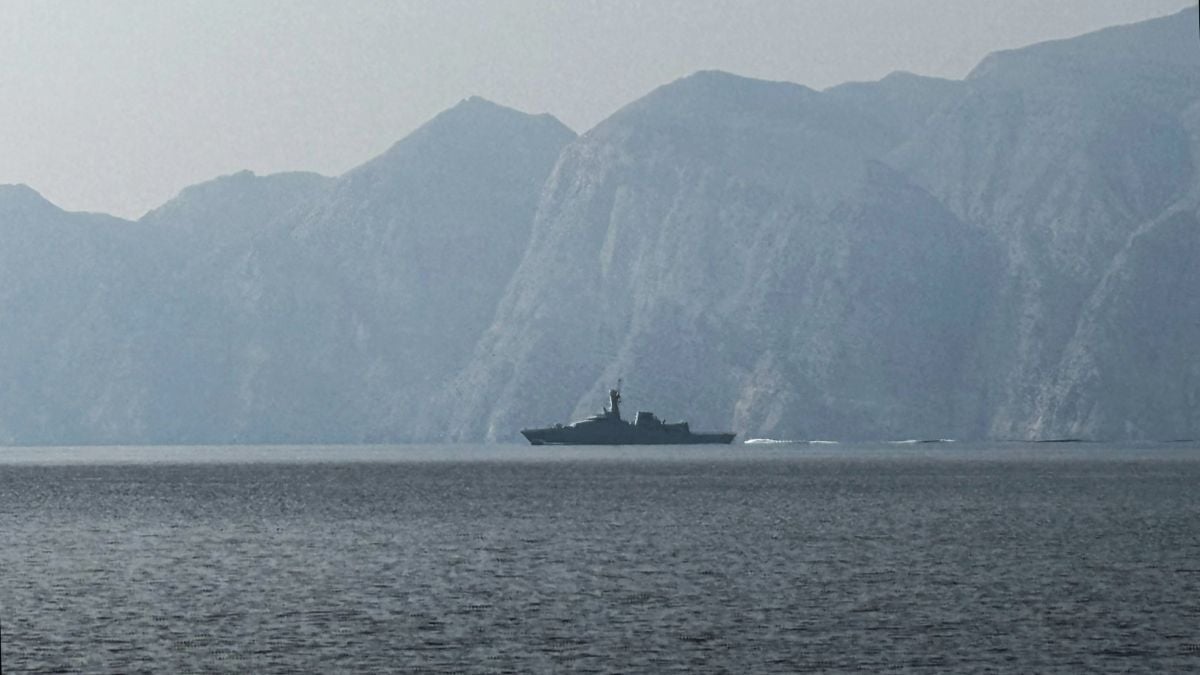
The Strait of Hormuz has a very important position in global energy trade. The narrow route connecting the Persian Gulf with the Arabian Sea is the main route for shipments of crude oil and liquefied natural gas from major producing countries in the Middle East.
Most energy exports from the region, including from Saudi Arabia, the United Arab Emirates, Kuwait, Iraq and Iran, pass through these waters.
Therefore, any threat to stability in the Strait of Hormuz almost always triggers global market attention. Concerns about shipping disruptions in this region have the potential to drive up oil prices and put pressure on international energy supply chains.
In his statement, Aref said that the world is now faced with two choices: an oil market that is open to all parties or large costs that must be borne together.
- Also Read: Iran Rejects Peace Talks with the US, Tensions in the Strait of Hormuz Increasingly Hot
The message emphasized that the issue of Iran’s oil exports and the security of Hormuz were considered to be interrelated.
Pressure on Iran and its Impact on Energy Stability
Iran also linked the stability of global fuel prices to the cessation of economic and military pressure on the country and its allies.
This statement came after the situation in the region heated up following military escalations between Iran, the United States and Israel in recent months.
Tensions rose after a joint US-Israel military operation in late February sparked a retaliatory response from Tehran. The conflict was followed by the announcement of a two-week ceasefire on April 8 through Pakistani mediation.
Although the diplomatic break has opened up space for dialogue, previous negotiations have not resulted in an agreement. The new round of talks in Islamabad is seen as an important momentum to ease tensions.
On the other hand, the naval blockade against Iran imposed by the US since April 13 adds to the complexity of the situation.
- Also Read: The Mystery of Betting IDR 16 Trillion at the Polymarket, Which Always Knows About the Iran War Before the Public
For the market, a combination of geopolitical pressures, threats to shipping lanes, and negotiation uncertainty are factors that continue to be watched.
What are the impacts if Hormuz is disrupted?
Disruptions in the Strait of Hormuz could have far-reaching impacts, not only for oil producing countries, but also global consumers.
If this route is disrupted, crude oil deliveries could be hampered, logistics costs increase, and energy prices soar. This condition has the potential to trigger inflationary pressures in many countries.
For energy importing countries, including in Asia, developments in Hormuz are very relevant because they affect energy costs, industry and domestic fuel prices.
Therefore, every official statement from Tehran regarding the security of Hormuz usually immediately attracts the attention of the market and international diplomatic players.
Political Signal or Strategic Threat?
A number of analysts believe that Iran’s statement can be read as a political signal to increase its bargaining power in negotiations, not just a direct threat to shipping.
- Also read: Iran carries out diplomacy and is on military alert: Qalibaf asserts full control of the Strait of Hormuz over the US
However, in highly sensitive regions such as the Persian Gulf, political rhetoric often has a real impact on risk perceptions.
That is why the international community is paying great attention to the development of Iran’s relations with the US and its regional partners.
The World Awaits the Direction of Negotiations
The focus is now on the next round of negotiations. If diplomacy moves positively, tensions can ease and concerns about world oil supplies are reduced.
However, if negotiations are deadlocked again, the issue of Tehran not guaranteeing the security of Hormuz if Iran’s exports are restricted could become a factor that continues to haunt the global energy market.
In this context, the Strait of Hormuz is not just a shipping route, but also a meeting point between geopolitics, diplomacy and world economic stability.
What happens in that narrow waterway could have ramifications far beyond the Middle East—to energy prices, global inflation, and the direction of the international economy.***