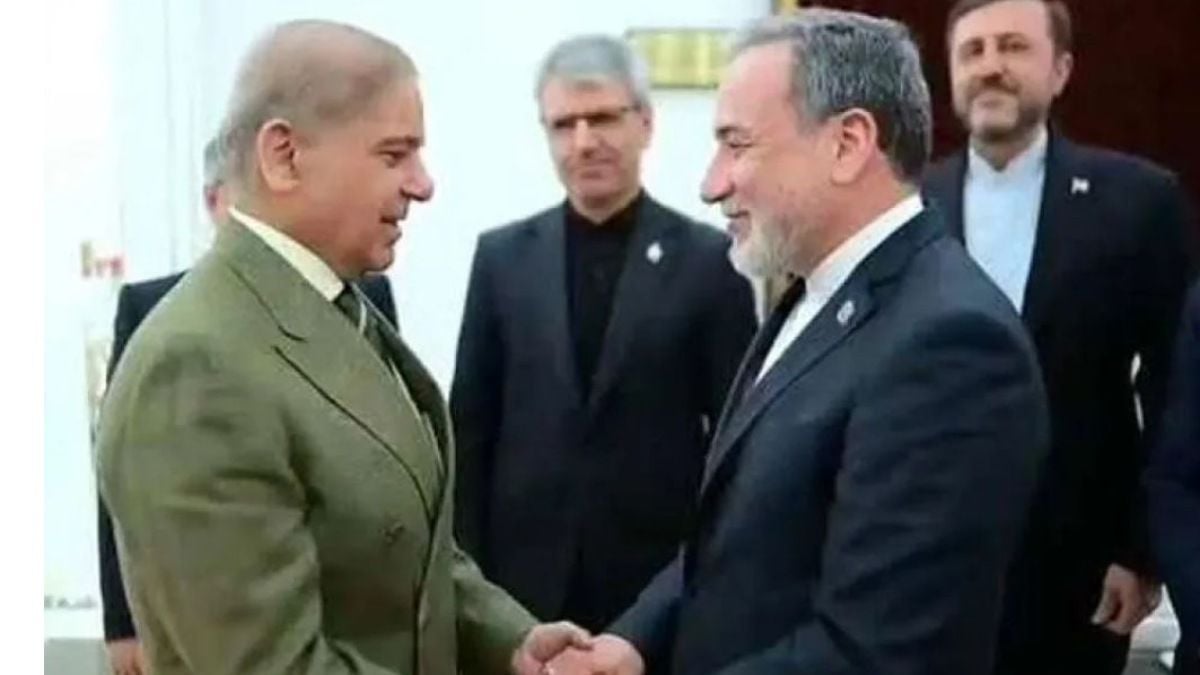
PRIANGANTIMURNEWS – Tensions between Iran and the United States have not really subsided. In the midst of the still heated situation, Tasnim News Agency reported a new step in Tehran’s diplomacy: Iranian Foreign Minister, Seyed Abbas Araghchi, visited Islamabad again on Sunday, April 26 2026.
His mission was not just an ordinary visit but to bring an “important message” about the conditions for ending the conflict to the United States, with Pakistan as an intermediary.
Interestingly, this visit is said to have nothing to do with the nuclear issue which has often been in the world spotlight. This means that there is another, more pressing and perhaps more sensitive agenda at play behind the scenes of regional diplomacy.
Also Read: Cabinet Reshuffle: Prabowo Entrusts Strategic Positions to Key Figures, from Generals to Activists
During the meeting, Araghchi not only discussed bilateral relations with Pakistan. He also brought up a number of crucial issues that could be the key to peace, starting from the implementation of Iran’s new legal system in the Strait of Hormuz, demands for war compensation, to guarantees that similar aggression would not be repeated.
No less important, Iran also highlighted the lifting of the blockade carried out by the United States Navy, a step that had been putting pressure on Tehran’s vital economic lifeline.
This visit is not the first in the near future. Previously, Araghchi had already met with Pakistani Prime Minister Shehbaz Sharif and Chief of Army Staff Asim Munir.
Also Read: Bahlil Claims National Energy is Stable, But LPG Dependence is Still a Time Bomb
In fact, he stopped in Oman before returning to Islamabad to continue intensive communication. This shows that diplomacy is now moving fast and may be a race against time.
After Pakistan, Russia will be the next destination. This step signals that Iran is building a regional communications axis to strengthen its position in global negotiations.
The background to this conflict cannot be separated from the major attack in the joint US-Israel attack on Iran in 2026. At that time, the United States and Israel attacked Tehran and other cities, killing Iran’s Supreme Leader, Ali Khamenei, as well as a number of high-ranking officials and civilians.
Also Read: Hajj News: 125 Thousand Indonesian Pilgrims Free from Immigration Queues in Saudi Arabia
Iran is not remaining silent. Retaliatory attacks in the form of missiles and drones were launched against Israel and US assets in the Middle East. In fact, Iran tightened control in the Strait of Hormuz by restricting ships affiliated with the two countries, a step that immediately rocked global trade routes.
There was hope when a ceasefire was implemented on April 8, followed by negotiations in Islamabad on April 11–12. However, the negotiations failed to reach a consensus.
Instead of easing, pressure actually increased after the United States tightened the blockade in the Strait of Hormuz, blocking access for ships to Iranian ports.
Will diplomacy through Pakistan be able to break the deadlock? Or will this conflict escalate again and drag in more global actors?
One thing is certain, the Strait of Hormuz is not just a sea route, it has turned into the main stage of attraction for world interests. And every decision taken today could have an impact far beyond the Middle East.***