Serving as the Head of the Food Security and Agriculture Department (DKPP) of West Bandung Regency since 2023, DR. H.M. Lukmanul Hakim, M.Si. has faced a number of challenges. Various issues such as the damaged condition of irrigation channels and land conversion into housing/residential areas must be resolved by the man who was born in Bandung 57 years ago.
Clearly, Lukman stated that the focus of the institution he leads is to increase the productivity and competitiveness of integrated agricultural products through modernization and technology implementation, as well as the timely provision of facilities and infrastructure in terms of quantity and quality.
“As well as maintaining the price stability of staple foods and controlling inflation,” Lukman said when contacted on Thursday, June 18, 2026.
This, he said, is in line with the Regional Medium-Term Development Plan (RPJMD) of West Bandung Regency (KBB), West Java, and the central government. In the RPJMD of West Bandung Regency, the policy direction in the food and agriculture sector indeed focuses on increasing the capacity of human resources (HR) of farmers, strengthening basic infrastructure, downstreaming products, institutional collaboration, and technology utilization.
Meanwhile, in the West Java Provincial RPJMD, the strategy and policy direction in the agricultural and food sectors are directed toward increasing the productivity of rice farming and other commodities to support food self-sufficiency, strengthening value-added industrial ecosystems, and creating food barns.
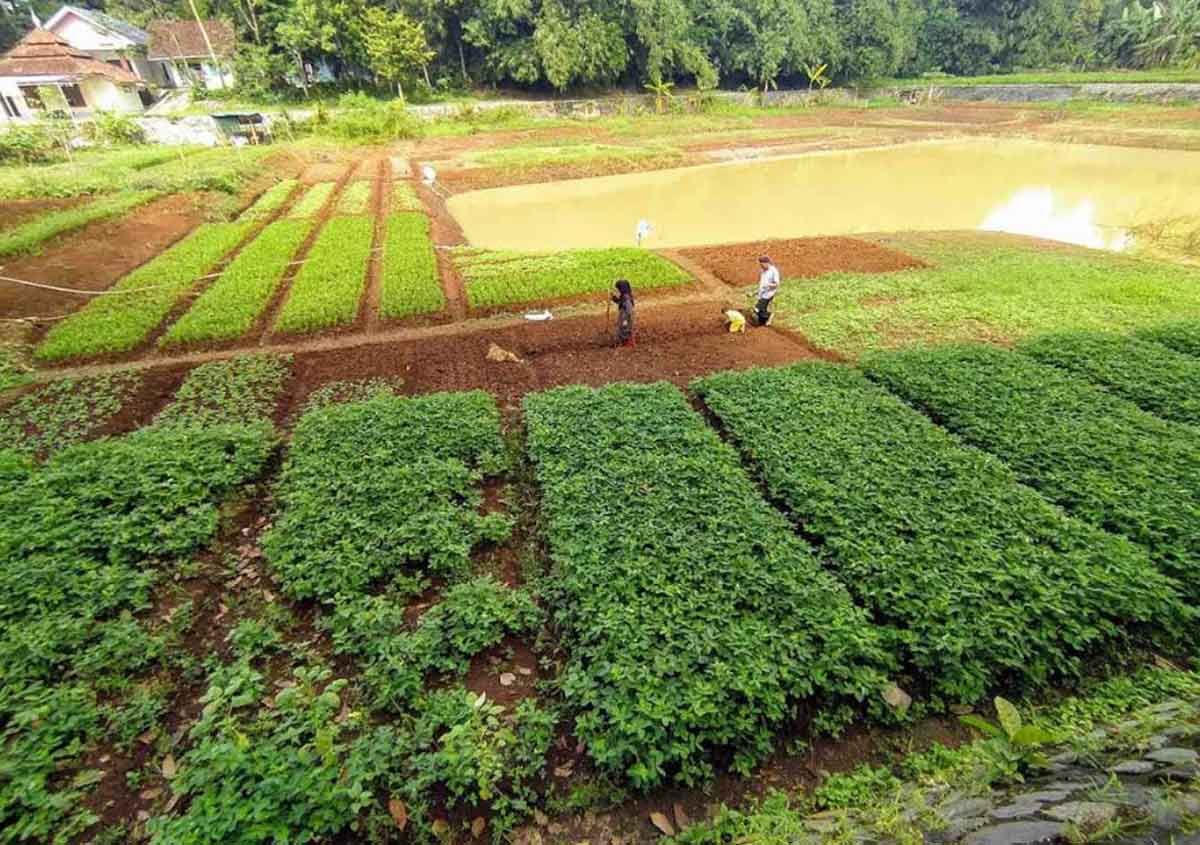
According to Lukman, West Bandung Regency is an agrarian-characterized regency with agroclimatic conditions that support the cultivation of food crops, horticulture, floriculture, and plantation commodities.
“In terms of socio-cultural aspects, West Bandung Regency has adequate agricultural human resources, agro-tourism potential, as well as a strategic administrative location as a buffer zone for the provincial and national capitals. This eases the market share for agricultural products,” he said.
Various Efforts
Regarding various problems in the agricultural sector, various efforts have also been made by DKPP KBB. In handling the damaged irrigation channels in the Pasir Angin area, Cipatat, and Bunijaya, Gununghalu, for example, Lukman said his institution is cooperating with the West Java Provincial Government and the central government (BBWS Citarum, the Ministry of Public Works, and the Ministry of Agriculture).
The repair matters for the Pasirangin Irrigation Area (DI) in Cipatat and the Martasinga Irrigation Area (DI) in Gununghalu fall under the authority of the Ministry of Public Works. “The Food Security and Agriculture Department has carried out coordination, reporting, and submission of repair proposals for these irrigation channels through the Sipuri application,” he said.
DKPP KBB has also carried out the revitalization of tertiary irrigation channels in 11 irrigation channels with a budget allocation worth Rp 1.8 billion. Regarding the issue of land conversion, a number of efforts have also been made.
The West Bandung Regency Government, for instance, compiled the West Bandung Regency Regional Regulation Number 7 of 2019 concerning the Protection of Sustainable Food Agricultural Land. “As a follow-up to this regulation, mapping of prospective food agricultural land to be designated as LP2B (sustainable food agricultural land) has been carried out in Gununghalu and Rongga Districts,” Lukman said.
Other efforts pursued include providing counseling for farmers and land-owning communities, as well as increasing land productivity and ensuring price and market certainty. “Farmers are given counseling on the importance of maintaining agricultural land to preserve family, regional, and national food security. To increase land productivity, the Food Security and Agriculture Department provides assistance facilities as resources,” he said.