SOREANG JOURNAL – The Ministry of Basic Education, through the Directorate General of Secondary Education and Special Education, continues to emphasize its commitment to strengthening the quality of vocational education in Indonesia.
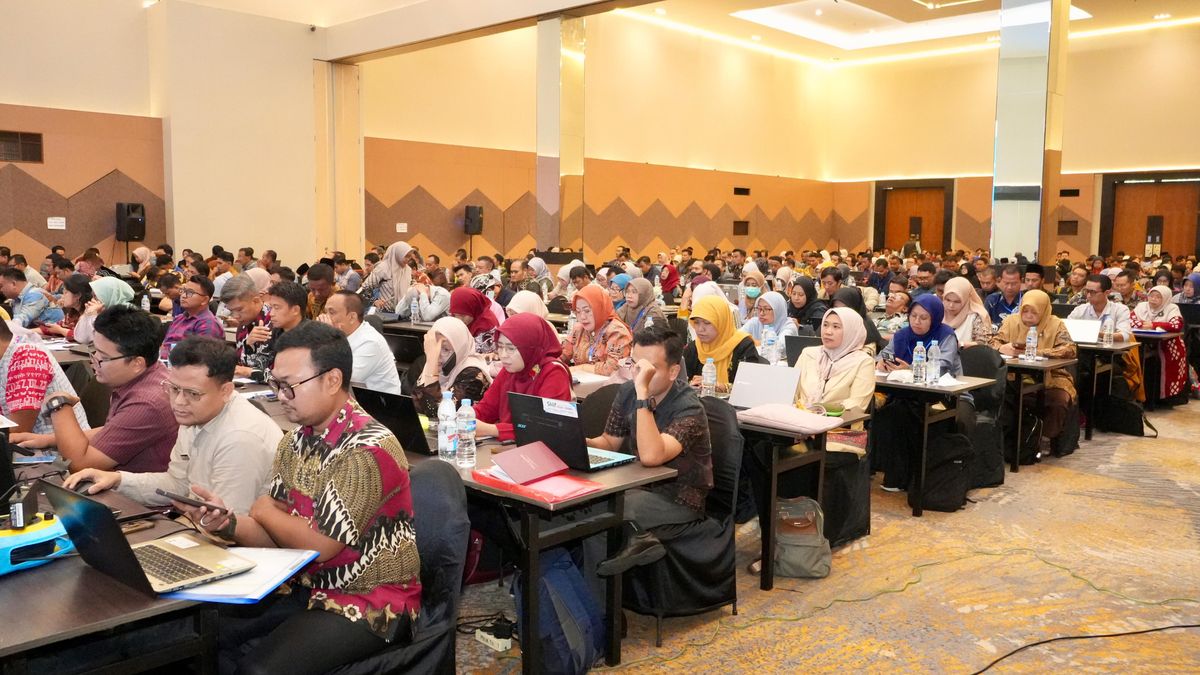
This commitment was proven through the 2026 Technical Guidance (Bimtek) Government Assistance Program for Competency Certification and Foreign Language Certification for Vocational School Students which was officially opened by the Deputy Minister of Primary and Secondary Education (Wamendikdasmen), Fajar Riza Ul Haq, in Tangerang, Banten, recently.
In his speech, Deputy Minister Fajar highlighted the importance of changing the paradigm for vocational school students to be able to compete on the international stage. This year, the Ministry of Basic Education provided an aid budget for vocational schools of more than IDR 112.5 billion for competency certification for vocational school students and IDR 75 billion for foreign language certification for vocational school students as a concrete form of the government’s support for vocational education in the midst of the global crisis.
Also Read: First in Bandung, Commitment to Caring for Maxim’s Education and West Java Education Department Holds Smart Quiz Between Vocational Schools
“This step was taken to ensure that vocational school students have strong capital to enter the increasingly dynamic world of work,” said Deputy Minister of Basic Education, Fajar Riza Ul Haq.
Regarding Government Assistance Technical Guidance, Deputy Minister Fajar emphasized that this activity was one of the Ministry of Basic Education’s efforts to address the large opportunities for vocational school graduates to be able to compete in the international job market.
The Ministry of Basic Education wants to encourage foreign language simplification programs and strengthen technical competencies so that vocational school graduates can enter the global talent supply chain.
“We can work in our hometown, in the village, or in any area, but the perspective must be with a global paradigm. We want vocational school students to have strong hard and soft skills, a competitive mentality, and the ability to adapt quickly,” he said.
Also Read: Realizing Equal Distribution of Educational Facilities Through Revitalization and Digitalization of Vocational Schools in the Eastern Region of Indonesia
Concluding his remarks, Deputy Minister Fajar hoped that vocational school educational institutions could become an ecosystem that builds a productive culture and enthusiasm for fast learning.
“In addition to working as formal migrant workers, vocational school graduates are also encouraged to strengthen the Indonesian middle class through entrepreneurial channels. Therefore, it is important to provide recognition of competence and foreign language skills in a certification,” explained Deputy Minister Fajar.
Meanwhile, the Director General of Secondary Education and Special Education, Tatang Muttaqin, said that optimizing the potential of vocational school graduates is a necessity amidst geopolitical dynamics and imbalances in global labor supply. Vocational school graduates are expected to not only have vocational skills, but also superior character and high adaptability.
“The government highlights that mastery of a foreign language is the main key for vocational school graduates to penetrate the global market. This year, the Ministry of Education and Culture allocated foreign language certification assistance with an approach that includes English and other foreign languages such as Japanese, French, Mandarin and German,” explained Director General Tatang.
Also Read: Bandung Regency Ministry of Religion Gives Thumbs Up to Al Wafa Ciwidey Vocational School which Holds Tahfiz Exam
Director General Tatang added that the assistance provided in 2026 targets a wider reach compared to the previous year which reached 100 thousand participants.
He explained that the reach had increased to 250 thousand students so that the representation of vocational school graduates who were competent in terms of foreign languages and vocational competencies was evenly distributed from various regions in Indonesia.
“This activity is also a forum for school principals to harmonize technical matters and ensure that assistance is implemented according to standards. Each participant can also share good practices in order to continue to create great vocational school graduates. In this way, vocational school graduates can fill strategic positions in the global industrial sector and contribute directly to national economic growth,” concluded Director General Tatang.***