Bulukumba News – The courtroom door had not yet been opened when news of death came first. In Washington, a schedule of testimony that should have been in the public spotlight was suddenly missing one important name. A United States Air Force officer, who was said to have sensitive information about unidentified aerial phenomena (UAP) or UFOs, reportedly died suddenly. No long statements. Just a pause—and a lingering question.
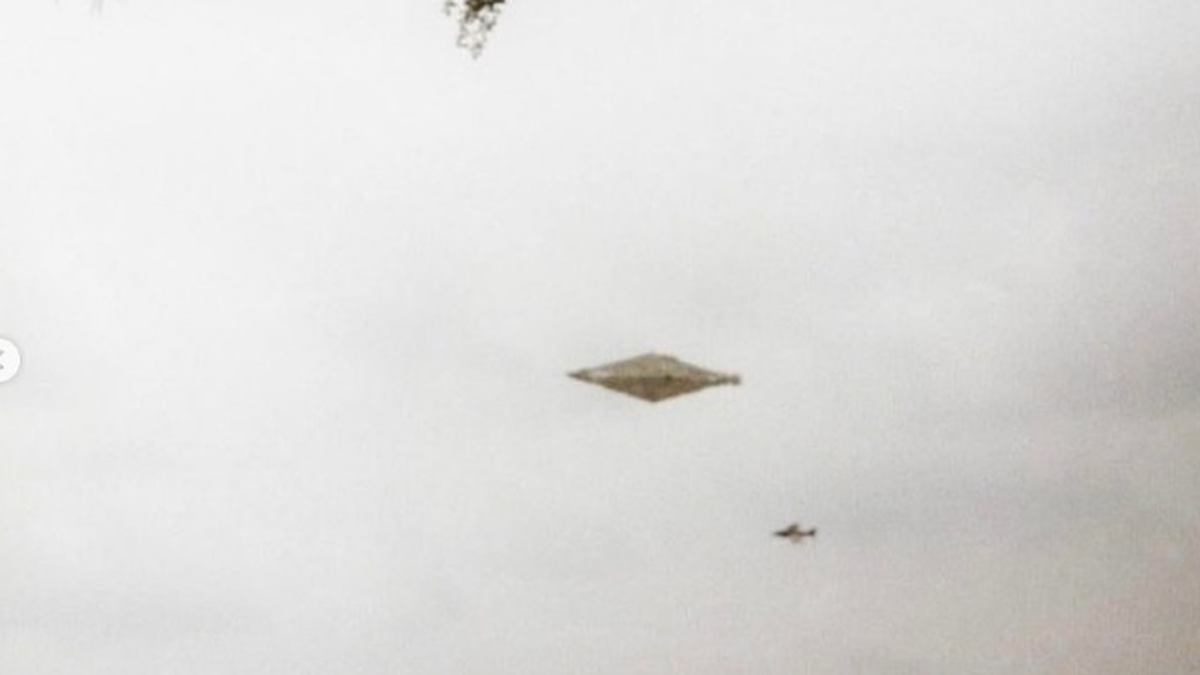
Outside the building, the UFO issue or what is now called UAP is circulating again, this time with a darker tone. It’s no longer a matter of what is visible in the sky, but who dares to talk about it.
Report quoted from Daily Mail stated that this death occurred just before his scheduled testimony before the legislative branch of the United States Congress. Too close together to ignore.
Also Read: Secret Traces in the Epstein Archives: Fantastic Funds to Debut UFOs and Aliens Revealed
Pressure on UAP whistleblowers and personal security risks
Investigative journalist Jeremy Corbell, who has been investigating the UAP issue for a long time, said that the pressure on whistleblowers cannot be taken lightly. In his interview, he described risks that go beyond simply losing a job.
“They gave up security clearance, security, and even risked their families just to tell the truth,” he said.
The statement opens up another side of the UFO narrative that is rarely discussed. Individuals who claimed to have information about secret government programs faced not only public skepticism, but also pressure that they characterized as systematic intimidation.
In recent years, the UAP issue has shifted from fringe theory to official discussion. Since the 2021 Pentagon report acknowledged the existence of unidentified air objects, the US Congress has begun to open hearing rooms. However, this openness does not necessarily eliminate risks for those directly involved.
Also read: Westall UFO Mystery: Dozens of Students Witness Flying Saucers, but Was the Government Deliberately Covered Up?
The impact of the death of a key witness on transparency and public policy
The sudden death of this key witness adds another layer of suspense. Not only does it delay the testimony process, but it also raises questions about how far protection for whistleblowers really goes.
In the United States legal system, protection for whistleblowers is regulated, but its implementation is often contentious. Especially if the information conveyed concerns national defense and security issues.
Several policy analysts, as quoted in a Congressional Research Service report (2025), say that sensitive cases often fall in the “gray area” between public transparency and state secrecy. It is in this space that conflicts of interest arise.
Also Read: US Vice President JD Vance Calls Aliens ‘Devils’, Promises to Dismantle Government UFO Archives
The death of a witness before providing public testimony is not only a loss of the individual, but also the potential loss of information that may never come to light.
Behind the debate about UFOs, there are humans who have to choose between silence or speaking out. That choice, in some cases, does not come without consequences.
When a voice is lost before it can be heard, what remains is not just speculation. There is an empty space in trying to understand something that has been hidden. And in that space, questions continue to swirl—no longer about what’s in the sky, but about what’s happening behind it.