THE THOUGHTS OF THE PEOPLE OF SULTENG – Today the international world is witnessing a new chapter in the increasingly complicated geopolitical struggle in the Middle East. Based on periodic reports from the channel The Geopolity As of the end of May 2026, it will have been six months since the creation of the body initiated by United States President Donald Trump, known as Board of Peace (Peace Council).
This body was initially hailed as a new blueprint for the post-ceasefire agreement in October 2025, with sweet promises to bring a safe, stable and prosperous future for the Palestinian people in the Gaza Strip. However, the reality on the ground speaks otherwise. The first six-month progress report submitted to the UN Security Council suggests that stability is a mirage.
international humanitarian monitoring agency, Human Rights Watchunequivocally stated that the vital infrastructure that sustains life in Gaza is in extremely critical condition. Even though the administrative management of Gaza has been taken over under the shadow of influence from the United States, the Israeli authorities are still systematically seen to be undermining and narrowing the humanitarian aid pipeline.
Also Read: United States Strategic Defeat in the Strait of Hormuz and Restructuring of the New World Order
Strict restrictions on the entry of basic supplies, such as electricity generators, engine oil and spare parts for heavy equipment, have paralyzed the health service system, environmental sanitation and the process of cleaning up building debris. As a result, refugee camps now face secondary threats in the form of exploding insect and rat populations, which have triggered the spread of skin infections and various other infectious diseases among civilians.
Furthermore, the safety of humanitarian workers is at its lowest point. Data as of April 2026 records that at least 593 fact-finding officers and aid distributors have died since the major escalation in October 2023, of which eight died after the ceasefire agreement was implemented. Narratives from the field indicate a bitter irony: existence Board of Peace Instead of being a concrete solution, it is considered by a number of observers to be a “political cover” for the continuation of aggressive actions in Gaza without the enforcement of binding international law.
Also read: Escalation in the Strait of Hormuz and Donald Trump’s pressure strategy
Council of Europe Intervention and Call for Sanctions against Humanitarian Violations
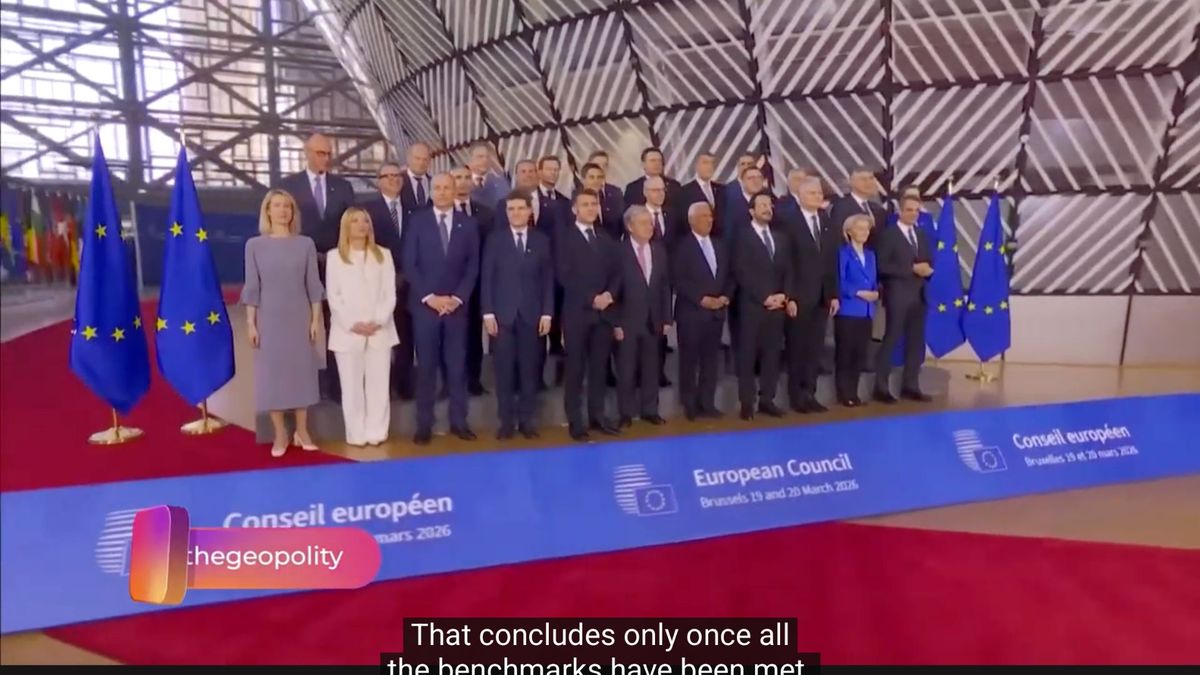
In other parts of the world, these dynamics in the Middle East have triggered a wave of serious attention and tension within the European Union institutions, especially the European Council (European Council). The relationship between the escalation in Gaza and European foreign policy has become increasingly sharp following the occurrence of a major diplomatic incident involving European citizens.
The civil community and European leaders are paying very serious attention, especially after strong calls for the European Union to impose strict sanctions on high-ranking Israeli officials.
One of the main triggers for the current anger of the Council of Europe is the above incident of brutal detention of humanitarian activists Sumud Global Fleetan international aid fleet that sailed from Turkiye to break through the blockade of Gaza. The inhumane treatment of European citizens on board the ship sparked a strong reaction. France, for example, immediately took radical steps by prohibiting Israel’s Minister of National Security, Itamar Ben-Gvir, from entering its territory.
In addition, Italy and Ireland officially urged the Head of European Union Foreign Policy and President of the European Council, Antonio Costa, to include sanctions against right-wing Israeli officials at the upcoming European Union Summit (Summit).
At the same time, the European Council is also faced with a deep internal dilemma regarding the consistency of their political morals. On the one hand, Germany, through Chancellor Friedrich Merz, is busy proposing the concept of association membership (associate membership) for Ukraine and the Western Balkan countries to stem Russian influence in Eastern Europe. However, this geopolitical maneuver sparked sharp criticism from European civil society itself.
A strong moral demand arises: if the European Council is able to move quickly, provide massive political commitments, and impose multiple economic sanctions to defend Ukraine’s sovereignty, why are the same international law enforcement standards not applied firmly to stop the occupation and violence against Palestinians in Gaza and the West Bank?
Through pressure from member states such as Spain, Ireland, Malta and Slovenia who expressed their readiness to recognize the full sovereignty of the Palestinian state, the Council of Europe is now at a historical crossroads. The serious attention given by the European Council today is no longer just diplomatic rhetoric on paper, but rather a crucial test of Europe’s credibility in maintaining the global humanitarian legal order amidst the failure of the security system driven by the transatlantic powers.***