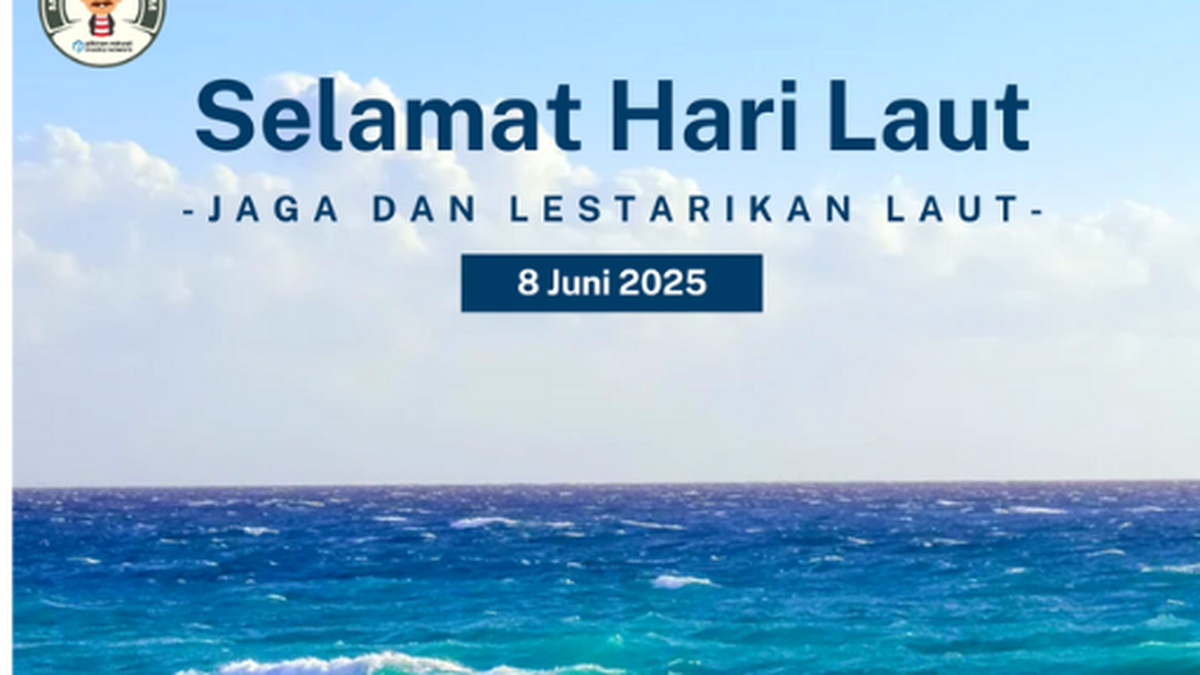
MANDALIKA THE MIND OF THE PEOPLE – World Oceans Day, which is celebrated every June 8, has once again become a global momentum to increase awareness of the marine ecosystem. In 2026, the United Nations (UN) is carrying the theme “Reimagine: Beyond the world we know, a new connection with our ocean”.
This theme invites the world community to build a new relationship with the sea, not only to use its results, but also to actively maintain its sustainability amidst the threat of climate change, plastic pollution and damage to marine ecosystems.
The commemoration of World Oceans Day was first proposed by Canada at the Earth Conference or Earth Summit in Rio de Janeiro, Brazil, in 1992. The idea was then formalized by the UN General Assembly in 2008 and has been officially celebrated every June 8 since 2009.
Since then, World Oceans Day has become an international agenda to remind the importance of the ocean for human life and the earth as a whole.
On its official website, the UN states that the sea has a vital role because it produces more than half of the world’s oxygen, absorbs carbon dioxide emissions, regulates the global climate, and is a source of food and livelihood for billions of people.
“The sea is the lungs of the earth and the foundation of human life,” said the UN statement in its World Oceans Day campaign.
The 2026 global theme is also related to the implementation of the BBNJ (Biodiversity Beyond National Jurisdiction) agreement, namely an international agreement to protect biodiversity in the high seas through cross-country cooperation.
In Indonesia, the commemoration of World Oceans Day is also accompanied by various environmental activities with the theme “Joint Action for Sustainable Beaches”. This activity was previously held in the Seribu Islands by the Ministry of Environment through beach clean-up actions, mangrove planting, coral reef restoration, and education on reducing plastic waste.
This year’s commemoration of World Oceans Day has deep meaning for the global community. Apart from being a reminder of the vital role of the sea, this momentum also encourages real conservation action and changes in human behavior towards the environment.
The UN notes that more than 90 percent of the world’s large fish populations are declining due to overexploitation, while around 50 percent of the world’s coral reefs are being damaged due to global warming and human activities. On the other hand, millions of tons of plastic waste enter the sea every year and threaten the life of marine biota.
These conditions encourage joint action by various countries and environmental organizations to stop marine pollution, reduce the use of single-use plastics, and strengthen protection of coastal and marine areas.
Through the theme “Reimagine”, the public is invited to imagine a new future that is more harmonious between humans and the sea. Small changes such as not littering, reducing plastic consumption, and supporting the preservation of mangroves and coral reefs are considered to have a big impact on the world’s marine ecosystem ***