ABOUT CIBUBUR – With the total number of believers in 2026 reaching 1.42 billion in the world, Catholicism is one of the most influential and historic religious traditions in the world, with a traditional heritage stretching back around 2,000 years. From its Founder, Jesus Christ, to its role in shaping culture, education and global politics, the Catholic Church has deep historical weight.
Father Markus Solo Kewuta SVD, from the Holy See’s Dicastery for Interreligious Dialogue, revealed 30 facts that highlight the origins, core beliefs, global impact, and distinctive practices that continue to guide his billions of followers today.
History and Origins

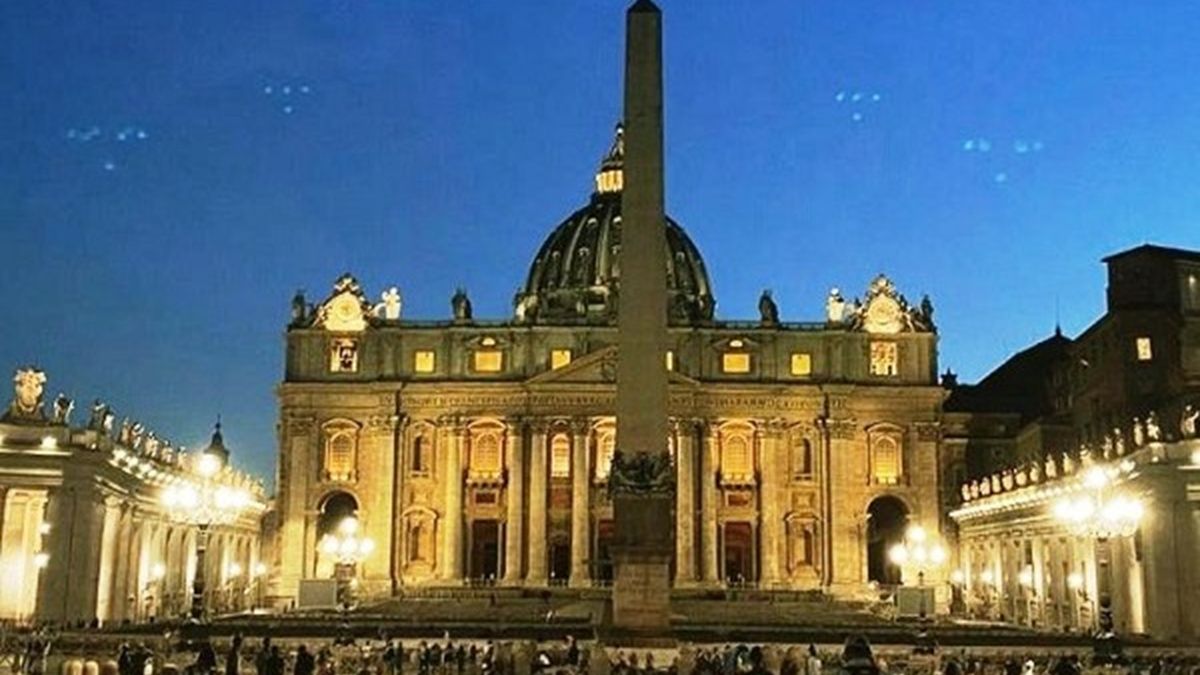
St Peter’s Square Vatican. Source: Lucius GK
1. The Catholic Church is around 2,000 years old.
The church traces its founding to the time of Jesus Christ, making it the longest continuously operating institution in the Western world. At the world level, there are still other older religions, namely Hinduism, Judaism, Jainism, Confucianism, Taoism and Buddhism.
2. Founded by Jesus Christ
Catholic tradition believes that Jesus Christ himself founded the Church and entrusted His mission to the Apostles.
3. Peter Was the First Pope
Jesus appointed Peter as the first leader, saying, “You are Peter, and on this foundation I will build My church.” Peter’s successors became known as Popes.
4. Pentecost is considered the birthday of the church
Fifty days after Easter, the Holy Spirit fell on the apostles. This moment is seen as the beginning of the Church’s public mission.
Also read: This is Padre Marco’s clarification regarding Pope Leo XIV publishing 12 breakthroughs in the life teachings of the Catholic Church
5. Christianity was Legalized in 313 AD
The Edict of Milan or Edict of Milan, issued by Emperor Constantine, ended the persecution of Christians in the Roman Empire. Christianity legalized.
6. Catholicism became the state religion of Rome in 380
Emperor Theodosius declared Christianity the official religion of Roman Christianity, while granting the Church legal and political supremacy.
7. The Great Schism Split Christianity in 1054
Differences regarding papal authority and other issues led to a split between the Western (Catholic) and Eastern (Orthodox) Churches.
8. The Protestant Reformation Triggered Another Major Schism
Martin Luther’s Reformation in the 16th century (1517) gave rise to various Protestant denominations. The Church responded with the Counter-Reformation.
9. The Second Vatican Council Changed Church Practices
The Second Vatican Council (1962–1965) reformed the Church’s liturgy and opened dialogue with other religions and the secular world.
Core Beliefs and Doctrines
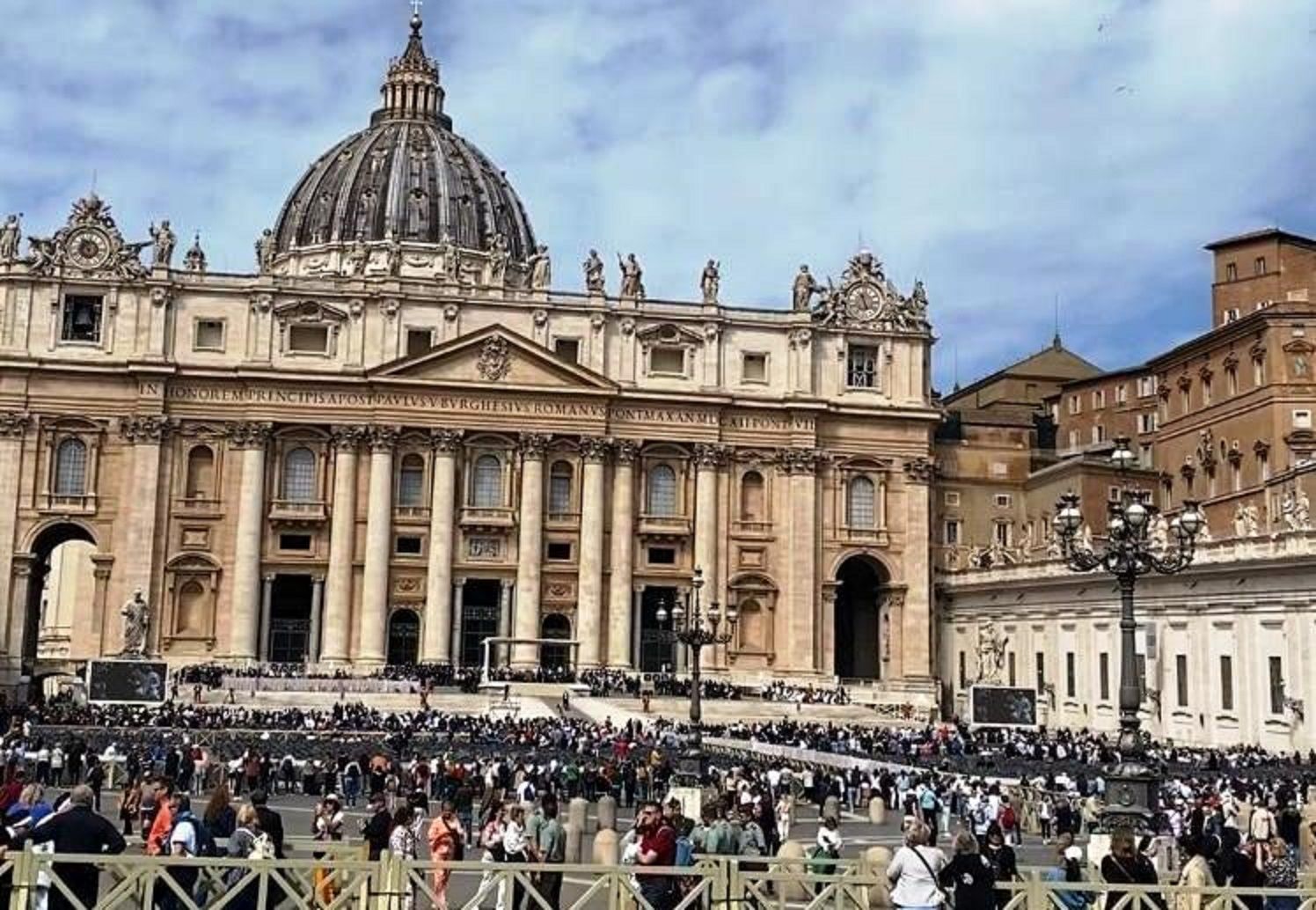
Pilgrims attend a general audience in St. Peter’s Basilica Square, Vatican. Source: Lucius GK
10. The Nicene Creed Summarizes Catholic Beliefs
This statement affirms faith in one God, Jesus Christ, the Holy Spirit, the resurrection, and the one, holy and apostolic Catholic Church.
Also Read: Padre Marco: Pope Leo XIV is a Good Choice
11. God is a Trinity
Catholics believe in one God expressed as three divine persons: Father, Son, and Holy Spirit. In short, One God, Three Persons. Not three Gods or three Gods.
12. The Seven Sacraments Mark Important Life Events
These sacraments are Baptism, Confirmation, Eucharist, Penance, Anointing of the Sick, Holy Orders, and Matrimony.
13. Transubstantiation Occurs During Holy Mass
Catholics believe that bread and wine are transformed into the body and blood of Christ through the priest’s consecration (blessing).
14. The Bible Is the Inspired Word of God
Catholics adhere to the Holy Scriptures and Church traditions. The Church determines which books are included in the Bible (canonization of the Bible).
15. Saints are Honored, Not Worshiped
Catholics pray to saints as intermediaries, but worship only God.
16. Mary Holds a Special Place
Mary is revered as the Mother of God. Catholics believe that Mary was conceived by the Immaculate Conception and then ascended body and soul into heaven.
Also read: Opening the year together, PWKI raises the theme of food for all
17. Whales Are Considered Infallible Under Certain Conditions
When teaching definitively matters of faith or Church morals, the Pope is protected from error.
Papacy and Vatican

Pope Leo XIV waves to the faithful present.
18. The Pope is also the Bishop of Rome
The Pope is the spiritual head of the worldwide Catholic Church and is considered the successor of Saint Peter.
19. Vatican City is the World Center of the Roman Catholic Church
This independent city state within the city of Rome is the smallest country in the world and the residence of the Pope.
20. The Vatican Maintains Diplomatic Relations Around the World
The Vatican operates as a sovereign entity by assigning ambassadors to almost every country.
21. The Swiss Guard Protects the Pope
Founded in 1506, this ceremonial yet functional army is known for its colorful Renaissance-style uniforms. They really came from Switzerland who swore to protect the Pope and the Vatican.
Also Read: Pope Leo XIV: AI Must Serve Humanity
22. Main Region and Extra-Territory Region
The Vatican is a very small city-state, with an area of 0.44 km². Therefore, the Vatican has an inner region (0.44 km) and an outer region of the Vatican known as Extra-Territory.
Global Reach and Modern Impact

A total of 200 members of IRRIKA, Rehat, and the extended family of the Indonesian Embassy in the Holy See during a special audience with Pope Leo XIV in the Clemenina Hall, Vatican Palace, Monday, September 22 2025. Source: Holy See
23. More than 1.42 Billion Catholics Worldwide
This makes Catholicism the largest Christian denomination in the world.
24. The Catholic Center Has Shifted South
Today, the majority of Catholics live in Latin America, Africa and Asia. Brazil leads with the largest national Catholic population, followed by Mexico, the Philippines, the US and the Democratic Republic of Congo.
25. The Eastern Catholic Churches Are in Full Communion
There are 23 Eastern Catholic Churches with unique rites and governance but in full unity with the Pope or the Roman Catholic Church which uses the Latin rite.
26. Largest Non-Governmental Educational Institution and Health Service Provider
The Catholic Church runs tens of thousands of schools, hospitals and social institutions around the world.
Also read: Pope Leo XIV opposes the revival of the ‘Tower of Babel’ with the Encyclical Magnifica Humanitas
27. Largest Charitable Organization in the United States
Catholic institutions in the United States provide food, shelter, education, and disaster relief throughout the country. This action is considered the biggest in the USA.
28. Latin Rite Priests are Celibate
In most Roman Catholic Churches, priests are not allowed to marry, which symbolizes complete undivided devotion and service to God and others like Jesus who was also unmarried.
29. Women Cannot Be Ordained Priests
Although women also play important roles in the Church, only men can receive Holy Orders. Several female saints have been declared Doctors of the Church (Saint Hildegard von Bingen, Saint Catherine of Siena, Saint Therese of Lisseux, Saint Teresa of Avila).
30. The First Printed Book Was a Catholic Bible
Gutenberg’s invention of the printing press began with the mass printing of the Latin Vulgate Bible in the 15th century.
The Lasting Influence of the Catholic Church
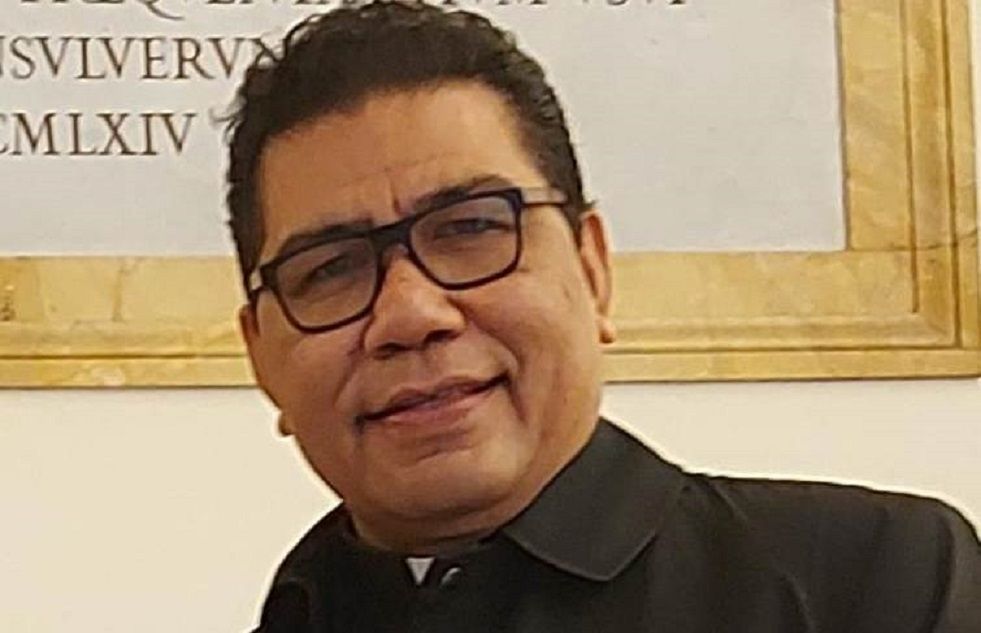
Father Markus Solo Kewuta SVD. Photo: doc. Personal
Padre Marco – as the only official of the Holy See, the Vatican from Indonesia is familiarly called – said that the long-standing Catholic tradition, global presence with great service, and structured beliefs make it one of the most influential institutions in human history. From ancient foundations to modern reforms, its role extends far beyond places of worship.
Also Read: Launching First Encyclical, Pope Leo XIV Highlights Artificial Intelligence
With more than one billion followers (1.42 billion by 2026) and contributions in the fields of education, charity, and diplomacy, the Catholic Church remains a central force in shaping moral thought, society and world development, community values, and global dialogue across cultures and generations.
“For those who are still hesitant and undecided about joining the Roman Catholic Church, open yourselves to listen and accept the voice of God’s call,” concluded Padre Marco.