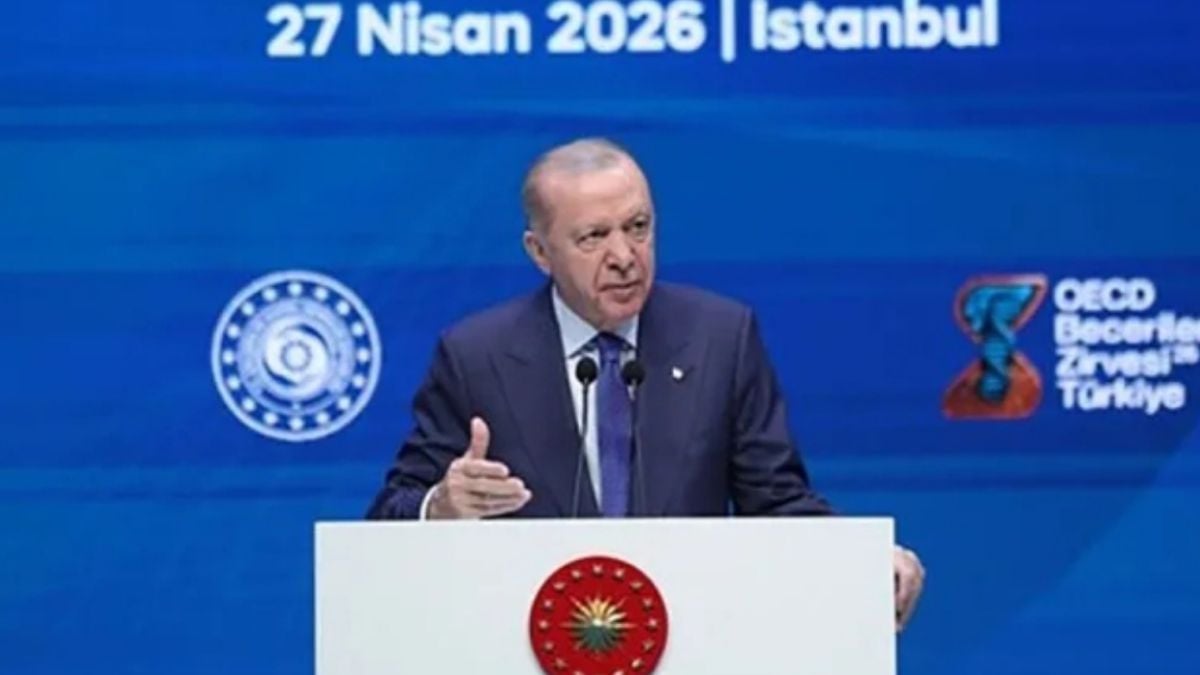
BUTOLPOST – The President of Turkiye, Recep Tayyip Erdogan, emphasized that the crisis in the Strait of Hormuz has become an important lesson for many countries that energy security is no longer just an economic development issue, but has become part of national sovereignty and security.
Erdogan made this statement when inaugurating a number of renewable energy facilities in Turkiye, Wednesday (4/6). According to him, the prolonged tension in the Middle East region, especially around Iran and the Strait of Hormuz, increasingly shows how vulnerable the world’s energy supply is to geopolitical conflict.
“The closure of the Strait of Hormuz teaches us that energy security is not only a development issue, but also a matter of sovereignty and national security,” stressed Erdogan.
He assessed that various recent developments have strengthened Turkiye’s strategic position as one of the important energy distribution centers in the region. The crisis involving Iran and this vital shipping lane is seen as opening up an opportunity for Ankara to play a bigger role in the global energy supply chain.
In the midst of this situation, the Turkiye government also continues to strive to reduce dependence on energy supplies from abroad. This step was taken by increasing domestic energy production, developing renewable energy, diversifying supply sources, and increasing the efficiency of energy use in various economic sectors.
Meanwhile, the Minister of Transport and Infrastructure of Turkiye, Abdulkadir Uraloglu, revealed that his country and Saudi Arabia are discussing the construction of a new railway line following the historical route of the Hejaz Railway.
The project even has the potential to be extended to Oman and is seen as a strategic alternative to trade routes that currently depend on the Strait of Hormuz.
Tensions in the region increased after the United States and Israel launched attacks on a number of targets in Iran on February 28. The attack sparked retaliation from Tehran targeting Israeli territory as well as US military facilities in the Middle East.
Although Washington and Tehran announced a ceasefire on April 7, the situation in the region has not completely stabilized. Negotiations held in Islamabad also have not produced any significant breakthroughs.
As a result of this escalation, the Strait of Hormuz experienced a de facto blockade which hampered the distribution of oil and liquefied natural gas from the Persian Gulf countries to the international market. This condition has triggered a spike in global energy prices and increased concerns about the energy security of various countries.
On the other hand, Erdogan expressed optimism about the Turkiye economy. He said his country’s economy was able to record growth for 23 consecutive quarters despite facing various external pressures, and the government targets this positive momentum to continue throughout 2026.***