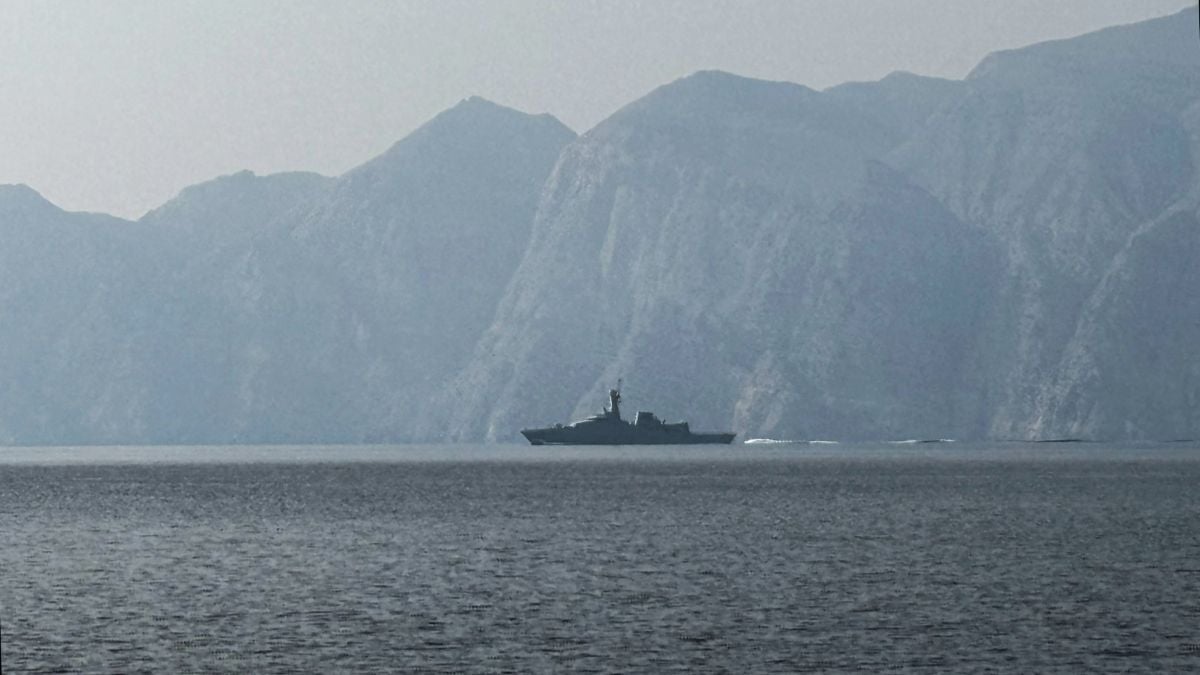
THE MIND OF THE PEOPLE – The Iranian government is reportedly starting to prepare a new scheme for managing the Strait of Hormuz which could potentially include implementing maritime fees for ships passing through. This plan emerged after the achievement of a memorandum of understanding (MoU) between Iran and the United States which paved the way for ending the conflict and restoring shipping activities in one of the world’s most important energy routes.
Quoting a report from The Guardian, Thursday, June 18 2026, the announcement was made on the same day that the United States lifted the blockade on Iran and tankers began operating again through the Strait of Hormuz.
Iran insists that the strait connecting the Persian Gulf with the Sea of Oman is under its supervision. The Iranian government also signaled that a new management model would be implemented after the 60-day negotiation period ended.
Iran’s chief negotiator, Mohammad Bagher Ghalibaf, stated that the Strait of Hormuz needed a more structured management system, including the possibility of imposing fees on users of the shipping lane.
- Also Read: 14 Points of the US-Iran Interim Agreement to Stop the War and Reopen the Strait of Hormuz
Saudi Arabia Criticizes New Management Plan
Iran’s plan immediately received a response from a number of regional countries, including Saudi Arabia.
Saudi Arabian Foreign Minister Prince Faisal bin Farhan Al Saud questioned the urgency of changing the management system which had been considered to be working well before the conflict broke out.
“The management of the straits was going well before the conflict. There were no problems. Ships sailed freely. There were no safety problems. There were no environmental problems. So why should we now, as a result of the conflict, accept new arrangements that will be forced? That to me makes no sense,” said Prince Faisal.
Apart from that, Tehran also emphasized that it does not welcome the talk of establishing a European naval mission aimed at escorting commercial ships passing through the area.
US-Iran Agreement Enters Advanced Negotiation Stage
In the midst of these dynamics, Iran and the United States have begun to enter the advanced stage of the negotiation process which is designed to last 60 days.
Iran’s supreme leader, Ayatollah Mojtaba Khamenei, reportedly supports resuming direct dialogue with US President Donald Trump’s administration. According to the report, Khamenei assessed that Washington had used various diplomatic instruments to push for an agreement.
Also Read: US and Iran Sign Peace Agreement, World Oil Prices Drop Again
The initial agreement reached by the two countries covered a number of important points, including cessation of military operations, restoration of international shipping, partial lifting of sanctions, and discussion of the future of Iran’s nuclear program.
However, a number of strategic issues are still awaiting resolution in negotiations which will take place in the next few weeks.
The Lebanese Problem and Israel’s Attitude
These diplomatic developments also have an impact on the regional security situation, especially in Lebanon.
Israeli Prime Minister Benjamin Netanyahu emphasized that his country would maintain a security zone in southern Lebanon as long as it was deemed necessary for Israel’s national interests.
Netanyahu also reiterated his country’s commitment to preventing Iran from obtaining nuclear weapons.
- Also Read: Iran and the US Sign MoU for Peace, Here are 14 Points That Can Change World Geopolitics!
On the other hand, Iran argues that the clause regarding respect for Lebanon’s territorial integrity in the deal should be followed by the full withdrawal of Israeli troops from the territory they still control.
President Trump himself called for respect for the ceasefire that is being sought.
“We encourage everyone in the Middle East region to maintain their commitment to let our negotiations proceed beautifully,” Trump wrote via the Truth Social platform.
Formal Signing Postponed
Although the document of understanding was personally signed by Iranian President Masoud Pezeshkian and US President Donald Trump in English and Farsi versions, the official signing ceremony originally scheduled to take place in Switzerland was reportedly postponed.
The delay is a concern because Pakistan previously served as the main mediator in the negotiation process.
Even though the ceremonial event was cancelled, technical talks between the two countries will reportedly still take place in the Bürgenstock area, Switzerland, to discuss more detailed implementation of the agreements that have been reached.
Iran’s Economic Recovery Will Not Be Instant
In the economic sector, the Iranian government warned that lifting some trade and oil export barriers would not automatically restore the country’s economic condition in a short time.
Iranian Economy Minister Seyed Ali Madanizadeh stated that increasing oil exports had the potential to help economic recovery, but the impact would not be felt immediately.
“That doesn’t mean everything will immediately return to normal,” he said.
According to various economic analyses, the war that has been going on for the past few months has put enormous pressure on Iran’s finances. State revenues have decreased, while revenues from the oil sector have fallen sharply, worsening the government’s fiscal condition.
Therefore, the successful implementation of the agreement with the United States is considered to be an important factor in determining the speed of Iran’s economic recovery in the next few years. ***