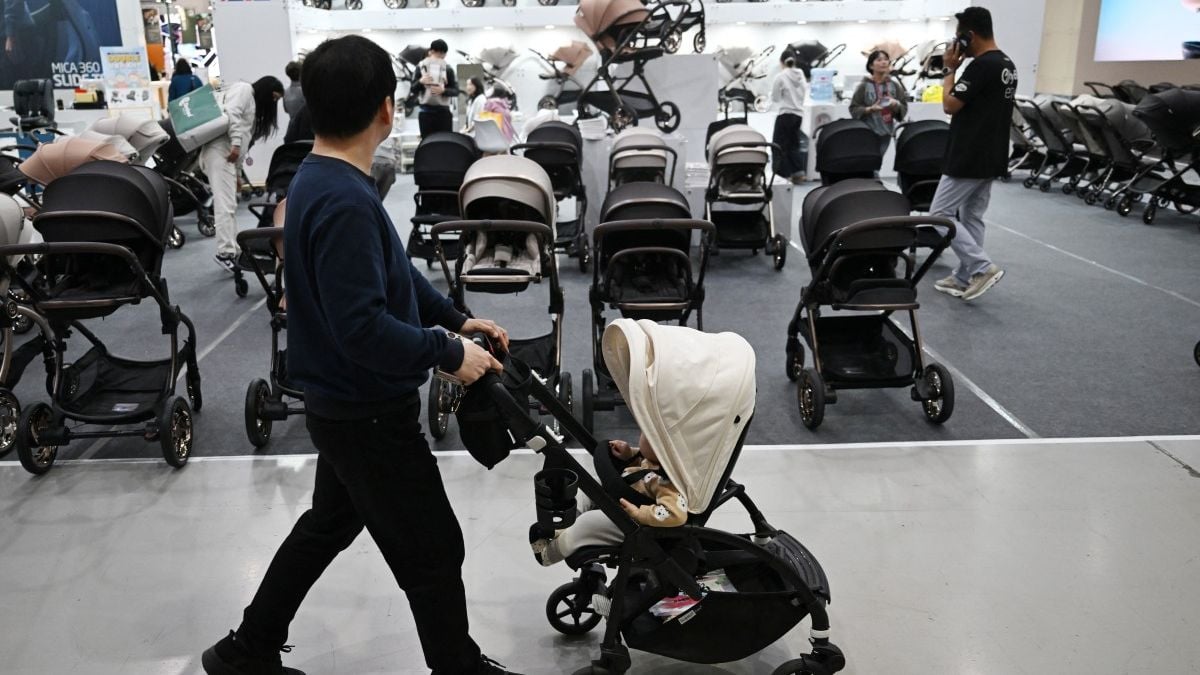
News Screen – The South Korean government continues to strengthen pro-natal policies by providing an allowance of one million won per month to parents during the first year of a baby’s birth.
This step is part of the government’s efforts to overcome the demographic crisis caused by the low birth rate which has been a serious problem in the country for years.
Even though it still has one of the lowest fertility rates in the world, South Korea has begun to record an increase in the number of births in recent months.
Also read: The trend of AI shamans in South Korea, fortune telling is now completely digital
Official government data shows nearly 23 thousand babies were born in February 2026, the highest figure for February in the last seven years. The annual increase was 13.6 percent, the highest since records began in 1981.
This increase was also followed by an increase in the number of marriages since mid-2022. The South Korean government has previously provided various incentives to encourage people to have children.
In addition to the monthly allowance of one million won, the government also provides maternity assistance of two million won, transportation subsidies for pregnant women, support for postnatal care costs, and low-interest home loans for young families.
Other policies include expanding parental leave and subsidizing fertility treatments for couples undergoing pregnancy programs.
Kim Woo-jin, a 33-year-old office worker, admitted that government assistance was enough to help reduce the costs of pregnancy and childcare. “I feel that state support plays a role in helping young families to be better prepared to have children,” he said.
However, not all couples consider financial assistance to be the main solution. Kim Su-jin, a freelance music industry worker who gave birth to her first child last year, said the issue of having children in South Korea is not just about money.
He highlighted the high cost of education, the culture of expensive private tutoring, social pressure, and concerns about job stability amidst developments in technology and artificial intelligence.
Demographic expert from Seoul National University, Lee Sang-lim, believes that it is still too early to conclude that the increase in birth rates was entirely triggered by the government’s latest policies.
According to him, this trend was also influenced by couples who postponed marriage and the birth of children during the Covid-19 pandemic.
Despite the increase, South Korea’s total fertility rate in 2025 will still be at 0.8 children per woman. This figure is still far below the standard of 2.1 needed to maintain population stability in the long term.
Experts assess that the South Korean government still needs to maintain consistent policy support so that the trend of increasing birth rates can persist in the next few years. ***