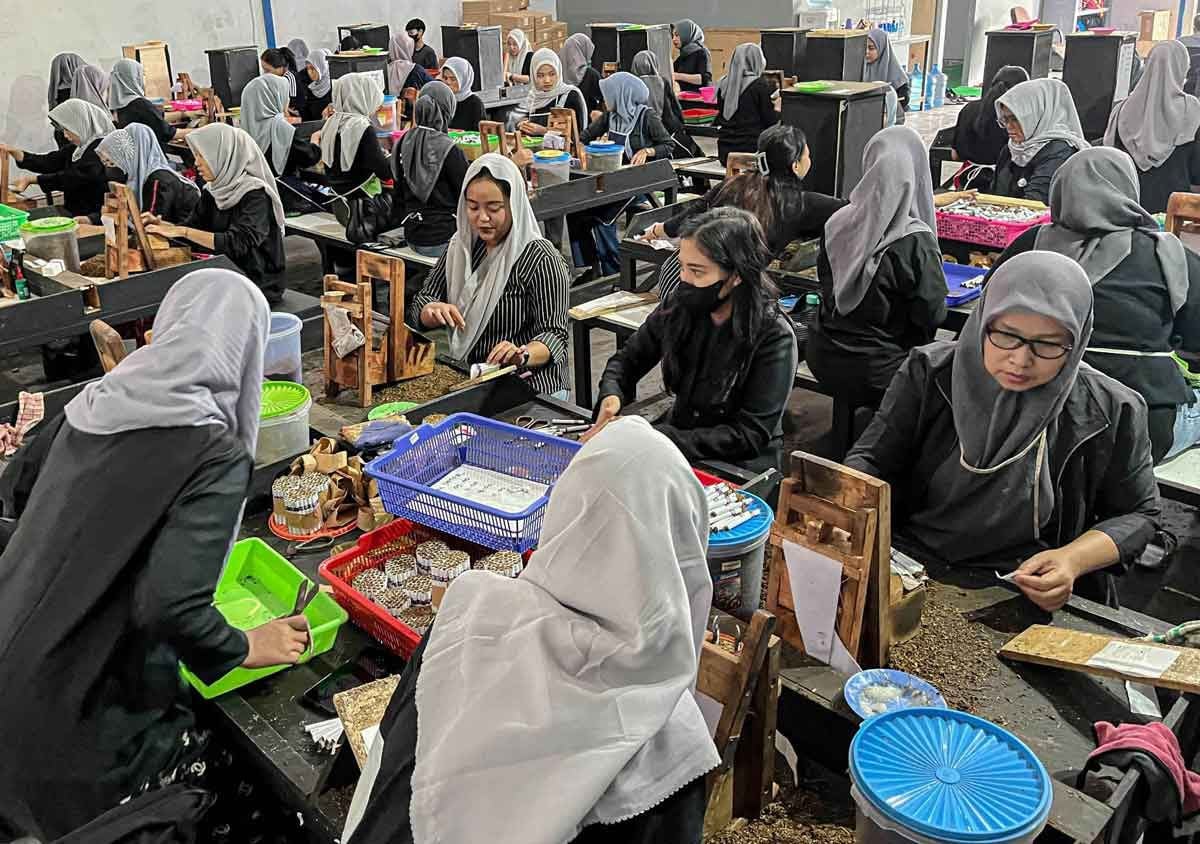
The high value of investment entering West Java has turned out not to guarantee the proportional creation of new jobs for the community. On the contrary, West Java is currently overshadowed by structural pressure in the form of a surge in the number of layoffs (PHK) due to a shift in the character of investment, which is now more capital-intensive rather than labor-intensive.
A Professor of Human Resource Management at the Faculty of Economics and Business (FEB) of Islamic University of Bandung (Unisba), Prof. Dr. Sri Suwarsi, S.E., M.Si., CGA., CHCM., views that the phenomenon of increasing layoff figures in West Java needs to become a serious concern for all parties. Nevertheless, this situation cannot yet be categorized as an overall employment emergency.
“Why? Because West Java still possesses a competitive advantage as the center of the national manufacturing industry, the main investment destination, and has a large labor market. Even so, the high number of layoffs shows the existence of structural pressure that must not be ignored,” Sri said when contacted by “PR” on Friday, June 19, 2026.
Sri stated that the high value of investment in West Java does not always correlate directly with the creation of new jobs due to the entry of new investments in medium- and high-technology sectors that are capital-intensive. As a result, the nominal investment increases significantly, but the amount of labor absorption does not increase proportionally.
According to Sri, the surge in layoff numbers in West Java is a warning sign that an economic transformation is underway. The biggest challenge for the government is not merely preventing layoffs from happening, but ensuring that affected workers can immediately transition to getting new jobs.
“Therefore, social protection strategies must go hand in hand with competitiveness improvement strategies through competence enhancements that are aligned with industry needs, so that investment growth truly generates inclusive welfare for the community,” Sri said.
On the other side, there is a fairly wide skill gap between the local workforce and the needs of modern industry. Many companies now require workers who master digital technology, automation, artificial intelligence, data analysis, as well as specific technical skills. Meanwhile, the profile of job seekers is still largely dominated by conventional competencies.
“This is where easy access to training for this group of people is needed, so that when job opportunities arise, they can be absorbed. The main challenge for human resources in West Java lies in quality and adaptability capabilities,” she said, emphasizing.
3 Challenges
She warned that if this phenomenon is not managed well through appropriate policies in the long term, an emergency situation could indeed occur. Within the next one-year period, the job market in West Java is projected to face three main challenges.
The first challenge, Sri said, is the slowdown in global demand which impacts export-oriented manufacturing industries. Second, the acceleration of automation and digitalization which is starting to reduce the need for labor in routine job sectors. Third, the occurrence of a mismatch between workforce competencies and the needs of new industries.
“From the regional economic perspective, layoffs have the potential to significantly decrease household purchasing power because most of the community’s income originates from the formal employment sector,” Sri stated.
If this occurs in large quantities and over a long duration, the impact will be heavily felt on public consumption, which has so far been one of the main driving engines of West Java’s economy. In addition, there is a risk of a shift of community groups from the vulnerable middle class toward low-income groups or expanding the near-poor group (people who are slightly above the poverty line).
Therefore, Sri suggested that the government’s focus should not only be directed toward providing post-layoff assistance, but on accelerating reemployment as well as upgrading workforce skills through various trainings.
Uncertainty
The macro conditions explained by Sri are in line with the anxieties felt by worker groups. The Chairman of the Regional Leadership Council (DPD) of the All-Indonesia Workers Union Confederation (KSPSI) of West Java, Roy Jinto Ferianto, projects that a wave of layoffs indeed still has a high potential to continue occurring in Indonesia, including in the West Java region.
Roy assesses that the current economic situation is still plagued by uncertainty. The combination of global economic issues, geopolitical tensions in the Middle East, the high exchange rate of the United States dollar, to the scarcity of industrial gas forces many companies to carry out labor efficiency.
“In fact, it is not impossible that a number of companies will go bankrupt. As a result, workers or laborers affected by layoffs will lose their income. This condition leaves them with no purchasing power capacity and ultimately they become a burden to the state,” Roy said.
Based on facts in the field, Roy explained, the laborers affected by layoffs are on average divided into two groups. First, those who are still in their productive age usually switch professions to become casual laborers or online motorcycle taxi drivers (online drivers).
Meanwhile, the second group consists of laborers whose age is no longer young. This is the group suspected to face great difficulties in looking for new jobs, thereby ultimately increasing unemployment figures.
According to Roy, the government so far has not been maximal in providing protection to the workforce. “We can see this, for instance, from the many violations of labor norms that seem to be left alone without firm law enforcement. I also see that the supervisory function is not running well yet,” he said.
He hopes the government is capable of providing protection as well as job security for the community amidst the current economic situation. Roy also urges the government to ensure the prevention of layoffs while simultaneously monitoring so that the rights of laborers who have already been laid off are truly fulfilled by employers.
“Another hope is that for laborers who are victims of layoffs in West Java, they can be channeled to new workplaces or given financial assistance so that they are able to open independent businesses,” he said.
Roy also highlighted another obstacle commonly encountered, namely the educational curriculum which is frequently out of sync with the needs of the working world. As a result, many companies recruit labor from outside the region where the company operates due to the lack of local human resources who meet the qualifications.
Meanwhile, until this news was published, there has been no response or official reaction from the Indonesian Employers Association (Apindo) of West Java as one of the users of labor regarding the phenomenon of the layoff wave and the shift in investment character.