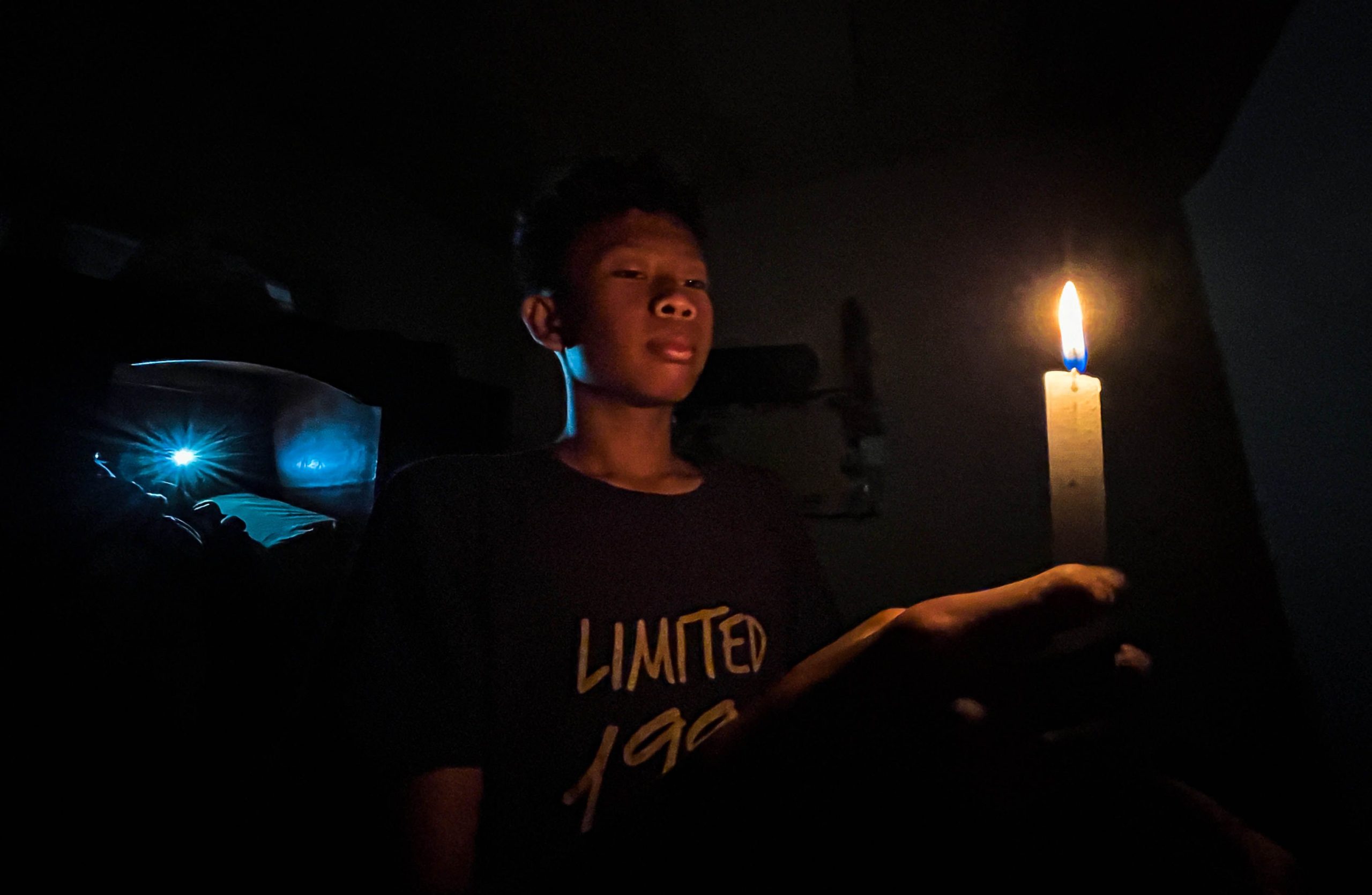
Citizens can sue the government and the State Electricity Company (PLN) in court regarding the frequent power outages in the West Java region. The repeated power cuts indicate a failure of the state to guarantee the basic rights of its citizens.
“Of course, citizens can sue. The lawsuit can be filed to a civil court for unlawful acts by the authority (PMH Penguasa) or to the State Administrative Court (PTUN) for unlawful acts by government officials,” said the Chairperson of the Indonesian Legal Aid Foundation (YLBHI), Muhamad Isnur, when contacted on Friday, June 19, 2026.
According to Isnur, there have already been many cases of consumer lawsuits in court. “That is protected by the Consumer Protection Law,” he said.
He emphasized that President Prabowo Subianto and the Minister of Energy and Mineral Resources (ESDM), Bahlil Lahadalia, must be held responsible for the issue. “This should be the president’s problem, so the ones to blame are the president and the Minister of ESDM,” he said.
Ideally, Isnur said, Bahlil should be replaced or removed from his position because he is incompetent and cannot take responsibility for this electricity situation. This is because the power outages that have occurred so far are due to their mistakes in managing matters related to coal.
“So it started with raising the price of coal and prioritizing exports. As a result, no one is able to supply medium-level coal domestically. So it is an error at the policy level,” he said.
Meanwhile, the Indonesian Legal Aid and Human Rights Association of West Java (PBHI Jabar) strongly condemns the occurrence of repeated power outages in the Greater Bandung area and various regions in West Java since June 2026. The Chairman of the Executive Board of PBHI Jabar, Rizky Ramdani, assesses that the electrical disruptions occurring systematically and repeatedly can no longer be categorized as ordinary technical glitches, but rather lead to a serious failure in the governance of national energy public services. This failure directly impacts the lives of citizens.
“PBHI Jabar views this condition as a form of structural negligence in fulfilling state obligations, which potentially violates human rights principles,” he said in the organization’s press release.
PBHI Jabar emphasizes that electricity is a basic need inherent to the constitutional rights of citizens. As the sole provider of national electricity services, PLN cannot be absolved from legal and moral responsibility to guarantee stable, safe, and non-discriminatory services.
Meanwhile, the government, through the Ministry of ESDM, has a supervisory obligation that must not be merely administrative, but must guarantee the continuity of the community’s basic rights. “Failure to ensure this is a form of the state neglecting the basic rights of citizens,” said Rizky.
He added that the repeated power outages have caused widespread and serious impacts, such as the paralyzing of the economic activities of lower-class people and MSMEs. Other impacts include disruptions to health services, including patient safety risks, hampering of the educational process and access to digital information, damage to household and business electronic equipment, and uncertainty in technology-based public services.
“PBHI Jabar assesses that this situation is not just a disruption, but a collective social loss that is allowed to happen repeatedly without any clear systemic solution,” Rizky said.
PBHI Jabar also highlights strong indications regarding weak risk management of the power grid, unreadiness of infrastructure to face system loads, poor transparency of information to the public, and the absence of an effective loss recovery mechanism.
“This condition shows an energy governance crisis that can no longer be covered up with routine technical excuses,” he said.
In a human rights perspective, the state has three main obligations, namely to respect, protect, and fulfill the rights of citizens. Repeated power outages without mitigation guarantees and without clarity of public information potentially constitute a violation of the right to a decent life, the right to health, education, work, and economy.
“PBHI Jabar emphasizes that this is no longer an ordinary public service issue, but an indication of human rights violations that are systemic in nature (structural rights failure),” he said.
Urging an Audit
PBHI Jabar also urges a thorough independent audit of West Java’s electricity system and real-time public data disclosure regarding power disruptions. In addition, there must be legal and administrative responsibility for negligent parties, a mandatory and automatic compensation scheme for affected communities, human rights-based national energy governance reform, and a comprehensive evaluation of government oversight performance.
In the records of “PR”, rotating power outages continue to occur in the West Bandung Regency area as well as other areas in West Java. This action triggers losses for citizens who own businesses. In the Cipeundeuy District area of West Bandung Regency, for example, there are residents who suffered losses because the ornamental fish they sell died due to the blackouts. This happened because the power failure caused the air circulation process in the ornamental fish ponds to stop.
Apart from West Bandung Regency, residents in a number of areas in Majalengka Regency complained about the intensity of the repeated power outages that last for a quite long duration of up to hours. This condition is considered very disruptive to community activities, especially for those who depend on the availability of electricity for their livelihood.
Ironically, the power cuts often happen suddenly without any prior notification from the related parties. As a result, residents do not have time to make preparations, such as storing clean water supplies which have so far relied on electric water pumps.
In Nunuk Village, Maja District, power supply disruptions are even reported to occur almost all the time. Especially when it rains, the electricity can go out overnight and only turn back on the next morning. A similar phenomenon apparently often recurs even though it is entering the dry season.
“The power goes out almost every week. What makes it miserable is that the blackouts most often occur at night and can sometimes last all night,” said Cicih, one of the local residents.
According to Cicih, due to the high frequency of power outages in her area, she is forced to always provide an adequate supply of candles at home as an anticipatory measure.
The adverse effects of these unscheduled power outages are also felt directly by micro, small, and medium enterprises (MSMEs). Edwar Ruspendi and Solihin, owners of a clothes washing and ironing service business (laundry), admitted that their business activities are completely paralyzed every time the power goes out because all of their production equipment relies entirely on electricity.
“What confuses us is if there are consumers who request express orders, which means it must be finished in a day or even half a day. If there were a notification that there would be a temporary power cut, of course we could reject the express order from the beginning. However, because it is often sudden, the orders are already accepted, and as a result, we cannot keep our promise, and that certainly disappoints consumers,” Edwar said expression of frustration.
Dodi, a resident from Jatiwangi who manages a photocopying service business, claimed to have suffered significant material losses. His production activities stop completely every time a sudden blackout occurs. “Usually, in the past, there used to be announcements via loudspeakers in mosques if there was going to be a scheduled power outage. Now it often goes out suddenly without any clarity whatsoever,” Dodi said.
In addition to paralyzing the business and household sectors, residents are also worried about the impact of outages that occur repeatedly within short intervals. This unstable voltage condition is suspected to have the potential to damage electronics owned by residents.
Meanwhile, when confirmed, a source at PT PLN (Persero) Majalengka Customer Service Unit (ULP) mentioned that the blackouts at several points were carried out because his party was carrying out periodic network maintenance. As for the disruptions that frequently hit the Nunuk Village area, it was more due to natural factors. Given that the power grid path to the area passes through a plantation area filled with dense trees, the transmission system becomes very vulnerable to disruptions, especially during heavy rain accompanied by strong winds.