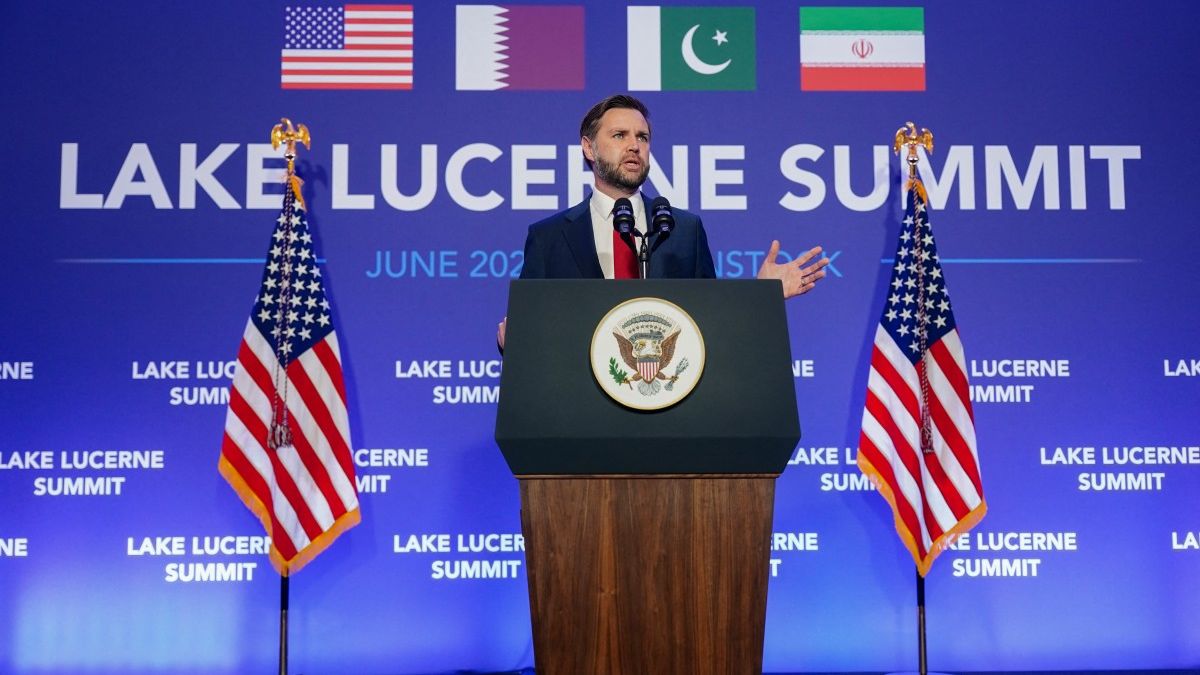
News Screen – Iran emphasized that it will continue to manage the Strait of Hormuz in accordance with international law after the end of a round of talks with the United States in Switzerland which discussed a number of strategic issues, including the security of shipping lanes and the nuclear program.
The statement came amid ongoing diplomatic efforts to formulate a long-term agreement between Washington and Tehran. Although some progress has been achieved, the issue of Iran’s nuclear program and the status of the Strait of Hormuz is still a major discussion that has not been fully resolved.
Iran’s chief negotiator, Mohammad Bagher Ghalibaf, confirmed that the Strait of Hormuz would remain under the management of the Islamic Republic of Iran.
Also Read: US-Iran Negotiations in Switzerland Discuss Nuclear and Lebanese Ceasefire
“The Strait of Hormuz will not return to pre-war conditions and will be managed by the Islamic Republic of Iran in accordance with international law,” he said as quoted by Iranian state media, Tuesday, June 23 2026.
Previously, United States Vice President JD Vance called the negotiations in Switzerland a positive foundation towards reaching a final agreement to end growing tensions in the Middle East region.
According to Iranian state media reports, technical talks following the high-level meeting have been completed. Furthermore, a special working group will be formed to further discuss nuclear issues and economic sanctions.
As part of the initial understanding, the two countries are said to have agreed to build communication lines to prevent incidents and misunderstandings in the Strait of Hormuz and ensure the security of commercial shipping. The deal was mediated by Qatar and Pakistan.
On the other hand, the United States government announced the temporary suspension of a number of sanctions against Iran’s oil sector. This step allows Iran to resume producing, selling and exporting crude oil until August 21.
Iranian state media also reported that there was an agreement regarding the release of frozen Iranian funds worth 12 billion US dollars. However, JD Vance stated that these assets had not been disbursed and if they were used later, they would be intended for the purchase of certain goods, including agricultural products from the United States.
Talks in Switzerland also resulted in an agreement on a road map towards a settlement which is targeted to be achieved within 60 days, with the possibility of an extension if necessary.
Diplomatic efforts will continue in the next few weeks. Iranian President Masoud Pezeshkian is scheduled to visit Pakistan, while United States Secretary of State Marco Rubio will visit a number of Gulf countries, including the United Arab Emirates, Kuwait and Bahrain.
Apart from the issue of the Strait of Hormuz, the discussion also included security developments in Lebanon. The mediators proposed establishing a conflict management unit to help maintain stability and prevent escalation between Israel and the Iran-backed Hezbollah group.
Although some progress has been achieved, discussions regarding Iran’s nuclear program remain one of the biggest challenges in the negotiation process. Tehran insists its nuclear program is aimed at civilian interests, while Washington continues to demand guarantees that the activity does not lead to the development of nuclear weapons.
With the establishment of communication channels and follow-up working groups, both parties are now trying to maintain diplomatic momentum in order to reach a more comprehensive agreement in the coming months.***