President Prabowo Subianto stated that Indonesia’s national rice productivity has increased by as much as 100 percent thanks to the successful implementation of modern agricultural technology. Harvest yields that previously averaged around 5 tons of paddy per hectare have now surged dramatically to more than 10 to 12 tons per hectare. This remarkable increase further strengthens Indonesia’s optimism in achieving food self-sufficiency and eventually becoming a global food barn.
“I believe there have been many innovations, new technologies, and new techniques developed by the agricultural community under the leadership of the Minister of Agriculture. In my view, the results are quite revolutionary. What previously produced 5 tons of paddy can now produce more than 10 tons, even 12 tons. That means our productivity has increased by 100 percent,” President Prabowo said in Jakarta on Wednesday, June 24, 2026.
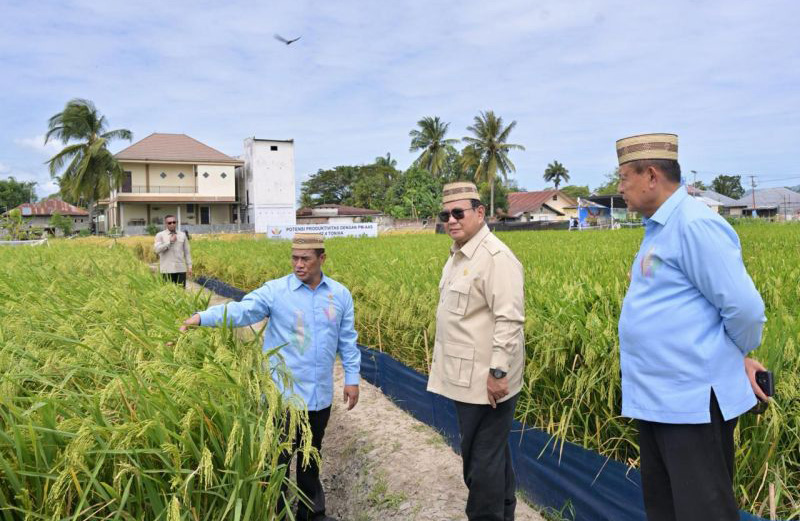
The President made the statement after inspecting the Modern Agricultural Rice Cultivation Technology under the Advanced Agricultural System Model (PM-AAS) as well as the Technology Exhibition Area. The exhibition showcased various cutting-edge innovations in agriculture, fisheries, livestock farming, plantations, and supporting technologies for food self-sufficiency as part of the 17th National Farmers and Fishermen Week 2026 held in Gorontalo Regency.
The President emphasized that the significant productivity gains driven by these innovations have strengthened confidence that Indonesia’s food security is on the right track. He also expressed optimism that these policies would enable Indonesia to help address food crises in other countries in the near future.
Sustainable Development
However, the Head of State reminded stakeholders that these encouraging achievements must be maintained through a sustainable agricultural system to ensure they do not become merely a short-term phenomenon.
In addition to improving farmers’ welfare, the government continues to refine strategies for agricultural intensification, extensification, and downstream development to enhance the quality and diversity of national agricultural commodities, including rice, corn, cassava, sugar, soybeans, sorghum, and sago.
Through these proactive measures, the agricultural sector is preparing to become a key pillar of national strength in addressing global challenges. The government remains fully committed to promoting and expanding the adoption of these technological innovations throughout the country.
The ultimate goal is to achieve equitable and independent food self-sufficiency at every level—from villages and sub-districts to regencies, cities, and provinces across Indonesia.***