Universitas Indonesia (UI) has introduced an innovative disability-friendly product developed by students from its Creative Business Study Program at the Vocational Education School. Named REKAT, the inclusive bra is specially designed to help women with motor impairments, older adults, and persons with disabilities dress more independently without compromising comfort or aesthetics.
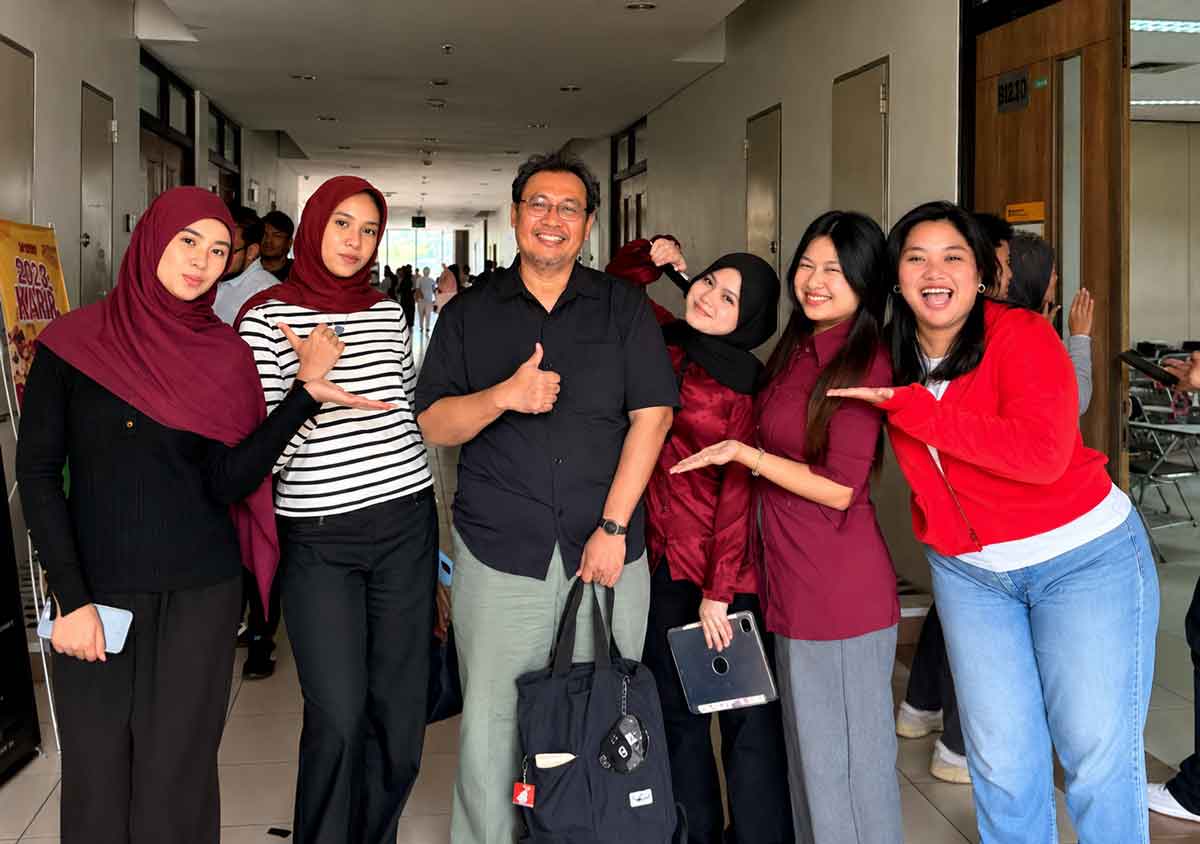
Getting dressed is a basic daily activity that can be a significant challenge for women with physical limitations, often affecting both their independence and self-confidence. Inspired by this issue, REKAT was developed by five Vocational Education students at Universitas Indonesia: Patricia Revi De Mila, Quency Nova Mardira, Aulia Attaya, Nayang Nurizah, and Annas Tasya.
The project was created as part of a Product Development course, which requires students to identify real-world problems, design practical solutions, and develop functional prototypes.
The innovation is considered highly relevant to improving accessibility in Indonesia. According to Statistics Indonesia (BPS), there were approximately 22.97 million people with disabilities in Indonesia in 2023, accounting for 8.5 percent of the country’s population.
These figures highlight the growing need for inclusive fashion products that embrace inclusive design, an approach that has rarely been applied to intimate apparel such as bras. The idea became even more compelling after one of the team members witnessed firsthand the motor challenges experienced by a member of their own family.
Using a user-centered design approach, REKAT was developed as a wire-free bra equipped with a front magnetic fastening system. Unlike conventional bras with hooks located at the back, the magnetic closure at the front enables users to put on and remove the bra with much simpler movements, allowing them to dress more independently.
The product took approximately three months to develop, covering literature reviews, user-needs research, material exploration, and in-depth interviews with prospective users. Under the supervision of faculty members, the team also visited a lingerie manufacturing facility to study the construction and design of undergarments.
Through the development process, the students realized that the challenge of wearing a bra goes beyond technical difficulties. Dressing is closely linked to privacy, psychological comfort, self-confidence, and personal independence.
“We learned that innovation does not always mean creating something entirely new. Sometimes the best innovations come from understanding users’ needs and simplifying their experience. Throughout this process, we realized that empathy is an essential element in creating solutions that are truly relevant and impactful,” said Patricia Revi, speaking on behalf of the REKAT development team in a written statement released by Universitas Indonesia’s Public Relations Office on Wednesday, July 8, 2026.
A Practical Example of Inclusive Innovation
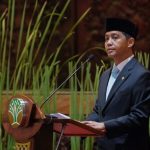
The REKAT project also received praise from Dr. Safrin Arifin, S.K.M., S.St., M.Sc., Director of Universitas Indonesia’s Vocational Education School. He described the product as a tangible example of how classroom learning in science and creativity can be transformed into meaningful social innovation.
“REKAT is undeniable proof that our students are capable of applying empathy, creativity, and the knowledge they acquire in the classroom to address real societal needs. Innovations like this not only produce functional products but also contribute to creating a more inclusive, equitable, and fair society for everyone,” Dr. Safrin said.
The creation of REKAT also reinforces Universitas Indonesia’s commitment to supporting the United Nations Sustainable Development Goals (SDGs), particularly SDG 5 (Gender Equality) and SDG 10 (Reduced Inequalities).
The product has the potential to become a model for inclusive fashion innovation in Indonesia, paving the way for the development of more disability-friendly products that promote social equity.
Through innovations such as REKAT, Universitas Indonesia continues to strengthen its role as a university that responds to real societal challenges. The university remains committed to supporting interdisciplinary research, education, and community engagement that transform academic ideas into practical solutions, contributing to a more independent and inclusive Indonesian society.