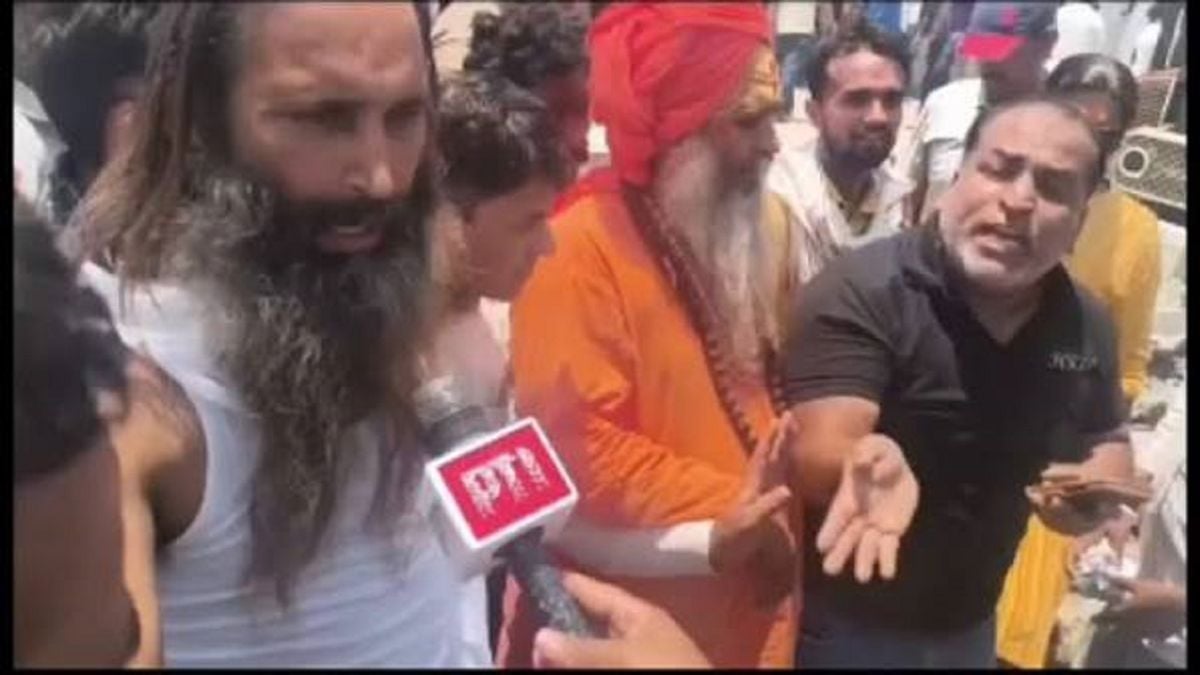
PAKUAN MEDIA, DEHRADUN —In a recently widely circulated video, the President of the Hindu Raksha Dal, Lalit Sharma, allegedly made statements that sparked public outrage because they specifically targeted minority groups, including calls that were deemed inhumane towards women and unborn children.
Starting from a water dispute that ended in death
The tension in Bairagiwala was actually triggered by the bloody incident on June 13. Vinod Kumar Kashyap, a local leader of the BJP’s OBC wing, was killed in a physical clash sparked by a dispute over irrigation water pipelines from a government borewell.
Kashyap’s death immediately sparked a wave of protests from a number of organizations. Unfortunately, the protest had a long tail. Reports in the field stated that there had been stone throwing and arson in Muslim-majority neighborhoods.
The local authorities then took firm action by demolishing the house of one of the alleged perpetrators which had previously been attacked by a mob, on the grounds that the building was standing on illegal land (illegal demolition).
Also Read: From Insult to Political Movement: 5 Facts about the ‘Cockroach’ Party that Rocked India and Made the Government Hot
Extreme Narrative That Sparked Widespread Condemnation
The situation escalated when leaders of civil society organizations spoke to the media after Kashyap’s death. Lalit Sharma was recorded demanding extreme retaliation. At the same place, Aman Sweden, a leader of the VHP-Bajrang Dal, also invoked a similar narrative with the slogan “blood for blood”.
The recording of the speech immediately spread on digital platforms and sparked strong reactions from various humanitarian activists, political figures and netizens. Many parties consider that this statement is no longer just criticism, but a form of incitement to violence that is dangerous for social harmony.
Wave of Reaction and Legal Pressure
Former Chief Minister of Jammu and Kashmir and President of the PDP, Mehbooba Mufti, also gave a strong response via social media X. She strongly criticized this phenomenon and called it a setback in the social order of a democratic society.
“When hateful narratives begin to become commonplace, the foundations of an inclusive society are at stake. The authorities’ silence on rhetoric like this will only provide room for division,” he wrote.
Similar criticism came from social media users who questioned the slow response of law enforcement to the publicly delivered speech. Netizens urged the police to immediately investigate whether the statements in the video violate the law regarding hate speech (hate speech) and sedition.
Until this article was published, the local authorities had not provided an official statement regarding the legal steps that would be taken against the speakers in the video, while public pressure for the perpetrators to be held accountable continues to grow.***