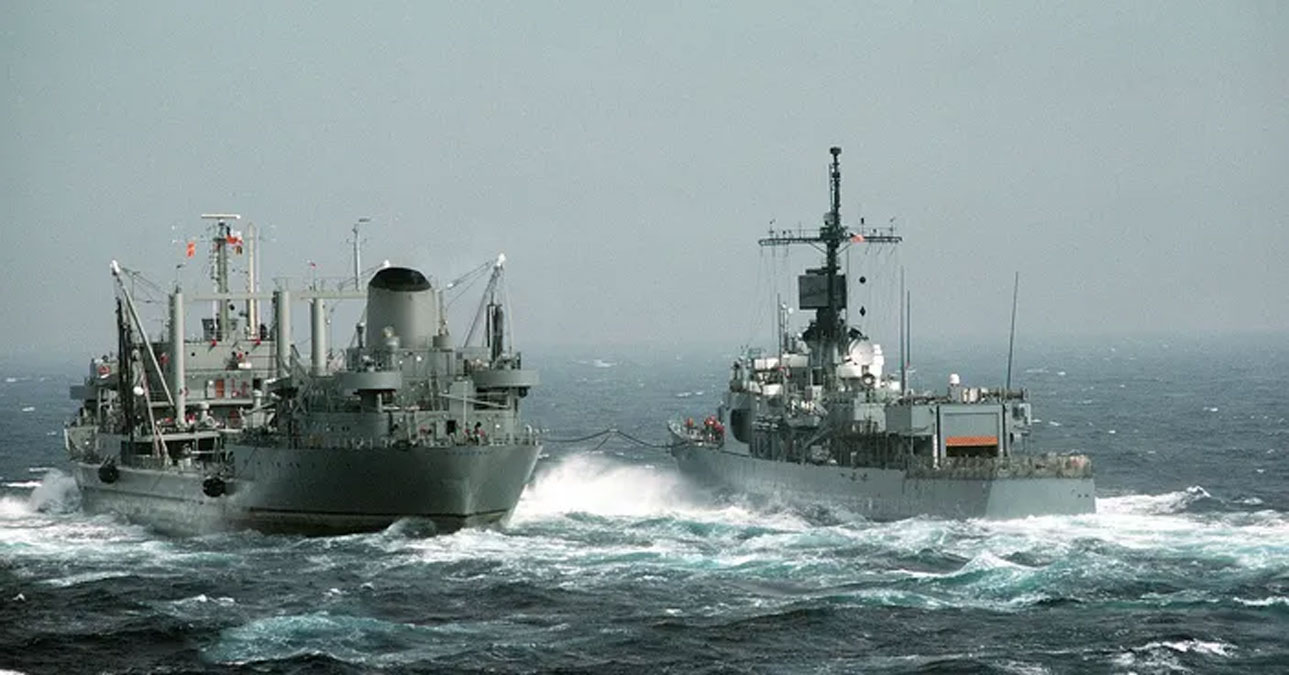
Geopolitical tensions in East Asia have escalated once again. The Chinese government has publicly issued a strong warning to Japan, urging it to cease all forms of interference in the ongoing territorial disputes in the South China Sea.
Beijing specifically called on Tokyo not to involve itself in matters related to the Permanent Court of Arbitration’s ruling concerning the dispute between the Philippines and China.
“We urge the Japanese authorities to stop discrediting China, cease spreading misinformation regarding the South China Sea, and refrain from undermining regional peace and stability,” Beijing said in an official statement.
Trigger Behind the Dispute
China’s strong reaction came in response to remarks made by Japanese Foreign Minister Toshimitsu Motegi on Sunday, July 12, 2026.
In his speech, Motegi reaffirmed that the Permanent Court of Arbitration’s ruling on the territorial dispute is final and legally binding under the United Nations Convention on the Law of the Sea (UNCLOS). He stated that China’s unilateral maritime claims have no valid legal basis.
According to Tokyo, Beijing’s rejection of the arbitration ruling undermines the principle of peaceful dispute resolution and weakens the rule of international law.
Responding to the criticism, China’s Ministry of Foreign Affairs issued a formal rebuttal.
First, Beijing argued that Japan has no legal standing to judge China’s territorial sovereignty or maritime rights in the South China Sea.
Second, China maintained that its maritime rights over the Nanhai Zhudao (South China Sea Islands) are rooted in a long historical legacy and supported by a solid domestic legal foundation.
Third, Chinese authorities asserted that the Permanent Court of Arbitration had exceeded its authority, rendering its ruling illegal and therefore null and void.
Beijing Accuses Tokyo of Double Standards
In its diplomatic note, China also accused Japan of applying double standards regarding the legal status of islands.
Beijing cited Taiping Dao in the Nansha Qundao (Spratly Islands), which covers approximately 500,000 square meters and possesses a sustainable ecosystem, including freshwater resources. Despite these characteristics, the arbitration tribunal did not classify it as an island entitled to an Exclusive Economic Zone (EEZ).
China contrasted this with Okinotorishima, a Japanese territory in the Pacific Ocean consisting of only two small rock outcrops measuring less than 10 square meters in total, which Tokyo nevertheless claims entitles Japan to an EEZ covering hundreds of thousands of square kilometers.
“If Japan fully supports the standards established by the arbitration ruling, then logically it should also be willing to relinquish its own maritime claims based on its small islands,” a spokesperson for China’s Foreign Ministry said.
Furthermore, Beijing expressed suspicion over what it described as Tokyo’s hidden agenda, pointing to Japan’s recent efforts to strengthen defense cooperation with the Philippines, expand military equipment exports, and deploy armed forces overseas.
According to China, such actions go beyond the scope of Japan’s post-war constitution, which is based on the principle of self-defense.***