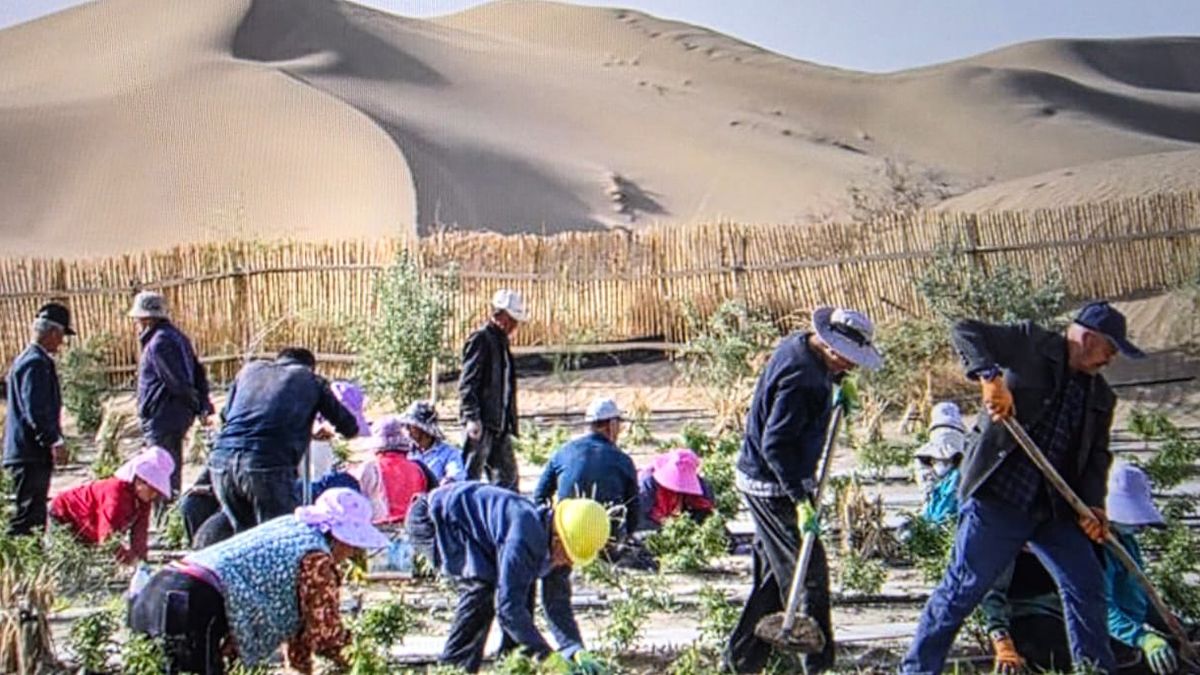
SABACIREBON – Landscape transformation occurred in the southern region Taklimakan Desertwhere a stretch of green barrier now stretches vastly along the edge of the once barren desert.
Rows of fruit trees and sand-bearing forests thrive, becoming a natural fortress that holds back the rate of sand expansion while reflecting the ecological and economic revival of the area.
In the region Xinjiangvarious greening initiatives continue to be developed, ranging from cultivating medicinal plants to managing productive fruit gardens.
Also read: Persik Kediri vs Persita Tangerang 1-0, Jon Toral’s goal brings victory
This effort not only serves as a mitigation measure against desertification, but also opens up new economic opportunities for local communities.
The programs integrated in this sand-retaining green belt project are gradually transforming barren areas into centers of sustainable growth. Land that was previously unproductive is now being utilized optimally through environmental and economic-based approaches.
Along with this, the sand-based industry in this area is developing rapidly. Currently, the total managed area reaches approximately 722,000 hectares, reflecting the significant scale of transformation.
Also read: Pegadaian gold price is stable today, Antam IDR 3 million
From an economic perspective, this sector recorded an annual output value of around 28.975 billion yuan, or the equivalent of more than 4.25 billion US dollars.
These figures show that environmental conservation efforts can go hand in hand with increasing economic prosperity.
This success is a clear example of how an integrated approach between nature conservation and industrial development can create a new balance, while strengthening ecological resilience in areas that are vulnerable to climate change.***