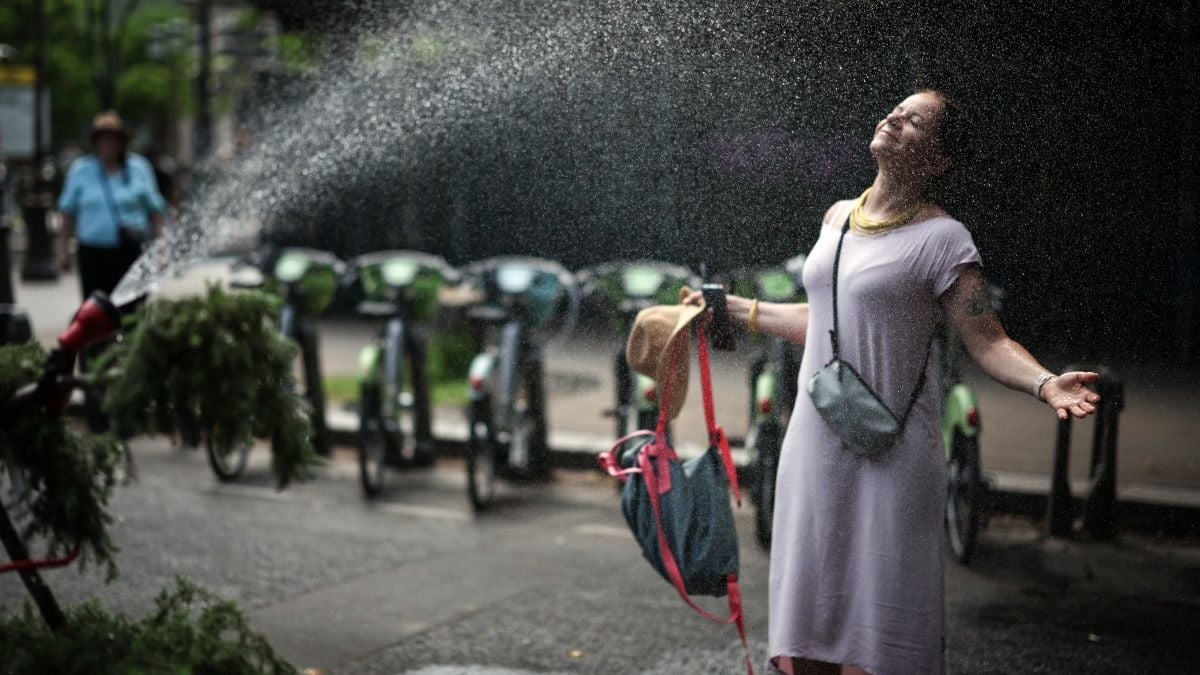
News Screen – The UK is bracing for an extreme heatwave that could potentially break the highest temperature record for June. These unusual weather conditions have prompted hundreds of schools to close learning activities early, while transportation services have begun to be limited for public safety.
The British Meteorological Agency (Met Office) issued a red warning for extreme hot weather on Wednesday and Thursday. The very rarely issued warning covers much of central and southern England, including London and Birmingham.
Temperatures are expected to reach 40 degrees Celsius, a figure never before recorded in June in the UK. In fact, the previous June temperature record of 35.6 degrees Celsius recorded in 1976 is predicted to be exceeded in the next few days.
Also Read: Extreme Heat Wave in France, Alcohol Prohibited at Music Festivals
The Met Office Chief Scientist, Stephen Belcher, said that such high temperatures in June were a worrying phenomenon. According to him, climate change due to human activities has increased the possibility of heat waves with higher intensity.
The impact of extreme weather is starting to be felt in various sectors. Based on data compiled by the BBC, at least 300 schools plan to close some or all learning activities during the peak of the heat wave.
In the transport sector, Network Rail urges people to only travel if absolutely necessary. Some train operators have even issued warnings asking passengers to postpone travel due to the risk of disruption due to high temperatures.
Meanwhile, the Eurostar train service canceled a number of journeys between London and Paris.
Extreme weather phenomena are also a concern in Kew Botanical Gardens, London. An oak tree that died due to drought and heat in the summer of 2022 was painted red as a symbol of warning against the increasingly real climate crisis.
Kew Gardens representative, Sinead Marron, explained that her party continues to monitor the condition of the trees and water them in areas where possible. Apart from that, they are also researching tree species that are more resistant to high temperatures to be planted in the future.
Climate scientists assess that the UK is still not ready to face increasingly frequent increases in temperature. Imperial College London Professor of Climate Science, Friederike Otto, said that many of Britain’s homes, infrastructure and economic systems were built based on past climate conditions that have now changed.
According to Otto, temperatures above 35 degrees Celsius, which were previously considered rare, are now increasingly common. In the last 12 years, extreme temperatures have been recorded in seven different years.
The Met Office also warned of the possibility of a “tropical night”, namely conditions when temperatures at night remain high and do not drop significantly. This situation can increase the risk of health problems, especially for vulnerable groups such as the elderly, children and people with chronic diseases.
The Met Office’s Deputy Chief Weather Forecaster, Mark Sidaway, said the impact of this heat wave is expected to be quite serious and can be felt by the wider community, not just those who have been considered vulnerable to extreme hot weather.***