News Screen – The United Nations (UN) will begin the process of evacuating thousands of sailors trapped in the Strait of Hormuz area after reaching a temporary agreement between the United States and Iran to end the ongoing conflict in the Middle East.
The move was announced as diplomatic talks between Washington and Tehran began in Switzerland aimed at finding a permanent solution to the conflict that has sparked regional instability and disrupted global energy trade routes.
Secretary General of the UN’s International Maritime Organization (IMO), Arsenio Dominguez, said his party had obtained the necessary security guarantees to carry out the humanitarian operation.
Also Read: US-Iran Negotiations in Switzerland Discuss Nuclear and Lebanese Ceasefire
According to him, more than 11,000 sailors stranded due to disruption of shipping traffic in the Strait of Hormuz will be evacuated in coordination with Iran, Oman, regional coastal countries, the United States and international maritime industry players.
The temporary agreement between the US and Iran is also starting to have an impact on shipping activities. After experiencing disruption due to restrictions imposed by Iran during the conflict, ship traffic in the Strait of Hormuz is now showing an increase.
The Strait of Hormuz is one of the most strategic shipping lanes in the world because it is the main gateway for the distribution of oil and gas from the Gulf region to international markets.
However, a number of Iranian officials emphasized that the management of the shipping route would experience changes compared to conditions before the conflict. Iran and Oman also stated that they would review trade management mechanisms and services related to shipping activities in the region.
Meanwhile, diplomatic efforts to achieve long-term peace continue. The initial agreement between Washington and Tehran opened a 60-day negotiation period to discuss a number of important issues, including the lifting of economic sanctions and the future of Iran’s nuclear program.
However, the issue of monitoring nuclear facilities is still a point of difference. Iran’s government has denied claims that it has agreed to a return to International Atomic Energy Agency (IAEA) inspections of a number of nuclear facilities previously targeted in the conflict.
On the other hand, United States President Donald Trump stated that Iran had agreed to strict nuclear controls as part of the ongoing negotiation process.
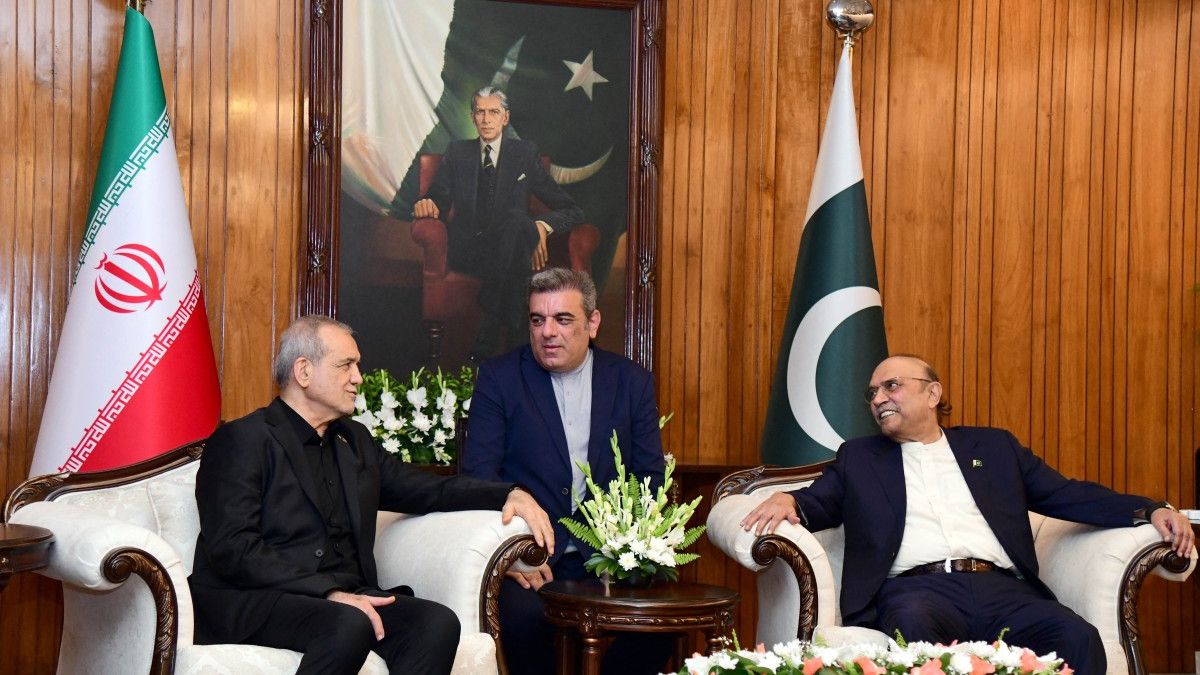
Apart from US-Iran talks, diplomatic activity has also increased in a number of regional countries. US Secretary of State Marco Rubio embarked on a visit to several Gulf countries, while Iranian President Masoud Pezeshkian visited Pakistan, which is acting as a mediator in the negotiation process.
At the same time, Lebanon and Israel resumed talks in Washington to find a solution to the conflict involving the Hezbollah group. The US government hopes that this series of dialogue can end the cycle of violence which has worsened the security situation in the Middle East.
Even though various peace efforts continue to be made, tensions in a number of areas still persist. Local media reports say security incidents have occurred again in southern Lebanon, indicating that regional stability still faces challenges despite the ongoing diplomatic process.***