Statistics Indonesia (BPS) reported that Indonesia’s annual inflation (year-on-year/yoy) reached 3.34% in June 2026, up from 3.08% recorded in May 2026. The increase was driven primarily by rising food prices.
“Annual inflation occurred as the Consumer Price Index (CPI) increased from 108.27 in June 2025 to 111.89 in June 2026. On a year-on-year basis, inflation was mainly driven by the food, beverages, and tobacco group,” said Ateng Hartono, Deputy for Distribution and Services Statistics at BPS, during a press conference in Jakarta on Wednesday, July 1, 2026.
He explained that the food, beverages, and tobacco category recorded 4.67% year-on-year inflation, contributing 1.36 percentage points to the national inflation rate, making it the largest contributor. The food commodities with the greatest impact on annual inflation included fresh fish, rice, cooking oil, red chili peppers, chicken meat, bird’s eye chilies, machine-made kretek cigarettes (SKM), and shallots.
In addition to food, the personal care and other services category also contributed significantly, posting 10.10% year-on-year inflation and adding 0.69 percentage points to national inflation. This increase was mainly driven by higher gold jewelry prices compared with the same period last year.
Meanwhile, the transportation category recorded 4.57% year-on-year inflation, contributing 0.55 percentage points.
“Inflation in the transportation category was driven by higher prices for gasoline, airfares, automobiles, motorcycles, and lubricants or engine oil,” Ateng said.
The main contributors to transportation inflation were gasoline, airfares, and engine lubricants. Gasoline accounted for the largest contribution at 0.21 percentage points, followed by airfares at 0.05 percentage points, while lubricants contributed 0.01 percentage points.
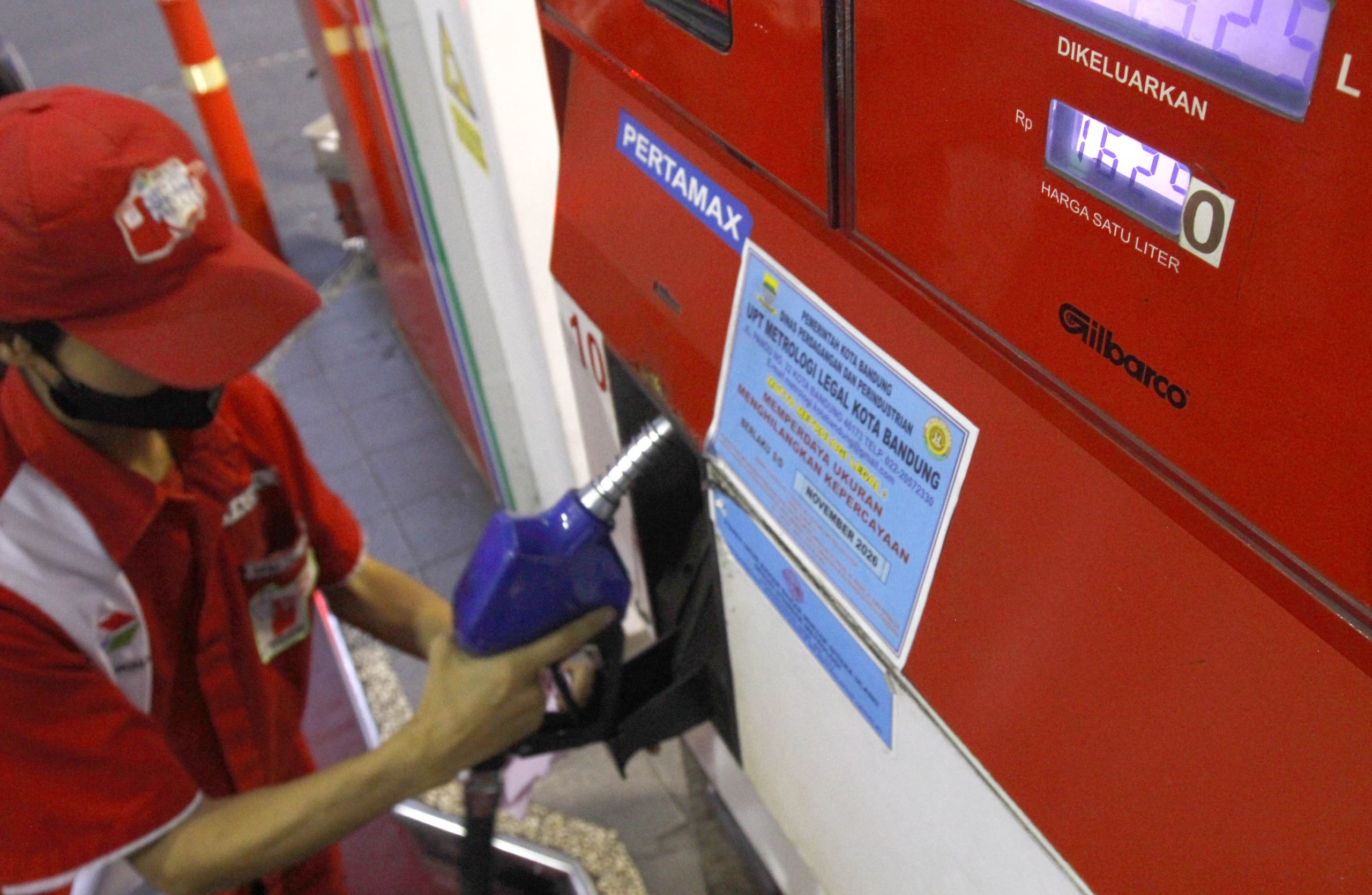
“Inflation in the transportation category was driven by increases in gasoline prices, airfares, and engine lubricants. The rise in gasoline prices resulted from adjustments to several types of non-subsidized fuel,” Ateng explained.
For reference, non-subsidized fuel prices were adjusted twice during June—on June 1 and June 10. On June 1, the prices of Pertamax Turbo increased, while Dexlite and Pertamina Dex became cheaper. On June 10, the price of Pertamax was increased. Meanwhile, higher airfares were mainly driven by increased demand during the school holiday period in June.
Based on inflation components, all components recorded monthly inflation in June 2026. The largest contribution came from administered prices, which contributed 0.27 percentage points with an inflation rate of 1.41%, followed by the core inflation component, contributing 0.15 percentage points with an inflation rate of 0.23%, and the volatile food component, which contributed 0.02 percentage points with an inflation rate of 0.14%.
Higher Than Previous Month
Teuku Muhammad Riefky Hasan, a macroeconomic researcher at the Institute for Economic and Social Research, Faculty of Economics and Business, University of Indonesia (LPEM FEB UI), had previously projected that June inflation would rise to around 3.3%–3.5% year-on-year, higher than the previous month.
Riefky also believed inflation was pushed higher by the increase in Pertamax fuel prices.
“Besides Pertamax, another contributing factor is the weakening rupiah, which has led to imported inflation,” he said.
Earlier, Banjaran Surya Indrastomo, Chief Economist at Bank Syariah Indonesia, estimated June inflation would reach around 3.1% year-on-year, approaching the upper limit of Bank Indonesia’s inflation target of 3.5%.
“Indonesia’s inflation in June 2026 is projected to be around 3.1% year-on-year, with the possibility of moderately approaching Bank Indonesia’s upper target of 3.5%,” he said.
He explained that the increase in inflation was driven by a combination of the rupiah’s depreciation, the adjustment of Pertamax fuel prices, and higher consumer spending during the school holiday season, which boosted demand in the transportation, accommodation, restaurant, and tourism sectors.
According to him, imported inflation resulting from the weaker rupiah was the primary driver, as it increased the prices of imported goods, industrial raw materials, and production costs, thereby spreading price pressures across a wide range of goods and services.***