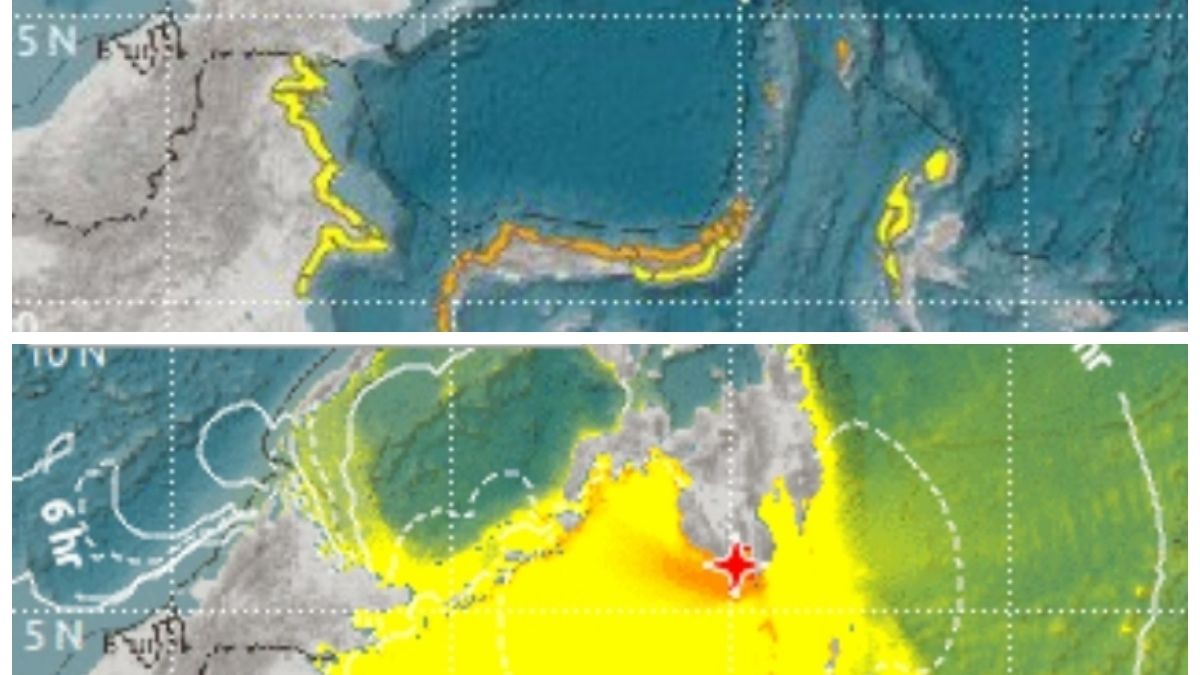
JABAR PR – A devastating natural disaster has rocked the Southeast Asia region again. Philippines earthquake todayMonday (8/6/2026), devastated the southern coast of Mindanao. This very strong tectonic shock was recorded as having power Magnitude 7.8triggering extraordinary panic and leaving massive infrastructure damage at various points.
Based on reports Philippine Institute of Volcanology and Seismology (PHIVOLCS), the epicenter of the latest earthquake was tracked off the coast of Sarangani Province, to be precise about 26 kilometers from the Kablanan area. Considering this is a type shallow earthquake with a depth of only 55 kilometers, the destructive power felt at the ground surface is very destructive.
Philippines Earthquake Casualty Update: SAR Team Jumps to Location
The impact of this brutal shock is starting to become clear. A report from the emergency response center on Monday afternoon confirmed the increase in numbers Philippines earthquake fatalities. At least 16 people were reported to have died when they were crushed by building debris.
Meanwhile, process evacuation of residents continues to be dramatic. An estimated 130 to 200 people suffered minor to serious injuries and were rushed to the nearest emergency hospital. The authorities are also still looking for 7 residents who were declared missing, where Philippine search and rescue team continue to search under the concrete rubble.
General Santos Building Damage and Facility Paralysis
General Santos City and South Cotabato are the red zones with the most severe impacts. Damage to the General Santos building reported to be very massive. At least 37 vital structures were destroyed or experienced dangerous structural cracks.
Several public facilities that were reported to have collapsed included a major shopping center, several blocks of the Notre Dame of Dadiangas University building, as well as several fast food restaurants. Not only that, the Bucana Bridge, which is the lifeblood of transportation, also experienced serious cracks, forcing local authorities to close traffic access. Power outages and communication network disruptions in the Koronadal region have made rescue operations even more difficult.
Threat of Aftershocks and Emergency Response
Post-main shock, PHIVOLCS seismic loggers continued to detect hundreds aftershock (aftershocks) with varying magnitudes. The head of PHIVOLCS firmly warned the public to stay away from tall buildings and houses whose structures are cracked or slanted.
Responding to this crisis, Philippine President Ferdinand “Bongbong” Marcos Jr. had instructed the operation emergency response national scale. The National Disaster Risk Reduction and Management Council (NDRRMC) together with the Department of Social Welfare are currently mobilizing the distribution of logistics, refugee tents and medicines to disaster hotspots in Mindanao. Emergency operations are focused on saving lives in the golden first 24 hours.***