Bulukumba News – The sound of breaking glass and falling objects shattered the morning in the southern Philippines, Monday, June 8 2026. In a number of Mindanao coastal cities, residents ran out of their homes as the floor shook violently under their feet. Some shouted for family members, while others tried to get away from the building which was starting to crack and collapse.
Within seconds, the streets were filled with people looking for a safe place. Dust rose from the ruins of buildings, while emergency vehicle sirens began to sound from various directions.
The 7.8 magnitude earthquake was then recorded as one of the strongest earthquakes to hit the Philippines in 2026.
According to official information from the Philippine Office of Civil Defense (OCD), at least 17 people died and at least 129 people were injured as a result of the disaster. The victims reportedly came from a number of areas, including Davao, General Santos and Cotabato.
Also Read: Increased Risk of Large Earthquake in Japan Trench, Residents Asked to Sleep in Evacuation Ready Clothes!
Also Read: 60 Aftershocks: Larantuka Surrounded by Tremors
Mindanao earthquake victims increase
Philippine Media, Inquirer And ABS-CBNreported that some of the victims died as a result of being hit by buildings that collapsed when the shaking occurred. Others reportedly died after suffering heart attacks due to panic triggered by the large earthquake.
Rescue teams moved to various affected points to evacuate and search for victims. Hospitals in a number of cities also reported receiving many injured victims who needed medical treatment.
Local authorities are still collecting data so the number of victims has the potential to change as the search and evacuation process continues.
Also Read: BMKG Sets 15 Tsunami Alert Areas After M 7.7 Philippines Earthquake, Here’s the List
Also Read: Philippines M 7.7 Earthquake Triggers Tsunami in Indonesia, BMKG Detects Waves in 3 Regions
General Santos was worst affected
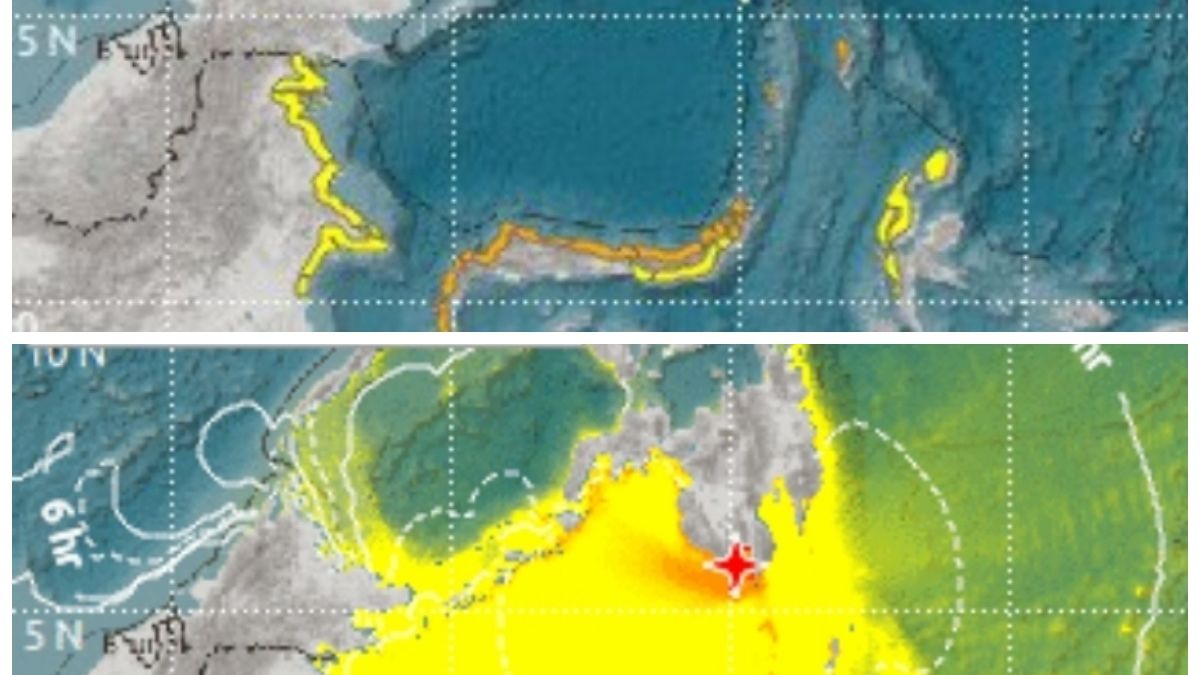
Based on data from the Philippine seismological institute, the epicenter of the earthquake was in the sea at a depth of around 33 kilometers, around 32 kilometers southwest of Maasim, Sarangani Province.
General Santos is one of the regions experiencing the most severe impact. The port city with a population of more than 700 thousand people is known as an important center for the tuna export industry and trade in the southern region of the Philippines.
The strong shaking also triggered a tsunami about one meter high in several coastal areas. However, according to the Pacific Tsunami Warning Center, the waves did not cause any casualties or major damage.
Even though the tsunami threat has subsided, many residents still choose to stay in open areas because they are worried about aftershocks. Fields, school yards and emergency evacuation locations were filled with families waiting for developments in the situation.
Reports of casualties and damage continue to come in from various regions of Mindanao. In the midst of ongoing rescue activities, the earthquake left visible scars not only on the collapsed buildings, but also on thousands of families who in an instant had to face loss and uncertainty.***