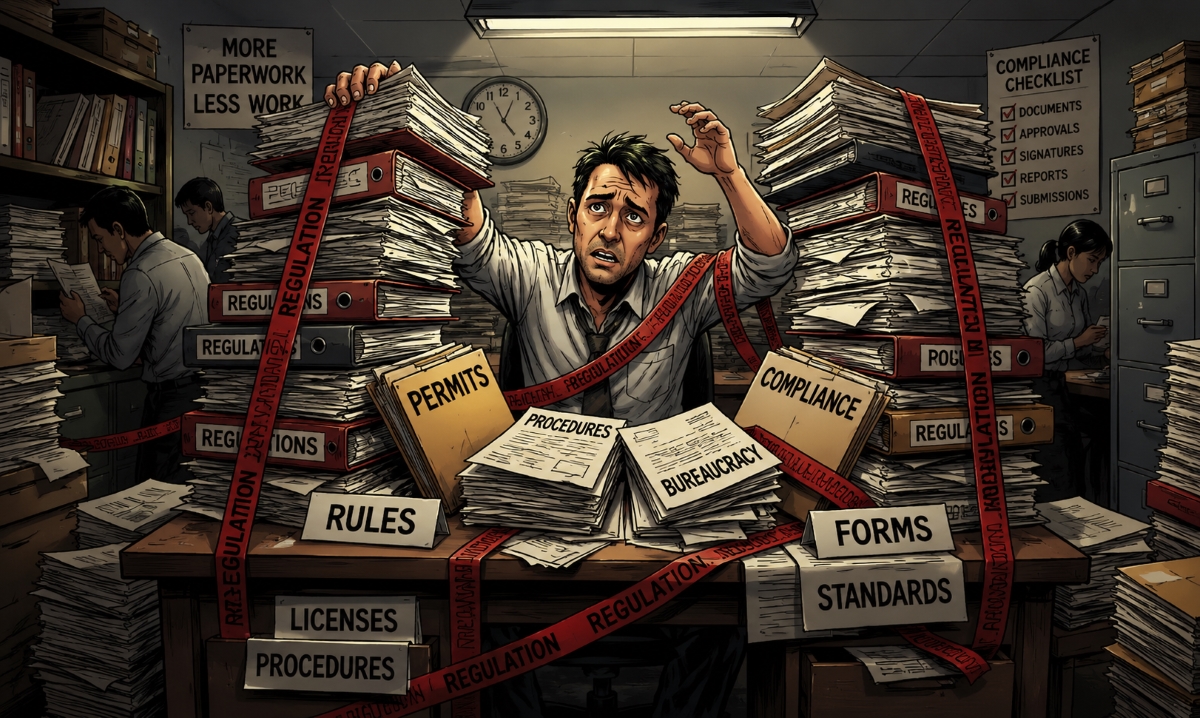
The proposed revision to Indonesia’s Copyright Law has drawn attention from various stakeholders. Industry players, organizations, and academics have argued that the regulatory changes could create new challenges if enacted without comprehensive study.
The impact is expected to extend beyond digital platforms, potentially affecting micro, small, and medium-sized enterprises (MSMEs), the creative industry, foreign investment, and the growth of Indonesia’s digital economy.
Several stakeholders have warned that overly rigid regulations could create uncertainty for digital service providers. If such conditions arise, Indonesia could lose its competitiveness in attracting investment while also hindering the development of creative digital talent in pursuit of the Golden Indonesia 2045 vision.
Concerns Over Higher Compliance Costs for Digital Platforms
One of the primary concerns is the potential increase in operational costs and complexity for digital platforms.
According to discussions surrounding the proposed revision, the new Copyright Law could require stricter content takedown mechanisms, more sophisticated copyright infringement detection systems, and layered administrative sanctions. Such provisions are viewed as potentially creating a less favorable business environment for digital service providers.
Concerns Over the Sustainability of Media Businesses
Similar concerns have also been raised by global technology company Google. In an official statement, Google expressed reservations about several provisions in the proposed Copyright Law, arguing that they could restrict the distribution of digital content by news publishers.
According to Google, such restrictions would not only reduce the visibility of local media outlets in search engine results but could also lead to declines in reader traffic and advertising revenue, both of which are critical to the sustainability of media businesses.
“We continue to build commercial partnerships, including for premium content, to support a sustainable industry ecosystem in the future. Rigid and overly broad mandates would ultimately harm local creators, slow innovation, and weaken Indonesia’s competitiveness in the global landscape, thereby discouraging the investment needed to drive its digital future,” Google said in its official statement.
Potential Impact on MSMEs
Beyond digital platforms, micro, small, and medium-sized enterprises (MSMEs) are also expected to be affected.
Concerns over potential legal sanctions could encourage digital platforms to remove or block content more aggressively as a precautionary measure.
If this occurs, promotional opportunities for MSMEs and local creators—many of whom rely on digital platforms to market their products, services, and creative works—could become increasingly limited.
Risks to Indonesia’s Creative Ecosystem
According to The Art & Science of Authenticity, a study conducted jointly by TikTok and Accenture Song, Indonesia’s creator economy is projected to reach US$376 billion, or more than Rp6,000 trillion, by 2030.
The Indonesian Copyright Reproduction Association (PRCI) also emphasized the importance of maintaining a balance between protecting intellectual property rights and ensuring public access to information and creative works.
PRCI warned that regulations that are excessively restrictive could disrupt the healthy distribution chain of creative content and ultimately harm the broader creative ecosystem.
Meanwhile, Paulus Wisnu Yudoprakoso, S.H., M.H., a lecturer at Atma Jaya University, argued that copyright regulations in the digital era should serve as catalysts for innovation rather than obstacles to technological and creative development.
“Copyright regulation in the digital era should function as an enabler, not a barrier. If the resulting rules become overly restrictive and impose excessive administrative compliance burdens on digital platforms, innovation will be the primary casualty,” Paulus said.
“In the long term, investors may reconsider their plans to invest in Indonesia’s digital sector. Ultimately, as Indonesia strives to realize its Golden Indonesia 2045 vision, the country risks falling behind in developing globally competitive creative digital talent,” he added.
Paulus expressed hope that the government would open a more inclusive dialogue with all stakeholders before finalizing the revision to the Copyright Law.
According to him, a modern copyright framework should be capable of protecting intellectual property rights while simultaneously fostering innovation, supporting digital economic growth, and advancing Indonesia’s national creative industries.***