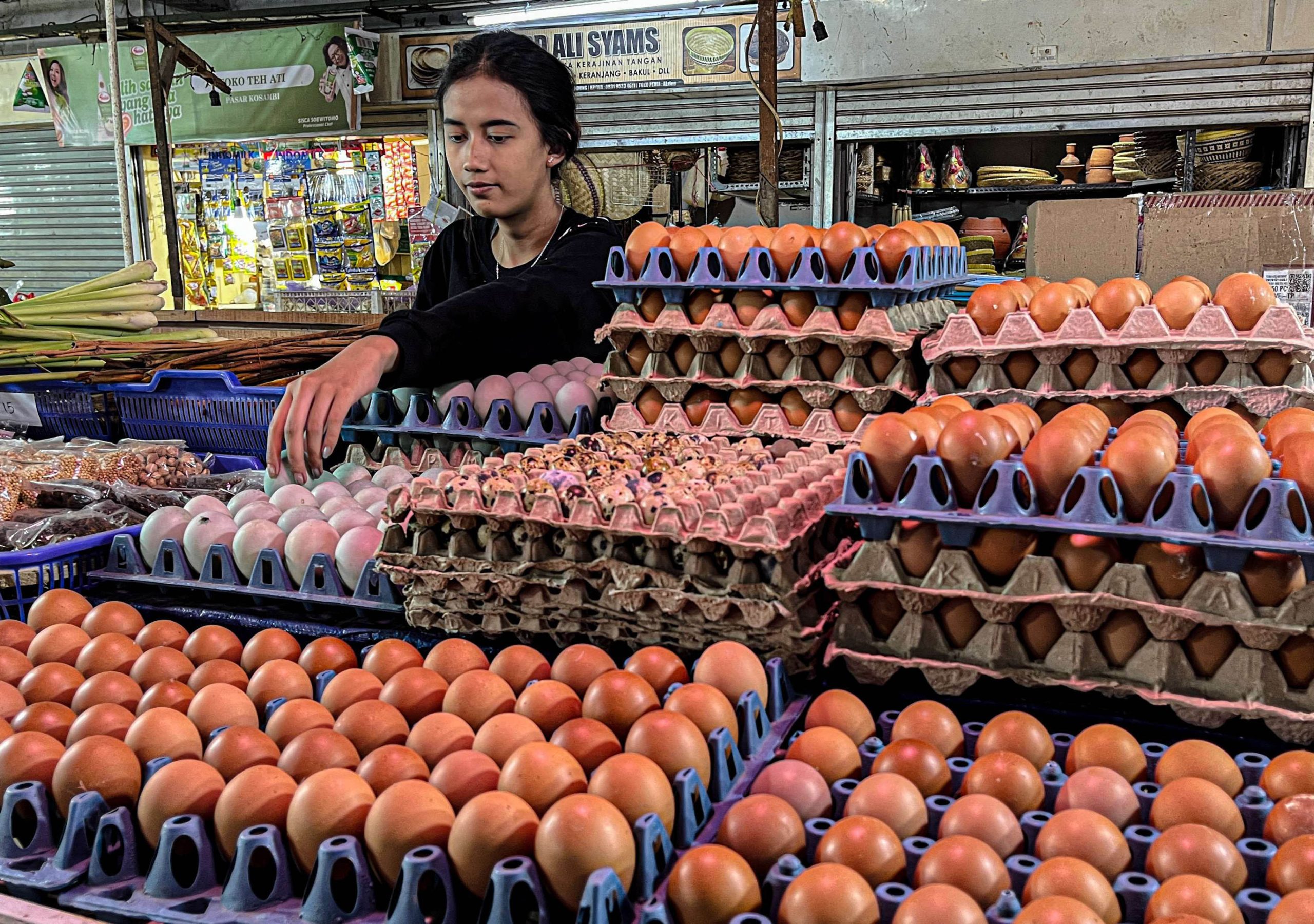
Strengthening domestic market absorption and the food supply chain is essential to maintaining stable chicken meat and egg prices at the farm level, where prices have recently declined. This was stated by Center of Economic and Law Studies (Celios) researcher Isnawati Hidayah, as quoted by Antara News Agency on Thursday, July 2, 2026.
She said greater certainty in the absorption of livestock products should be supported through a more sustainable food procurement system, including more stable purchasing contracts with farmers and greater utilization of locally produced food.
“For other policy measures, the government should develop a system capable of mapping production, consumption, and distribution more accurately so that market interventions are no longer reactive,” Isnawati said.
According to her, the government could optimize domestic demand by encouraging the development of micro, small, and medium enterprises (MSMEs), particularly community kitchens and canteens, while strengthening production, consumption, and distribution mapping systems to ensure more targeted market interventions.
She also proposed involving state-owned food enterprises (SOEs) in absorbing agricultural output through food assistance programs, government food reserves, and cold storage facilities.
Strengthening the cold chain system and the food processing industry is also considered necessary to expand the absorption of livestock products.
“The government also needs to begin introducing and supporting our farmers with cold chain infrastructure, such as cold storage facilities, while also developing the food processing industry,” she said.
Isnawati emphasized that meeting domestic demand and strengthening domestic market absorption should remain the top priority, while exports should serve as a secondary option once domestic needs have been fully met.
“Exports can certainly become one of the options. However, it is important to note that Indonesia’s current export volume remains relatively small compared to domestic production. Therefore, the priority should be strengthening the domestic market first before gradually expanding exports,” she added.
Domestic Market Remains the Priority
Executive Director of the Institute for Development of Economics and Finance (Indef), Esther Sri Astuti, shared a similar view, stressing that strengthening the domestic market should take precedence before expanding egg exports.
“In my opinion, the focus should first be on the domestic market, considering its enormous potential and the fact that eggs remain highly affordable for consumers,” Esther said.
In March 2026, Indonesia exported 545 tons of poultry products worth Rp18.2 billion to Singapore, Japan, and Timor-Leste. The exports consisted primarily of 517 tons of table eggs, while the remainder included chicken meat and value-added processed poultry products.
She explained that exports could only be expanded effectively after domestic market absorption had been fully optimized and surplus egg production remained available.
“Once the domestic market has been fully supplied and there is an egg surplus, farmers—with support from exporting companies and the government—can begin exporting eggs abroad,” she said.
Esther also emphasized that the government should support the long-term sustainability of poultry farming by providing more affordable feed for laying hens to reduce production costs.
“By providing incentives for lower-cost layer feed, I believe egg production costs will decline, resulting in lower prices and better product quality,” she said.
She noted that maximizing domestic absorption is essential for stabilizing egg prices. According to Esther, rising egg production—driven by the growing population of laying hens and the entry of new farmers—has created an oversupply, causing both egg and chicken meat prices to decline.
“The entry of new farmers has resulted in abundant egg production. When supply significantly exceeds demand, market forces naturally drive prices down sharply,” she explained.
Beyond supply issues, Esther pointed out that lengthy distribution chains have made farm-gate prices more volatile than retail prices, largely because intermediaries continue to play a significant role in price formation.
The decline in prices is reflected in national market data. According to the Ministry of Trade’s Market Monitoring and Basic Needs Information System (SP2KP) as of July 1, 2026, the weighted national price of chicken eggs fell by 0.67%, from Rp26,329 to Rp26,153 per kilogram. During the same period, the price of broiler chicken also declined by 0.28%, from Rp35,305 to Rp35,207 per kilogram.
Meanwhile, the government has prepared the distribution of subsidized feed corn through the Food Supply and Price Stabilization (SPHP) program. Minister of Agriculture and Head of the National Food Agency (Bapanas), Andi Amran Sulaiman, said the government has allocated 242,000 tons of subsidized feed corn for 2026, with an initial distribution target of 213,200 tons through the state logistics agency Perum Bulog.***