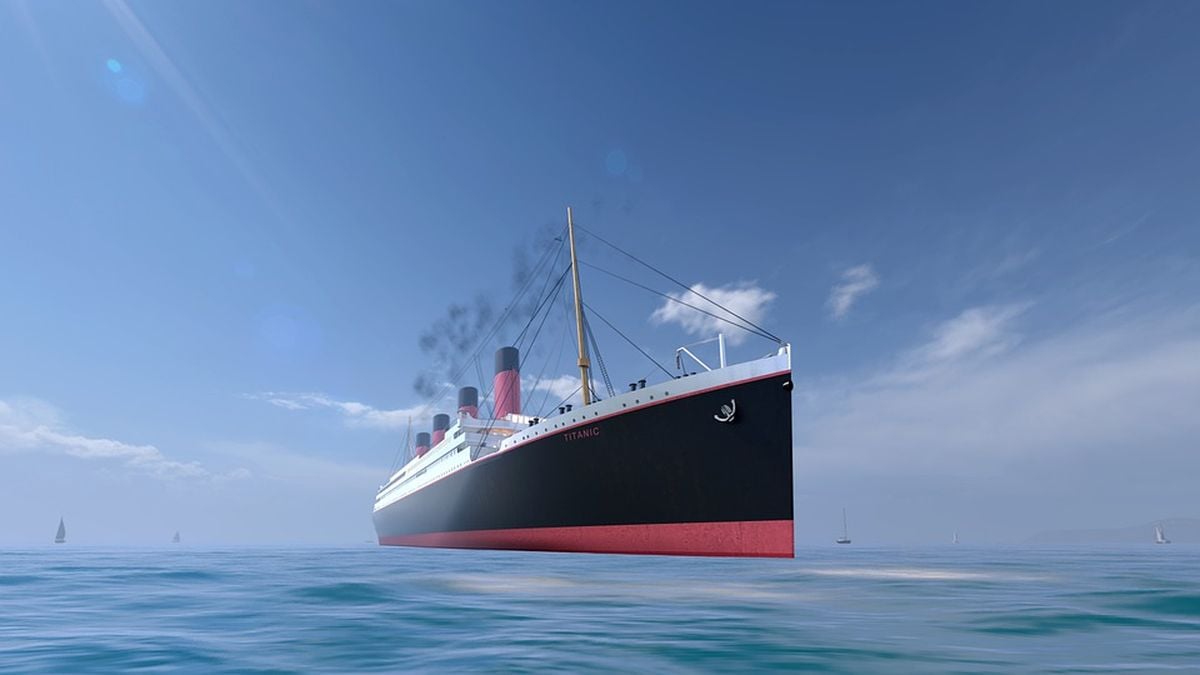
KABARMEGAPOLITAN.com – The sinking of the RMS Titanic on April 14 1912, here are seven factors thought to be the cause. On April 14, 1912, the largest and most magnificent ship of its time, the Royal Mail Ship (RMS) Titanic, sank. Titanic was the largest and most luxurious cruise ship of its time, measuring more than 882 feet long from bow to stern—the length of four city blocks—and 175 feet high, and weighing more than 46,000 tons.
Titanic boasted cutting-edge technology, including a sophisticated electrical control panel, four elevators, and a sophisticated wireless communications system that could transmit Morse Code.
However, on the night of April 14, 1912, just four days after leaving Southampton, England on her maiden voyage to New York, the Titanic struck an iceberg off the coast of Newfoundland and sank.
Now, more than a century after the Titanic sank, experts are still debating the possible causes of this historic disaster that claimed the lives of more than 1,500 passengers and crew.
Most of them agree that only a combination of circumstances can fully explain what destroyed the supposedly unsinkable ship.
Quoting from History, here are seven factors that are thought to have caused the Titanic to sink:
1. Sailing Too Fast
From the start, some blamed the Titanic’s captain, Captain EJ Smith, for sailing the large ship at high speed (22 knots) through iceberg-filled North Atlantic waters.
Also read: Ship carrying Spanish foreigners sinks in Labuan Bajo, Basarnas extends search period for victims
Some people believe that Smith was trying to improve the crossing time of the Titanic White Star’s sister ship, the Olympic.
However, in a 2004 paper, engineer Robert Essenhigh speculated, that efforts to control the fire in one bunker The ship’s coal may explain why the Titanic sailed at full speed.
2. Wireless Radio Operators Ignore Iceberg Warnings
Less than an hour before the Titanic struck the iceberg, another nearby ship, the California, radioed to say it was stopped by solid ice.
However, because the warning did not begin with the prefix “MSG” (Master’s Service Gram), which would require the captain to directly acknowledge receipt of the message, Titanic radio operator Jack Phillips deemed the other ship’s warning not urgent, and did not transmit it.
3. Possible Fatal Turn
According to claims made in 2010 by Louise Patten (granddaughter of Titanic’s most senior surviving officer, Charles Lightoller), one of the crew members panicked after hearing the order to turn right to avoid approaching the iceberg.
Because the ship was operating on two different steering sequence systems, it became confused and turned in the wrong direction—heading straight for the ice.
Patten included this version of events, which he said he heard from his grandmother after Lightoller’s death, in his fictional account of the Titanic disaster, Good as Gold.
4. Titanic Makers Tried to Cut Costs
Also read: Synopsis of the FILM In the Heart of the Sea, Whale Hunting, This Ship Sinks
In 1985, when an American-French expedition finally discovered the historic shipwreck, investigators discovered that the Titanic had not sunk intact after hitting an iceberg, but had broken up on the surface of the sea.
Materials scientists Tim Foecke and Jennifer Hooper McCarty blamed more than three million rivets holding the hull’s steel plates together.
They examined rivets brought from the wreck and found they contained high concentrations of “slag,” a smelting residue that can cause metal to splinter.
This may have weakened the part of Titanic’s hull that hit the iceberg, causing it to break apart on impact.
5. Mirage and Horizon Blurred Due to Weather Conditions
Two studies conducted around the time of the 100th anniversary of the Titanic disaster in 2012 showed that nature played a key role in the ship’s fate.
The first suggestion, that the Earth came very close to the moon and sun that year, increased their gravitational pull on the ocean and produced record tides, leading to an increase in the amount of ice floating in the North Atlantic around the time of the sinking.
A second study, by British historian Tim Maltin, claims that atmospheric conditions on the night of the disaster may have caused a phenomenon called superrefraction.
This bending of light could have created a mirage, or optical illusion, that prevented Titanic’s lookouts from seeing the iceberg clearly.
It would also make the Titanic appear closer, and smaller, to the nearby ship California, causing its crew to assume it was a different ship without a radio, preventing them from trying to communicate.
Also Read: BREAKING NEWS: KMP Yunicee Sinks in the Bali Strait, Temporary Number of Victims Died 6 People
From their perspective and with these foggy conditions, when the Titanic began to sink, the California crew would have thought it was just sailing away.
6. The Scouts Didn’t Have Binoculars
The second officer, David Blair, who held the key to Titanic’s binocular storage in his pocket, was removed from the ship before leaving for her maiden voyage from Southampton, and forgot to hand the key over to the officer replacing him.
At a later investigation into the sinking, Titanic watchdogs said binoculars may have helped them spot and avoid the iceberg in time.
Blair kept the key as a memento of his near miss, it was auctioned in 2007 and fetched around £90,000.
7. There Are Not Enough Lifeboats
No matter what caused the Titanic to sink, such a massive loss of life might have been avoided if the ship had carried enough lifeboats for its passengers and crew.
However, the White Star left Southampton with only 20 lifeboats, the legal minimum, with a total capacity of 1,178 people.
Although Maurice Clarke, the civil servant who inspected the Titanic in Southampton, recommended carrying 50 percent more lifeboats, his handwritten notes at the time reveal that he felt his job would be threatened if he did not give the famous ship the green light.
Due to the chaos that occurred after the Titanic hit an iceberg, 20 lifeboats abandoned the ship with around 400 empty seats, leaving more than 1,500 people to die in the cold ocean waters.***