PAKU MEDIA, TEHERAN – Tensions in the Middle East have peaked again after Iran and the United States were involved in mutual attacks in the strategic area of the Strait of Hormuz.
The latest clash occurred when the world was waiting for the opportunity to achieve a permanent ceasefire following the prolonged conflict between Iran, the US and its ally, Israel.
Iran’s military accused Washington of violating the agreement to temporarily halt attacks by attacking an Iranian oil tanker that was moving from the Jask region to the Strait of Hormuz.
Tehran also claims that other ships around the port of Fujairah, United Arab Emirates, were also targeted.
A spokesman for Iran’s Khatam al-Anbiya Headquarters said the attack was accompanied by air operations in a number of Iranian coastal civilian areas, including Khamir, Sirik and Qeshm Island.
“Iran immediately responded by attacking American military ships east of the Strait of Hormuz and south of Chabahar Port,” said a statement carried by Iranian state media, IRIB.
According to Iran, the retaliatory attack caused significant damage to US military ships. Tehran also warned that any new form of aggression would be met with harsher measures.
Also read: French cargo ship attacked in the Strait of Hormuz, Iran-US tensions heat up again on world oil routes
US Claims Acting in Self-Defense
On the other hand, United States Central Command (CENTCOM) provides a different version. Washington said its troops only carried out a “self-defense attack” after a US warship was threatened while passing through the Strait of Hormuz towards the Gulf of Oman on May 7.
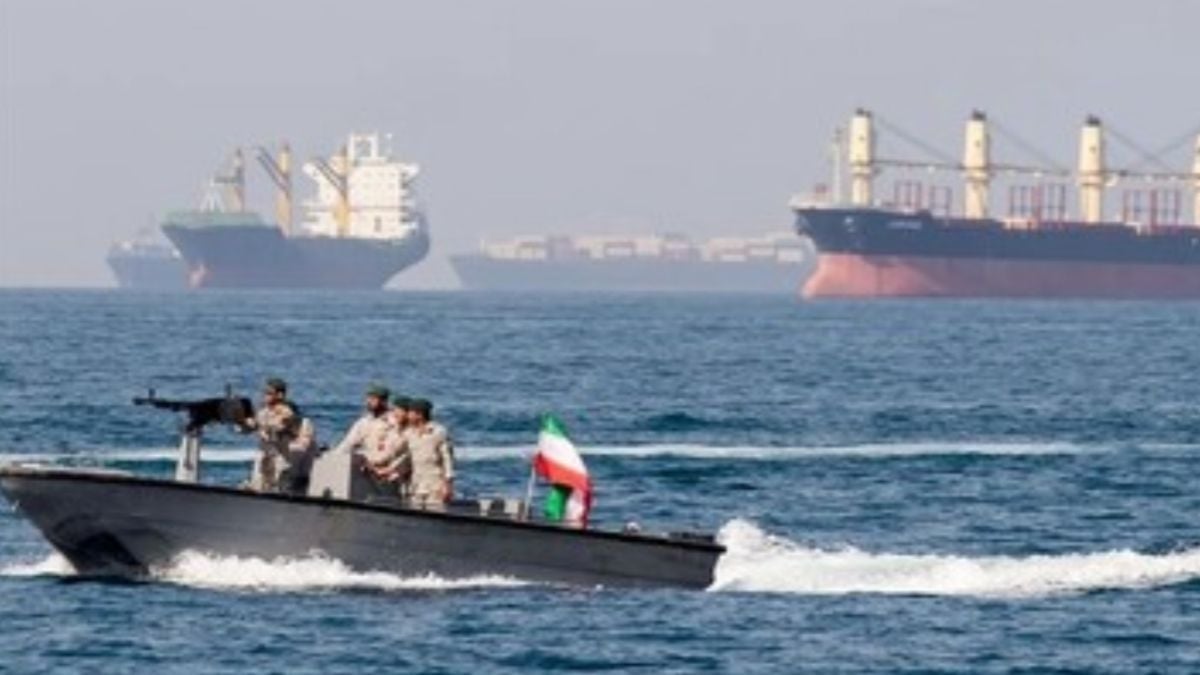
CENTCOM said Iran launched coordinated attacks using missiles, drones and speedboats against US Navy destroyers, including the USS Truxtun, USS Rafael Peralta and USS Mason.
However, the US claimed that no American ships or personnel were directly hit.
In response, the US military is said to have destroyed a number of Iranian military facilities suspected of being the center of attack operations, including missile and drone launch sites, command centers, and intelligence and surveillance facilities.
“CENTCOM does not want escalation, but is ready to protect American forces,” their official statement said.
The world is worried, the Strait of Hormuz is a bet for the global economy
This latest clash has sparked international concern because the Strait of Hormuz is a vital route for world energy distribution. About a fifth of global oil and gas supplies pass through the narrow waterway every day.
Blockades or open conflict in the region have the potential to shake the global economy and trigger a spike in world energy prices.
In the midst of this hot situation, a glimmer of hope for peace began to emerge. Iran is reportedly studying a peace proposal from the United States which it believes could officially end the war.
However, until now, two main issues are still stumbling blocks: Washington’s demands that Iran stop its nuclear program and the full opening of the Strait of Hormuz.
An Iranian Foreign Ministry spokesman said Tehran would soon provide an official response to the proposal.
Also Read: Iran Warns of Risk of Strait of Hormuz Disturbance If Oil Exports Are Restricted
Trump: “We’re Very Close to a Deal”
US President Donald Trump said he was optimistic that a peace agreement could be reached in the near future.
“They want to make a deal. We’ve had very good conversations in the last 24 hours,” Trump told reporters in the Oval Office.
The day before, Trump even stopped the military operation entitled “Project Freedom” which aimed to open the blockade of the Strait of Hormuz. This step is said to be a positive signal in the peace negotiation process.
US media, Axios, reported that Washington and Tehran are now closer to agreeing on a 14-point memorandum containing an initial peace framework.
In the draft, Iran is said to be willing to stop enriching uranium for a certain period and not develop nuclear weapons. In return, the US will lift some economic sanctions and release billions of dollars in frozen Iranian assets.
The deal is also said to include reopening the Strait of Hormuz within 30 days of signing.
If achieved, this agreement has the potential to be the biggest turning point in relations between Iran and the United States after decades of tension, economic sanctions and threats of open war in the Middle East region.***