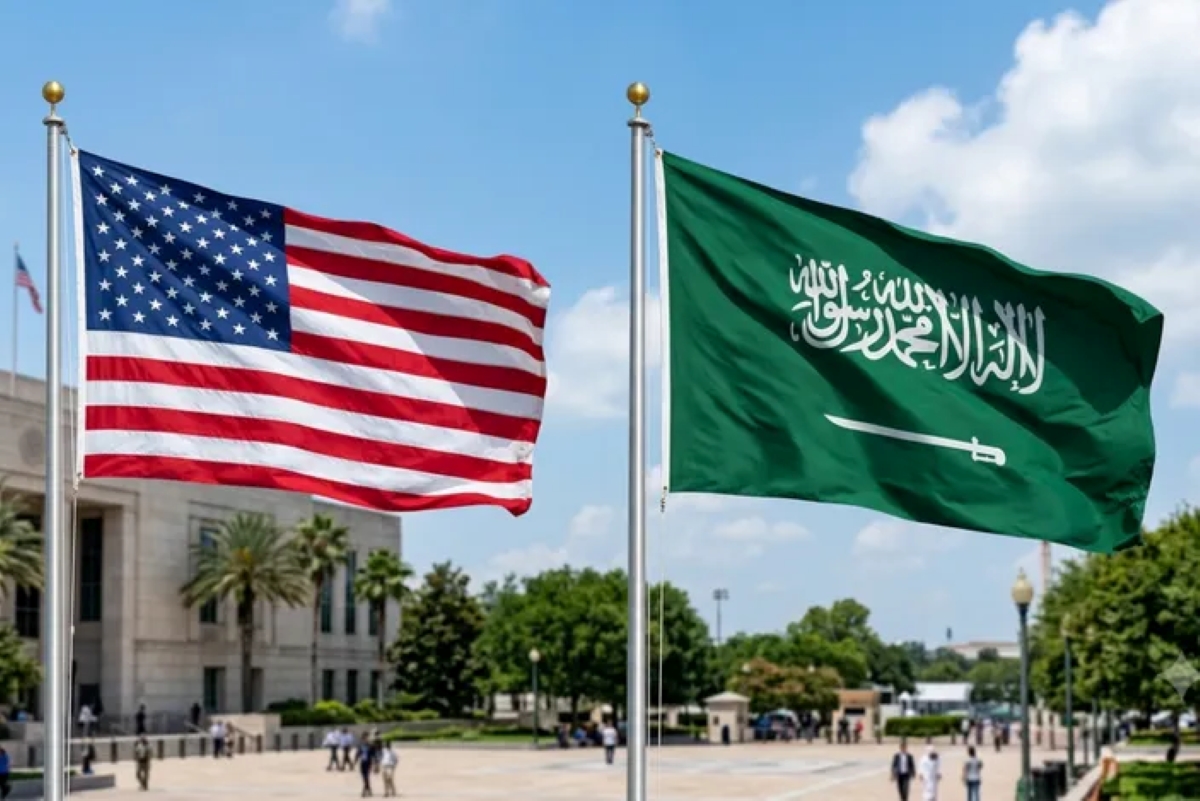
The United States has signed a nuclear cooperation agreement with Saudi Arabia that could pave the way for the kingdom to enrich uranium in the future.
The announcement has sparked widespread controversy as it comes while the United States is engaged in a war with Iran.
According to The Guardian, the U.S. Department of Energy said Energy Secretary Chris Wright and his Saudi counterpart, Prince Abdulaziz bin Salman, signed a “peaceful nuclear cooperation agreement” along with a “bilateral safeguards agreement” on Wednesday.
The full details of the agreement have not yet been made public.
The agreement will be submitted to Congress for review, where it is expected to face opposition from lawmakers concerned that insufficient monitoring safeguards could allow Saudi Arabia to develop uranium enrichment capabilities.
Wright said the agreement reflects the shared commitment of both countries to strengthening U.S.-Saudi commercial ties.
“These agreements uphold the highest standards of nuclear safety and nonproliferation while relying on the world’s best nuclear technology,” he said.
According to the U.S. Department of Energy, the partnership with Saudi Arabia is expected to expand American nuclear technology exports, create high-paying jobs, and strengthen the United States’ energy security and national security posture.
A report submitted to Congress earlier this year urged support for the agreement, arguing in part that it would prevent strategic competitors such as China and Russia from taking advantage of the opportunity.
However, the agreement is not expected to include the stringent monitoring measures imposed by the International Atomic Energy Agency (IAEA) under the 2015 Iran nuclear agreement.
Nonproliferation groups have long warned that such an arrangement could provide Saudi Arabia with a pathway toward developing nuclear weapons.
Saudi officials have previously stated that the kingdom would need nuclear weapons if Iran were to acquire them.
“Giving Saudi Arabia uranium enrichment technology is a very bad idea. But doing so in the middle of a war over Iran’s nuclear program is extraordinarily reckless. Saudi enrichment will create enormous pressure on Iran to obtain a nuclear bomb,” said Rosemary Kelanic, Director of the Middle East Program at Defense Priorities.
One day before the agreement was announced, U.S. Defense Secretary Pete Hegseth appeared before the U.S. Senate to request additional funding as the United States continues its campaign to prevent Iran from developing uranium enrichment capabilities.
Another development that has further heightened regional tensions is the signing of a joint defense pact between Saudi Arabia and Pakistan following Israel’s attack on Qatar.
Pakistan’s defense minister later stated that the country’s nuclear program would be available to Saudi Arabia if needed.***