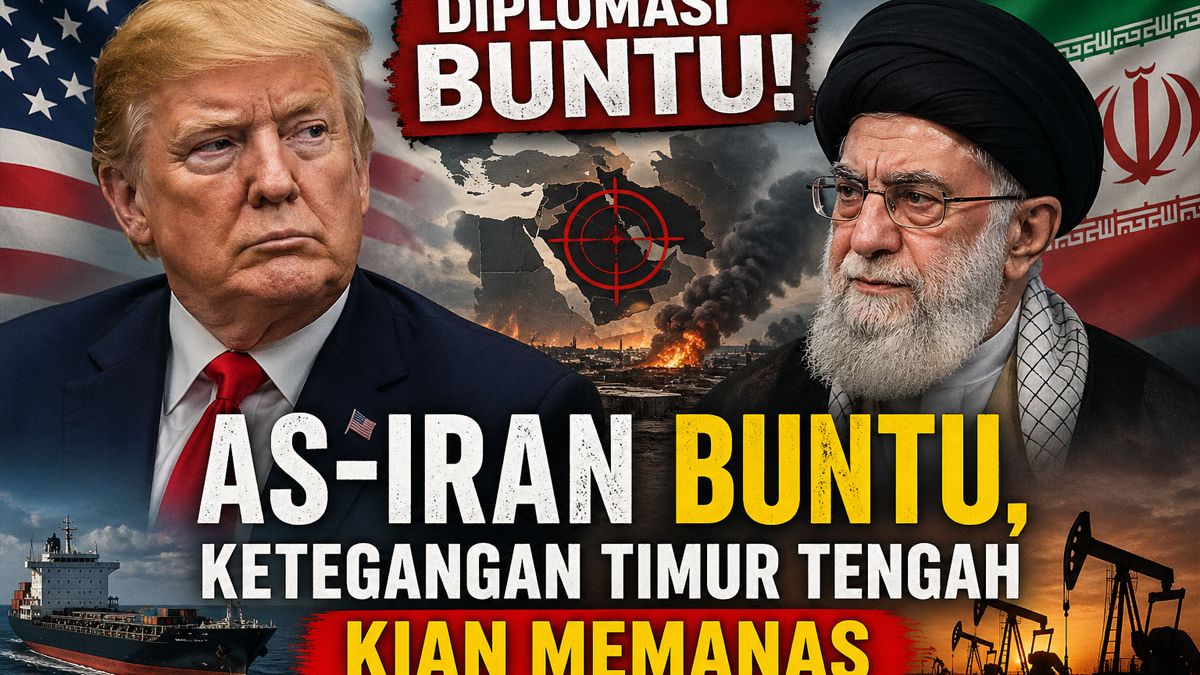
JABEJABE MEDIA – Tensions between the United States and Iran have increased again after diplomatic efforts between the two countries reached a deadlock in April 2026. The cancellation of plans for further negotiations by US President Donald Trump is a strong signal that the negotiation path has not found a common ground, amidst the conflict that continues to heat up in the Middle East region.
This situation was triggered by sharp differences regarding the nuclear issue and economic pressure. Washington continues to demand restrictions on Iran’s nuclear program, while Tehran views these conditions as unbalanced and detrimental to the country’s sovereignty.
Diplomacy Stalls Amid Pressure
Also Read: Iran-US Deadlock, Trump Cancels Mission to Islamabad When Negotiations Stall
The Iranian government emphasized that current conditions do not support constructive dialogue. Pressure in the form of sanctions and restrictions on economic access is considered to be the main obstacle to the creation of fair negotiations.
Iranian President Masoud Pezeshkian stated that the main obstacle to dialogue is ongoing external pressure. He emphasized that “blockade of ports is the main obstacle to ‘genuine negotiations’,” as quoted by Reuters on April 22, 2026.
Similar views were expressed by senior Iranian officials who rejected negotiations under pressure. He said, “will not engage in negotiations that resemble a surrender,” quoted by Reuters on April 21, 2026.
On the other hand, United States President Donald Trump decided to cancel plans for a diplomatic visit related to the talks. He said, “the trip wasn’t worth the cost,” quoted by Reuters on April 26 2026.
Regional Tensions Increasing
Also Read: Indonesia and 7 Muslim Countries Condemn Israel’s Action at Al-Aqsa, What is the Impact?
This diplomatic deadlock occurred in the midst of a military conflict that has been ongoing since the end of February 2026. Attacks and retaliatory actions between related parties have worsened the security situation in the region, including in strategic routes such as the Strait of Hormuz.
Mediation efforts through third parties were carried out, but have not yet resulted in a concrete agreement. Iranian Foreign Minister Abbas Araqchi called the previous dialogue process “very fruitful,” quoted by The Guardian on April 25 2026, although the latest developments show stagnation.
This condition raises global concerns, especially regarding energy stability and the potential for widespread conflict. As of the end of April 2026, there are no signs that the two countries will return to the negotiating table anytime soon.***