THE MIND OF THE PEOPLE — United States Vice President JD Vance led negotiations at the Buergenstock resort, Switzerland, on Sunday (21/6/2026) to confirm a temporary peace deal with Iran. However, this diplomatic process was overshadowed by Iran’s announcement that it had closed the Strait of Hormuz again due to Washington’s failure to stop fighting in Lebanon.
Quoting Reuters, the memorandum of understanding on a path to ending the war agreed a week ago requires the reopening of the strait and the cessation of all hostilities, including in Lebanon, which was invaded by Washington’s ally, Israel, in March. However, with minimal signs of an end to the fighting there, Iran stated on Saturday (20/6/2026) that it had closed the shipping lane again.
US officials denied the strait had been closed and said 55 merchant ships passed through it on Saturday. But on Sunday, Iran’s Fars news agency quoted a military source as saying no new permits had been issued for ships to pass through until further notice. Ship tracking data showing active positions broadly supports Iran’s claim that the strait is closed, with no tanker crossings recorded since Tehran announced the move on Saturday afternoon. Iran’s Tasnim news agency, citing a source close to the negotiating team, reported that the strait will not reopen until the ceasefire in Lebanon is respected, and the waterway will also remain closed until waivers allowing Iranian oil sales are issued.
Also Read: Iran Threatens to Close the Strait of Hormuz Again, Accuses Israel of Violating the Ceasefire After Attacking Lebanon
US President Donald Trump said he agreed to a memorandum of understanding last week to avoid a global depression caused by high oil prices caused by the closure of the strait. Since the deal was announced, oil prices have plummeted to their lowest levels since the war began, but the return of Iran’s effective blockade could see prices soar again on Monday.
Iran’s Foreign Ministry spokesman, Esmail Baghaei, said Sunday’s talks at the Qatari-owned Buergenstock mountain resort, involving Qatari and Pakistani mediators as well as Iran and the US, would last only one day. Since Washington failed to guarantee a ceasefire in Lebanon, the talks will only cover implementation of the memorandum of understanding itself, not substantive issues planned for the next stage of negotiations, Baghaei said.
The memorandum of understanding provides 60 days of talks on issues such as curbing Iran’s nuclear program in exchange for lifting international sanctions. Vance led the US delegation to face Iranian Parliament Speaker Mohammed Baqer Qalibaf. The two had previously met in the only known face-to-face talks so far, more than two months ago. “I think we’re going to make progress on the nuclear issue, make progress on the Lebanon cease-fire issue,” Vance told reporters at Joint Base Andrews, Maryland, before leaving.
Also read: Trump claims Israeli control in Lebanon, says Netanyahu needs to be kept ‘a little sane’
Failed Ceasefire
On Saturday, Iran’s Revolutionary Guard, accusing Israel of committing “crimes” in Lebanon in violation of the US commitment to a ceasefire, said ships would be at risk if they approached the strait, which carried a fifth of global oil supplies before the US and Israel launched attacks on Iran on February 28. A ceasefire in Lebanon has been repeatedly announced, most recently on Friday, but has appeared to have little impact on the fighting there, with more than a million people driven from their homes by the Israeli invasion.
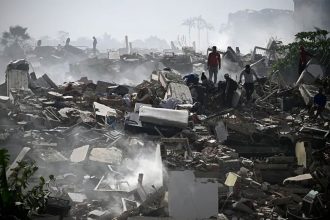
Reuters journalists in southern Lebanon watched as rescue teams carried away injured victims at the site of an Israeli attack on Saturday, which has reduced parts of Lebanon’s towns and villages to concrete rubble that local residents said resembled the Gaza Strip. Lebanese authorities said 20 people had died on Saturday. Lebanon’s armed forces said Sunday that special units were still working to dismantle unexploded Israeli bombs weighing 1,000 and 2,000 pounds dropped on southern cities.
Trump’s memorandum of understanding to end the war, which he launched with Israeli Prime Minister Benjamin Netanyahu, is deeply unpopular in Israel, which did not participate in the peace talks. Netanyahu’s government said it would not withdraw from large swathes of Lebanese territory it seized after Hezbollah fighters fired across the border into Israel in solidarity with Tehran.
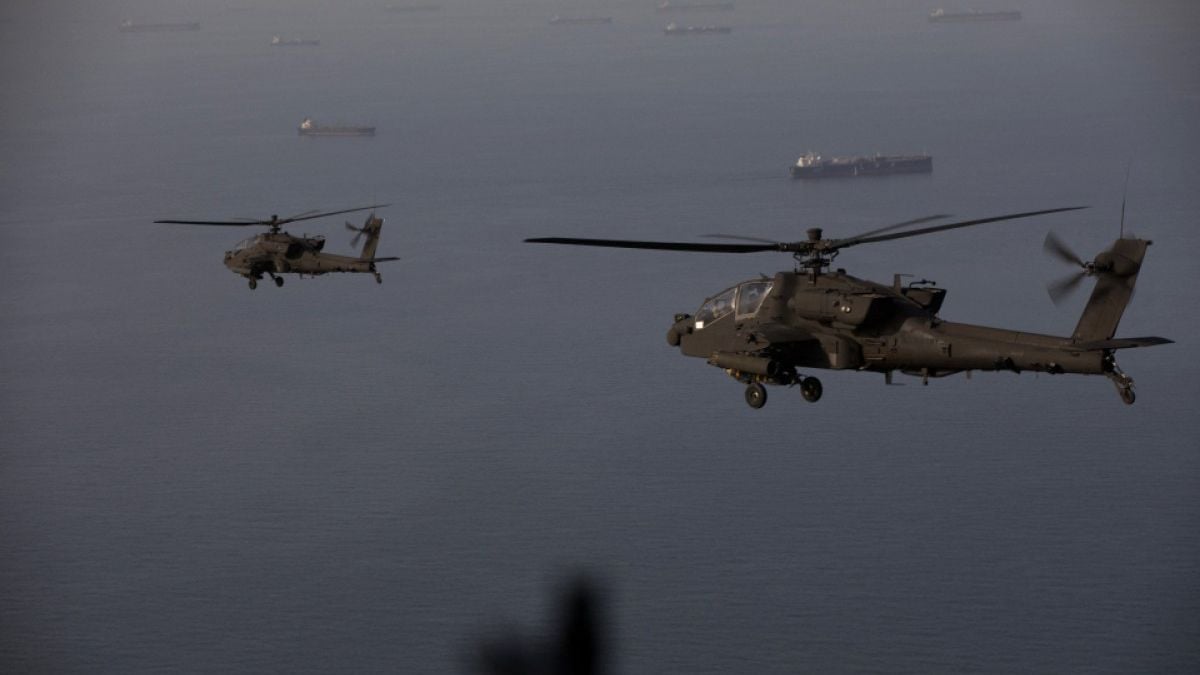
Pakistan said Prime Minister Shehbaz Sharif and Army Chief Field Marshal Syed Asim Munir had arrived to join talks at the resort, with helicopters circling overhead. In an interview with Fox News before departing the US, Vance expressed confidence that the ceasefire would hold and that he had seen no evidence of closing the Strait of Hormuz.
After Trump and Netanyahu launched this war, they stated their goals were to destroy Iran’s nuclear program, stop its ability to threaten neighboring countries with missiles and proxy groups, and enable the Iranian people to overthrow its government. Neither goal was achieved, although US officials said they had badly damaged Iran’s military and remained hopeful of a strong deal that would prevent Iran from obtaining nuclear weapons. A survey by Israel’s Hebrew University given to Reuters showed about 92 percent of Israelis believe Iran stands to gain more than Israel from a joint Israeli-US military campaign, while only 8 percent see Israel as the victor.