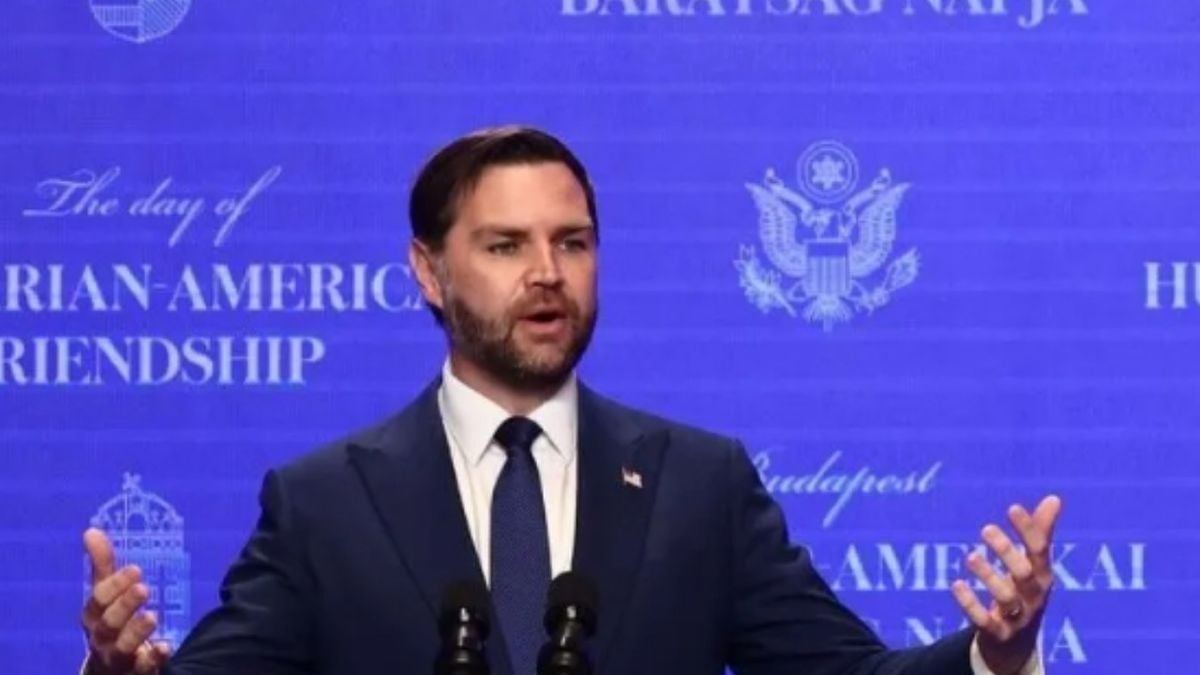
BUTOLPOST – The United States has begun sending firmer diplomatic signals to Israel after reaching a memorandum of understanding (MoU) with Iran to end the conflict that has been going on since the end of February 2026. US Vice President JD Vance emphasized that Israel must respect the peace process that is being built for the benefit of the entire Middle East region.
In a press conference in Washington DC, Thursday (18/6), Vance assessed that regional stability could only be achieved if all parties, including Israel, supported the diplomatic process.
“Fundamentally, Israelis, like everyone else, must respect this peace process which is fundamentally beneficial to them and to the entire region,” Vance said.
This statement is one of the clearest signals from the United States government that Washington wants all its allies to support the new direction of US foreign policy in the Middle East.
Vance revealed that the US government carries out high-level communications almost every day with the Israeli government and the Gulf countries to ensure the peace process proceeds according to the agreement.
The statement came just hours after the United States and Iran signed a virtual memorandum of understanding ending the military conflict that erupted on February 28, 2026.
In this agreement, the two countries agreed on a number of important steps, including ending the conflict, gradually lifting the US naval blockade, and restoring shipping activities in the Strait of Hormuz by Iran.
Iran also stated its commitment not to develop nuclear weapons. Meanwhile, discussions regarding Tehran’s nuclear program will continue through separate negotiations which are scheduled to take place over the next 60 days.
For Iran, lifting economic sanctions is one of the main targets in the negotiation process. On the other hand, the United States hopes that this agreement can pave the way towards stability in a region that has been hit by conflict for years.
Vance’s statement is seen as showing a change in Washington’s approach, which now places more emphasis on resolving conflicts through diplomacy rather than military confrontation.
If this process goes according to plan, the US-Iran agreement has the potential to become an important milestone that changes political and security dynamics in the Middle East, while reducing threats to world energy trade routes through the Strait of Hormuz.***