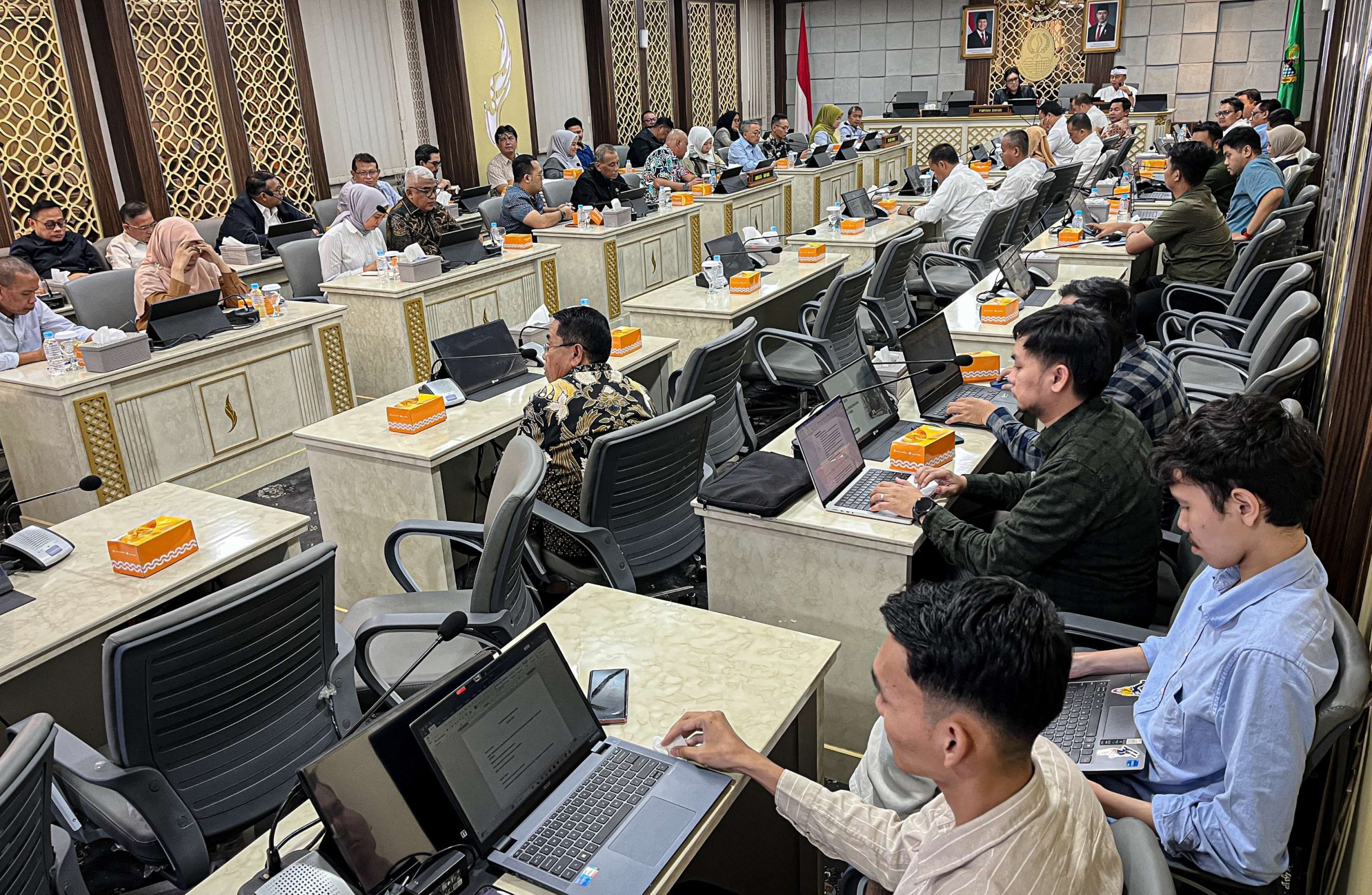
The West Java Regional House of Representatives (DPRD), which holds oversight and budgeting authority, has been urged to uncover the reasons behind the Rp5.7 trillion deficit in the province’s 2026 Regional Budget (APBD). The deficit, revealed just six months into the fiscal year, has raised serious questions and is being viewed as a mystery that requires a thorough explanation. If left unresolved, observers warn it could set a troubling precedent for regional financial governance.
Government affairs analyst Yusfitriadi from Visi Nusantara Maju said the emergence of such a large deficit midway through the implementation of the 2026 APBD naturally raises public concern.
“When the 2026 APBD was approved by the West Java DPRD and the governor, there was no deficit. Now, a massive Rp5.7 trillion deficit has emerged. This raises a major question: how could this happen?” Yusfitriadi said on Tuesday, June 30, 2026.
Because the DPRD was directly involved in drafting and approving the regional budget, he argued that the council must exercise its oversight and budgeting functions.
“We urge the DPRD to uncover the facts behind this budget deficit as part of carrying out its constitutional duties and authority,” he said.
Yusfitriadi warned that if the DPRD fails to investigate the issue, it could damage the institution’s public image. People may begin to feel they no longer have effective representation in the legislature.
He added that if lawmakers fail to identify the causes of the deficit and explain why it has become so large, the public could conclude that the DPRD merely serves as a rubber stamp rather than an institution exercising meaningful oversight.
“To prevent that perception and demonstrate that the DPRD’s functions are working properly, it should thoroughly investigate why this budget deficit occurred,” he said.
Questions Over Budget Planning
A similar view was expressed by public policy analyst Nandang Suherman from the Perkumpulan Inisiatif.
According to Nandang, the announcement of a Rp5.7 trillion APBD deficit came as a surprise because no indication of such a shortfall had emerged when the budget was approved or during the early stages of its implementation.
“If this deficit has only now surfaced after the budget has been in effect for six months, it naturally raises questions about the DPRD’s oversight role. Had its supervisory and budgeting functions been carried out effectively, this issue should have been identified much earlier,” he said.
Nandang added that the deficit also raises broader concerns about the quality of financial planning and fiscal management within the West Java Provincial Government.
“When the 2026 budget was approved, there was no deficit. Six months later, a substantial shortfall appears. Something must have happened to cause it. The DPRD must investigate and demand a full explanation from the provincial government,” he said.
Both Yusfitriadi and Nandang agreed that the deficit is a serious issue that should not be underestimated. Since it emerged during the implementation of the budget rather than at the approval stage, they believe the DPRD has a responsibility to explain its causes.
They also warned that financing the deficit through borrowing could have long-term consequences by creating additional debt obligations for the province.
Regional Secretary Responds
Meanwhile, West Java Regional Secretary Herman Suryatman, speaking after a meeting with the DPRD Budget Committee on Tuesday, June 30, 2026, did not provide a detailed explanation for the Rp5.7 trillion deficit.
Instead, he argued that the potential deficit was the result of a series of developments that had accumulated over time.
According to Herman, the provincial government has lost approximately Rp2.4 trillion in potential revenue during 2026, placing significant pressure on the budget.
“At the same time, policies such as tax exemptions for electric vehicles have affected our revenue, while one of our main sources of locally generated income is the Motor Vehicle Tax (PKB). If we simply accepted the situation, as the governor has said, our 2026 budget would reach a dead end,” Herman said.
He added that external factors—including the recent conflict between the United States and Iran, rising global oil prices, the depreciation of the rupiah, and fluctuations in the stock market—had also affected provincial finances.
“Those factors are beyond our control. We have to adjust the budget so it remains compatible with current conditions while ensuring that essential public services and minimum service standards continue to be delivered,” he said.
Herman stressed that the Rp5.7 trillion deficit remains only a potential deficit and that the figure is still subject to change.
“It depends on developments. If the central government transfers overdue Revenue Sharing Funds (DBH) within the next few days, the situation could change. Likewise, if we can increase locally generated revenue (PAD) or make spending adjustments, the deficit could be reduced,” he explained.
He said the provincial government is not yet focused on a fixed figure because the fiscal situation remains dynamic.
“A deficit is only one option for maintaining fiscal balance. We can also avoid a deficit by rationalizing expenditures and optimizing revenue so that income and spending remain in balance,” Herman said.
He added that the provincial government will continue consulting with the Ministry of Finance and the Ministry of Home Affairs as it seeks the most appropriate fiscal solution.***