All 32 places in the knockout stage of the 2026 FIFA World Cup have now been filled. The teams emerged from a field of 48 nations that competed in the group stage beginning on June 11, 2026.
On the final day of the group stage, Sunday, June 28, 2026, Croatia, the Democratic Republic of the Congo, Austria, and Algeria became the last four teams to secure their places in the Round of 32.
The lineup of qualified nations highlights an increasingly competitive knockout stage. The tournament’s expanded format has made the competition more balanced, with not only traditional European and South American powerhouses advancing but also teams from Asia and Africa demonstrating significant progress on football’s biggest stage.
Japan and Australia successfully carried Asia’s hopes into the knockout rounds. From Africa, only Tunisia failed to advance. South Africa, Morocco, Côte d’Ivoire, the Democratic Republic of the Congo, Senegal, Algeria, Egypt, Cape Verde, and Ghana all secured places in the Round of 32.
Although traditional football giants such as Brazil, Argentina, France, Spain, and Germany remain among the favorites, the gap in quality between established powers and emerging nations has noticeably narrowed.
Former Persib Bandung player and coach Robby Darwis believes this year’s knockout stage reflects a more balanced distribution of strength among the continents.
“I think this World Cup knockout stage is much more diverse in terms of the strength of teams representing each continent,” Robby said on Sunday, June 28, 2026.
The former defender, who helped Persib win the 1986, 1989/1990, 1993/1994 Perserikatan championships and the 1994/1995 Liga Indonesia title, said the tournament showcases a new era of world football.
According to Robby, nations that were once considered outsiders are no longer participating simply to make up the numbers. Instead, they now possess stronger football identities, better tactical organization, and greater mental resilience.
Can the Surprises Continue?
Looking at the knockout bracket, Robby believes the tournament favorites still have an excellent chance of progressing.
Brazil remains one of the strongest contenders thanks to the impressive performances of Vinícius Júnior and the return of Neymar. France has also looked exceptionally solid, led by the lethal attacking partnership of Kylian Mbappé and a well-organized defense. Argentina continues to be a formidable force because of its experience and championship mentality.
Spain and Germany have likewise emerged as serious title contenders, boasting deep squads and steadily improving performances throughout the tournament.
“The road ahead for the Asian and African representatives will certainly be difficult now that the knockout stage has begun. However, I hope Asia can continue producing surprises. I believe Japan and Australia have the quality to shock bigger teams. From Africa, I have been particularly impressed by debutants Cape Verde,” Robby said.
According to him, Japan has established itself as Asia’s most tactically organized team. Its disciplined approach, quick transitions, and strong mentality have become the Samurai Blue’s greatest strengths.
However, Japan faces an enormous challenge in the Round of 32, where it will take on Brazil.
A Difficult Road Ahead
Former Persib Bandung coach Djadjang Nurdjaman, better known as Djanur, offered a slightly different perspective.
He believes the chances for Asian and African teams are limited because of the difficult opponents they must face.
“Several Asian and African teams have reached the Round of 32, but none of them have shown anything truly extraordinary. If any of them make it to the Round of 16, I think the chances are quite small. Japan faces Brazil, for example—that’s a very difficult matchup,” said Djanur, who guided Persib to league titles both as a player and later as head coach.
Australia faces a similarly demanding challenge. According to Djanur, the Socceroos have displayed discipline and consistency throughout the group stage, but they will need to deliver a near-perfect performance to advance further.
Australia will face Egypt in the Round of 32.
Africa, meanwhile, has become one of the most fascinating stories of the tournament—not only because of the number of teams it has in the knockout stage, but also because of the quality of football they have displayed.
The Democratic Republic of the Congo has emerged as one of the tournament’s biggest surprises, playing with tremendous energy, aggressive pressing, and dangerous counterattacks.
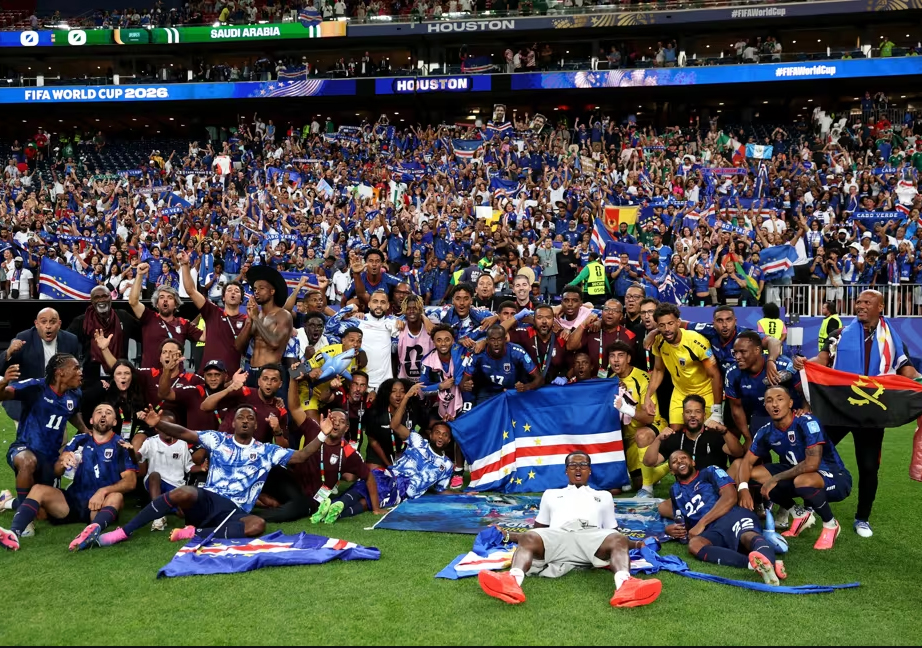
Cape Verde has also become one of the tournament’s most inspiring stories. As Robby noted, the African debutants have captured worldwide attention through their remarkable fighting spirit.
Egypt has impressed with its balanced attacking play and solid defensive organization.
Compared with Asia, Djanur believes one African nation has the strongest chance of making a deep run.
“Based on their performances, Côte d’Ivoire has the best opportunity among the African teams to reach the Round of 16,” he said.
His assessment is well-founded. Côte d’Ivoire has been one of the tournament’s most consistent teams, combining physical strength, pace, and international experience.
In the Round of 32, Côte d’Ivoire will face Norway.
Which Asian and African teams will continue their remarkable journey?
The Round of 32 will provide the answer, as the knockout stage promises more drama, surprises, and perhaps even new chapters in World Cup history.***